Some units are worth sealing for another decade and some are not. The condition and economics checks that decide it, from a company with no equipment to sell.
An old walk-in or reach-in with a shot door seal raises the same question every time: is it worth replacing a commercial refrigerator gasket on a unit this age, or should the whole cabinet go? Most of the time, the gasket is the cheap part and the cabinet is fine, so sealing it is the obvious move. That is the call The Gasketeers make every week in Boulder County kitchens, and it only goes the other way when the cabinet itself has given out.
This guide walks through what makes an old unit worth sealing, what signals that it is not, and how to get a straight answer before you spend money either way.
A worn gasket almost never means the cabinet is done; most older units still hold a seal fine.
Saturated insulation, a rusted-through base, and seal failures every few months instead of years are the real signs a cabinet is finished.
Sealing is usually the lower-cost move whenever the cabinet, frame, and door are still structurally sound.
No commercial cabinet lasts forever, and the honest answer is sometimes to stop spending on an old unit.
A discontinued model number is not a reason to replace a unit on its own.
The cabinet is usually not the problem
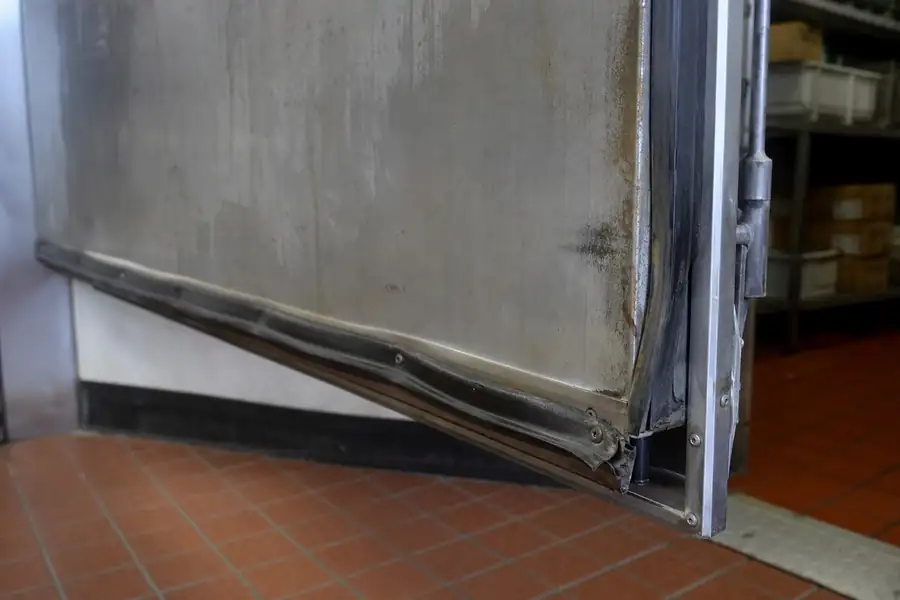
The gasket fails long before the cabinet does on almost every commercial refrigeration unit. A door seal gets flexed open and shut hundreds of times a day, scrubbed with cleaning chemicals, and pinched in the same spots for years, so it is the first part designed to wear out. The insulated cabinet behind it, the foam-filled walls, the frame, the floor, is built to outlast several gaskets.
Door hardware wears alongside the seal and gets blamed less often than it should. A sagging hinge, a weak closer, or a torn sweep lets the door hang out of square, and a gasket on a crooked door will fail again no matter how well it is fitted. Replacing the seal without checking the hinges and closer is a common way to pay twice for the same fix.
Need a gasket replaced?
Call us or send your unit's model number. Free quotes across Boulder County, usually same week.
An old cooler is worth sealing when the cabinet, the gasket channel, and the door frame are all still sound enough to hold a new seal square. Age by itself tells you very little; condition tells you everything.
Sound cabinet and insulation
A cabinet with dry, intact insulation holds temperature the way it did when it was new, regardless of how many years it has logged. If the panels are not saturated, a new gasket restores the seal the insulation was built to work with.
A channel that will still hold a seal
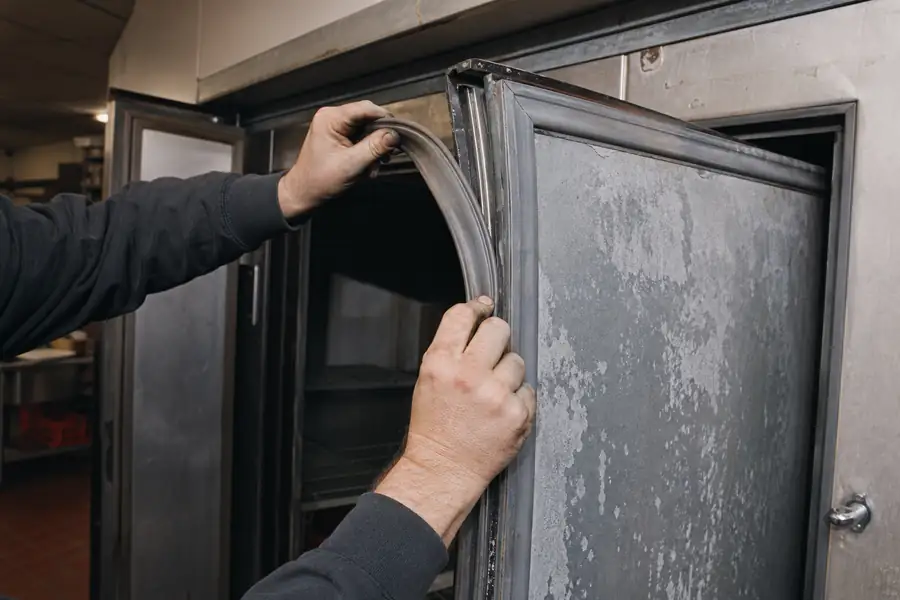
The gasket channel is the groove around the door where the seal's retaining bead locks in, either snap-in or screw-in depending on the unit. If that channel metal is straight and not rotted through, a new gasket seats the same way it did the day the unit was built, whether that unit is a True reach-in or an older Kolpak walk-in.
A door that can be brought square
A door that can still be adjusted back to flush, through reset or replaced hinges, closers, and sweeps, is worth sealing even if the model is twenty years old. Squareness matters more than age: a gasket on a door that closes true will outlast one on a door that keeps racking.
None of this changes if the unit's model number was discontinued years ago. The Gasketeers built a reputation on sealing units nobody else will touch, fabricating a custom gasket from the existing seal profile when the manufacturer no longer stocks the part. That process is covered in more depth in our companion piece on sealing a discontinued unit, which looks at the question from the other direction.
What signals the end
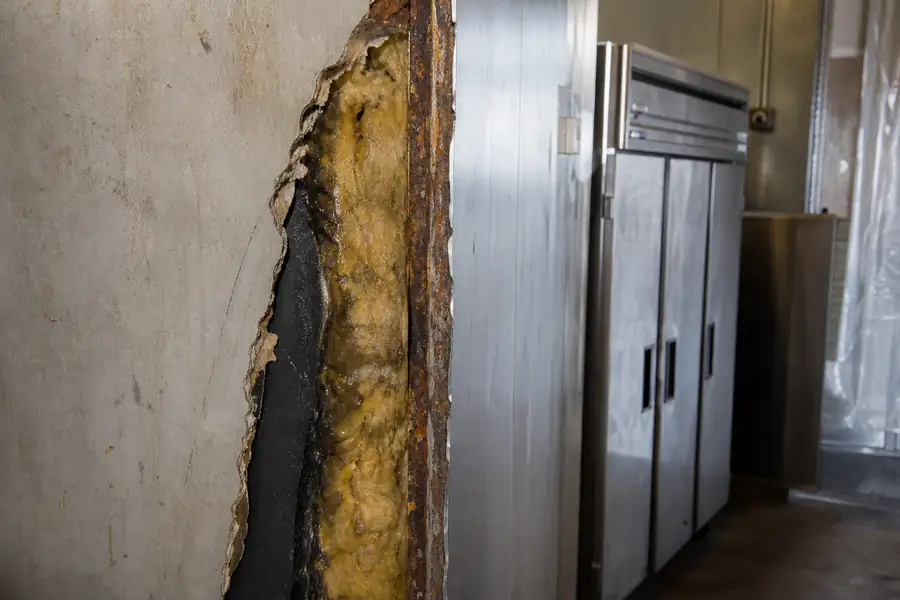
Three signs mean a cabinet is done, no matter how well a new gasket would fit: saturated insulation, corrosion through the base structure, and seal failures that keep repeating every few months instead of lasting years. Any one of these means sealing the door buys very little time.
Insulation saturation
Saturated insulation is foam or fiberglass core that has absorbed water over years of condensation and no longer insulates the way it should. At a cut edge, sound insulation looks dry and pale; saturated insulation looks dark, compressed, and wet. Once insulation is saturated, the cabinet loses cold through the walls themselves, and no gasket fixes a wall that is not insulating.
Structural corrosion at the base
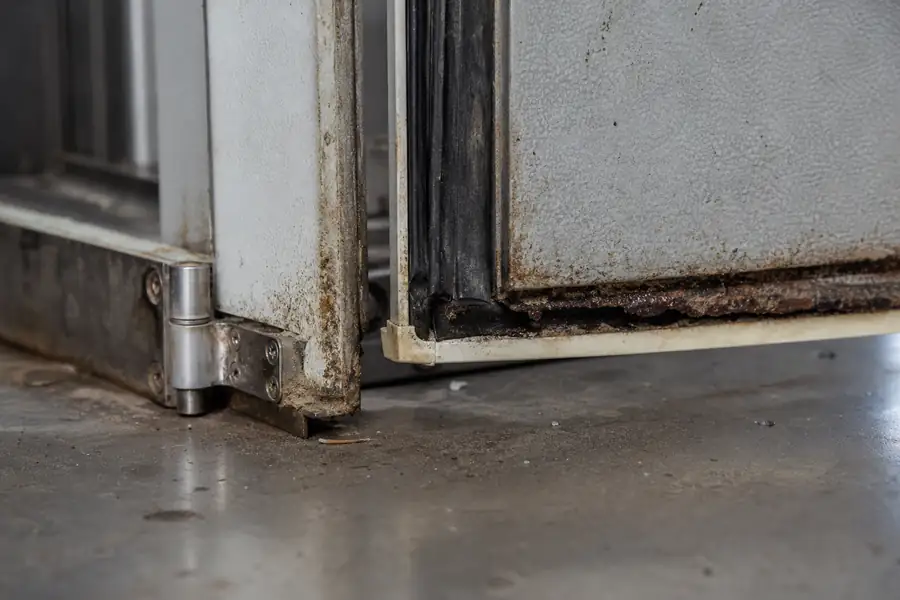
Corrosion at the base rail or floor track means the frame can no longer hold a door, or a gasket, square, even with a flawless new seal installed. Base corrosion usually comes from years of standing water or de-icing runoff, and once the metal is rusted through, there is nothing solid left to screw or snap a channel into.
Repeated seal failure in months rather than years
A gasket that cracks, pulls loose, or tears again within a few months of a correct installation is a symptom of a door that keeps racking out of square, usually from a bent frame or a hinge system failing faster than it can be adjusted. A well-fitted gasket on a sound door should hold for years, not months; when it does not, the cabinet is telling you something the seal alone cannot fix.
The economics of replacing a commercial refrigerator gasket
Whether it is worth replacing a commercial refrigerator gasket on an old unit comes down to the cabinet, not the calendar. A new gasket is a small, fast repair compared to sourcing and installing a replacement cabinet, and that gap is usually wide enough that sealing wins whenever the cabinet is sound.
That math flips once the cabinet is failing. A gasket on a unit with saturated insulation or a rotted base buys a few months of marginal improvement while the compressor keeps running harder than it should and product temperature keeps drifting. At that point, every dollar spent on the door is a dollar spent delaying a decision that is already made.
What we will tell you if it is not worth it
When a cabinet shows saturation, base corrosion, or seal failures every few months, The Gasketeers will say so plainly instead of selling a seal that will not hold. That assessment costs an operator nothing and saves the cost of a gasket that would have failed again inside a season.
We have no equipment to sell and no reason to keep a dying cabinet on life support. If sealing will not get a kitchen through the next several years, we would rather an operator know that before signing off on a repair.
Getting an honest assessment
The fastest way to find out which side of this an old unit falls on is to send photos of the door, the channel, and the data plate. Text a few photos to (970) 507-8034, or request a no-obligation assessment and we will tell you plainly whether the cabinet is worth sealing or whether it is time to start shopping.
Frequently asked questions
Is it worth repairing an old commercial refrigerator?
Usually yes, as long as the cabinet is structurally sound and the insulation is dry. Repairing the door seal is almost always cheaper and faster than replacing the whole unit, and age alone does not disqualify an older cabinet from another decade of service.
How long do commercial coolers last?
Well-maintained commercial walk-ins and reach-ins commonly run 15 to 20 years or more before the cabinet itself becomes the limiting factor, though gaskets, hinges, and closers typically need attention well before that. The cabinet's insulation and structure, not its age in years, determine when it is actually done.
When should you replace a walk-in cooler?
Replace a walk-in cooler when the insulation has saturated, the base structure has corroded through, or new seals keep failing every few months despite correct installation. Short of those conditions, sealing the door and squaring up the hardware is usually enough to keep an older walk-in running.
Can old refrigeration be brought back to temperature?
Yes, in most cases, if the seal and door hardware are the cause of the temperature problem rather than the refrigeration system itself. A door that seals tight and closes square stops the warm air exchange that drives ice buildup and temperature swings, which solves the problem in units where the cabinet is otherwise sound.