When Hinges, Closers or Sweeps Belong in the Same Visit as the Seal
Fitting a new seal to a door that will not close properly wastes the seal. How to tell when hardware needs doing at the same time, and what that changes.
A technician shows up to replace a gasket on your walk-in cooler and finds a hinge with play, a closer that no longer pulls the door shut, or a sweep torn off at one corner. Now the gasket job and a walk in cooler door hardware replacement are one conversation, not two. The Gasketeers try to flag that before the visit instead of during it, so the number on your quote doesn't change once the technician starts measuring.
A new seal fitted to a door that no longer closes square is a seal that fails again within weeks. Knowing which hardware faults actually threaten a gasket, and which don't, lets you get an accurate quote the first time.
A gasket cannot hold a door square in its frame; the hinges, closer, latch and sweep do that job.
Four hardware faults account for most premature seal failures: a weak closer, worn hinges, a missing sweep, and a misaligned latch.
Checking hardware before quoting the gasket catches these issues before the technician is standing in your kitchen.
Doing hardware and gasket work in the same visit usually costs less overall than two separate trips, and it protects the new seal from day one.
Common hinges, closers and sweeps for popular commercial brands are typically carried on the service van; less common or discontinued models often need to be ordered.
Why the seal is downstream of the hardware
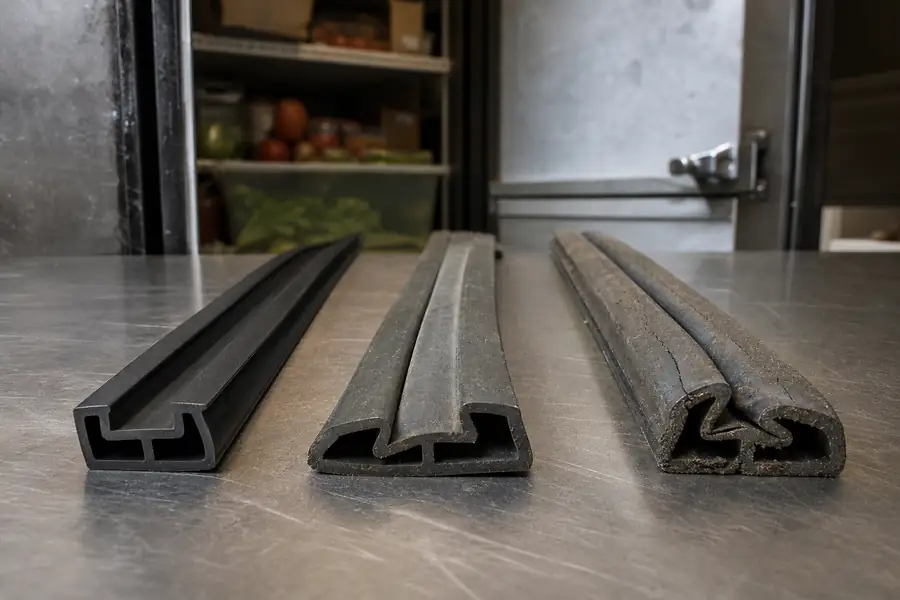
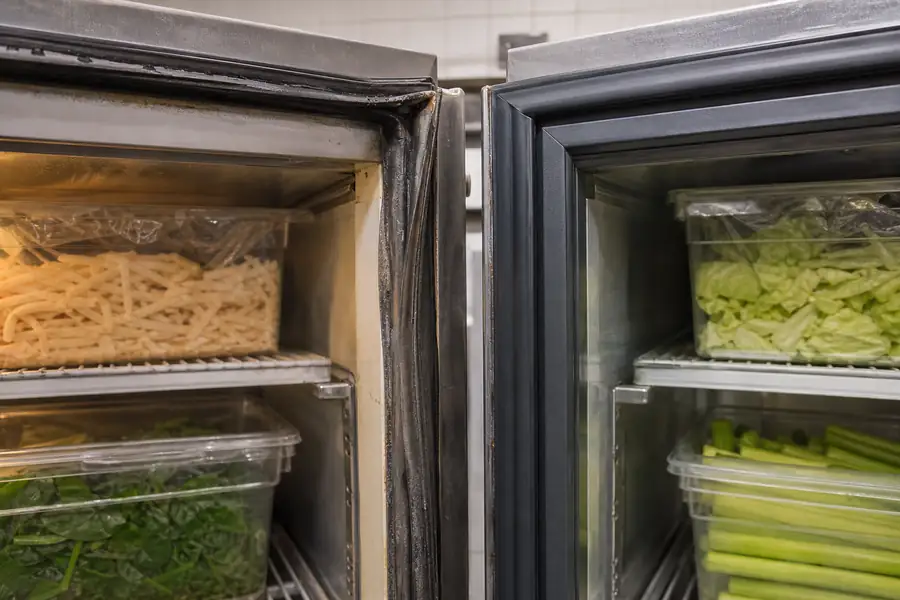
A gasket seals the gap between a door and its frame; it cannot create the square, even pressure that a proper seal depends on. That pressure comes from the hinges holding the door level, the closer pulling it fully shut, and the latch locking it in that final position. When any one of those is off, the gasket compresses unevenly, and the thin edge that doesn't compress lets cold air leak out around the clock.
This is why hinge, closer and sweep replacement comes up so often alongside a Walk-In Cooler & Freezer Gaskets job. The gasket is almost never the only part at fault once a door has been in daily use for a few years. A grocery walk-in in Longmont that's been swinging open for carts and pallets since the store opened is a textbook case: the gasket looks worn because the door hasn't been closing right for months.
Need a gasket replaced?
Call us or send your unit's model number. Free quotes across Boulder County, usually same week.
The four hardware faults that will kill a new seal
These four faults show up again and again on service calls across Boulder County kitchens, and each one is capable of undoing a brand new gasket within weeks.
A closer that no longer pulls to
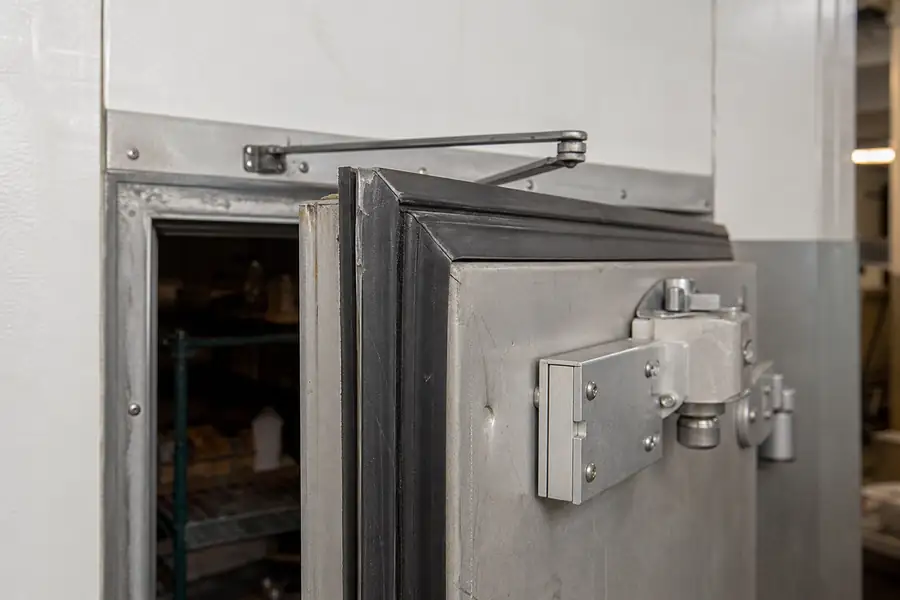
A cam-lift closer is the spring-loaded mechanism mounted near the hinge that pulls a walk-in door the last few inches shut and holds it against the seal. A worn or weak walk in cooler door closer leaves the door sitting open a crack instead of fully seated, so the gasket never compresses at all on that side. Frost building up in a line along one edge of the door is the usual sign.
Hinges with play or sag
Heavy freezer doors ride on hinges for years, and the pins and bushings inside them wear down under that weight. Once a hinge develops play, the door sags slightly off true and no longer sits square in the frame. A cooler door hinge replacement at that point is what lets the gasket do its job again, rather than contacting only part of its length.
A worn or missing sweep
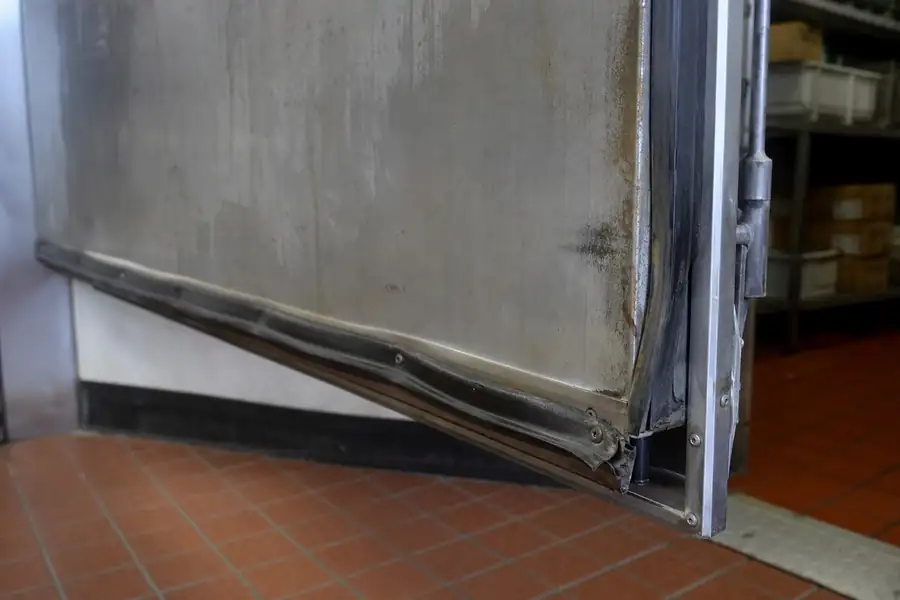
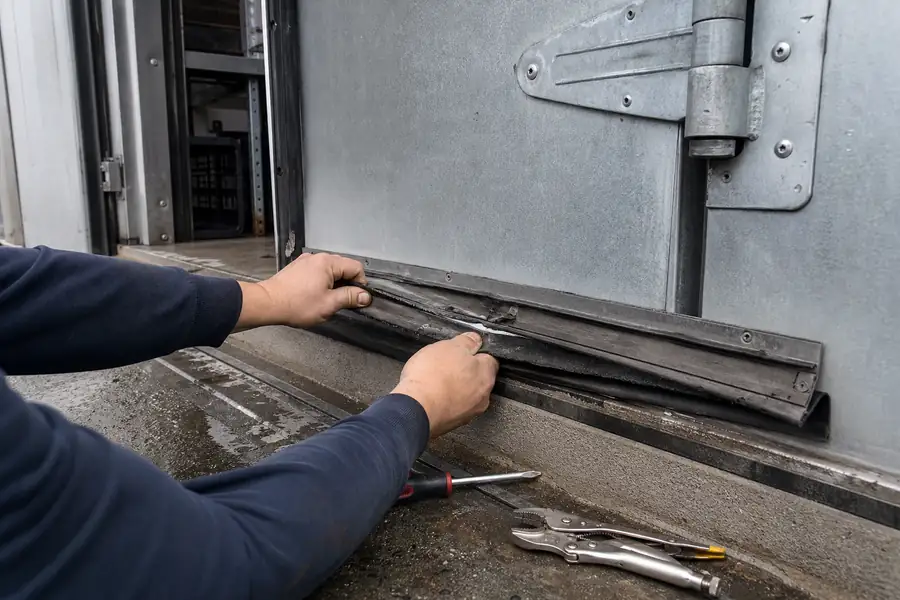
A door sweep is the rubber or brush strip along the bottom edge of the door that seals the gap between the door and the floor or threshold. Carts, pallet jacks and foot traffic wear sweeps down or tear them off entirely. Door sweep replacement on a commercial walk-in matters even when the side and top gaskets are in good shape, because cold air pools and escapes at floor level regardless of what's sealing the sides.
A latch pulling the door out of square
A misaligned latch or handle can torque the door slightly every time it's forced shut, pulling the frame a little further out of true each time. Over months that twisting works against the gasket on one side of the door, wearing it unevenly and opening a gap that a straight replacement seal won't close on its own.
How we flag this before the visit rather than during it
The Gasketeers check hinge play, closer tension, sweep condition and latch alignment before quoting the gasket, not after arriving with a work order for one part. That usually starts with a text: a couple of photos of the door, the data plate, and how the door sits when it's closed, sent to (970) 507-8034, tell us most of what we need before a technician ever drives out.
That matters most for operators working against a deadline. A senior living kitchen in Louisville facing a health inspection next week doesn't have time for a gasket to arrive and still fail inspection because a hinge was never addressed. Flagging hardware issues at the quote stage, rather than discovering them on site, keeps that kind of surprise off the schedule entirely.
What doing both at once saves you
Combining hardware and gasket work in one visit typically costs less than two separate service calls, and it protects the new seal from the kind of re-wear that comes from closing against a sagging door. One technician, one measurement trip, one quote that covers the whole job.
It also means the new gasket actually gets a fair shot at lasting. A seal installed on hardware that still pulls the door out of square will show the same frost and sweating within a month or two, and the cost of the first gasket is effectively wasted. Handling hardware and gasket work in the same appointment is the difference between fixing the symptom and fixing the cause.
What we can carry and what has to be ordered
Common hinges, closers and sweeps for widely used commercial brands like Kason, Kolpak, Nor-Lake and Master-Bilt are typically kept on hand, so a straightforward hardware fix can often happen in the same visit as the gasket work. Less common fittings, older models, or hardware for a discontinued door sometimes need to be special-ordered before the job can be finished.
When that happens, the gasket itself can usually still go in on schedule. The hardware follow-up gets booked once the part arrives, rather than leaving the whole job waiting on one slow-moving piece.
Getting both quoted together
The straightforward way to avoid a mid-visit surprise is to ask for the hardware and the seal to be quoted together before the technician arrives. Send photos of the door, note anything that feels loose, slow to close, or out of square, and ask for both to show up on the same estimate. You can get the seal and the hardware quoted together up front, so the number you see before the visit is the number you're asked to pay after it.
Frequently asked questions
Do I need to replace hinges when replacing a gasket?
Not always, but it's worth checking. If a hinge has developed play or the door sags slightly when it swings, a new gasket will wear out quickly against that misalignment, so replacing the hinge alongside the seal is usually the better long-term fix.
What is a door sweep on a walk in cooler?
A door sweep is the rubber or brush strip fastened along the bottom edge of a walk-in door that seals the gap between the door and the floor or threshold. It wears out from foot traffic, carts and pallet jacks dragging past it, independently of how the side and top gaskets are holding up.
How do you know if a door closer needs replacing?
A door closer that needs replacing usually leaves the door sitting open a crack instead of pulling it fully shut, often visible as a thin gap or a line of frost along one edge of the door. If the door needs a manual push to seat fully, the closer spring has likely weakened past the point of doing its job.
Can you fix a sagging walk in door?
Yes, in most cases a sagging walk-in door can be corrected by replacing the worn hinges or adjusting their mounting, which brings the door back square in the frame. Once the door sits level again, a new gasket can seal properly instead of compressing unevenly on one side.