How Long Should a Commercial Refrigerator Gasket Last?
There is no single answer, and anyone quoting one is guessing. What actually determines gasket service life, and how to tell where yours is in that range.
Quick answer: Most commercial refrigeration gaskets hold a tight seal for about 2 to 5 years under normal daily use, based on what The Gasketeers sees replacing seals across Boulder County kitchens. Where a specific unit falls in that range depends on how often the door opens, how cold it runs, what the gasket is made of, how it gets cleaned, and whether the door itself still closes square.
That's a wider answer than most kitchens want when they're trying to budget. Anyone who tells you flatly how long do commercial refrigerator gaskets last with a single number is guessing, because a glass display case opened 300 times a day wears nothing like a walk-in freezer door opened twice a shift.
Why nobody can honestly give you one number
A commercial refrigerator gasket's service life comes from how the specific door gets used, not from a fixed shelf life built into the part. The same gasket profile installed on a slow-moving prep table in a back kitchen and on a busy reach-in cooler at a counter in downtown Boulder will wear at completely different rates, even though they came off the same roll of material.
That's the honest version of refrigerator gasket lifespan: it's a range set by use, not a countdown clock set by the manufacturer. Rounding that off to one number is how competing sites end up repeating figures nobody actually measured.
Need a gasket replaced?
Call us or send your unit's model number. Free quotes across Boulder County, usually same week.
Five variables account for almost all of the difference between a gasket that lasts two years and one that lasts five. Most units are dealing with some mix of all five at once.
Cycle count
Every time a door opens and closes, the gasket flexes and the magnetic strip inside it re-seats against the frame. A reach-in cooler that opens every few minutes during a lunch rush racks up far more cycles in a week than a walk-in freezer that opens twice a shift, which is one reason gasket replacement timelines on reach-in units often run shorter than on walk-ins.
Temperature range
Colder units stress a gasket harder than cooler ones do. A freezer running at 0°F or below puts the seal through sharper expansion and contraction than a cooler holding 35 to 40°F, and that repeated flexing in the cold is what eventually cracks the material at the corners and folds.
Material
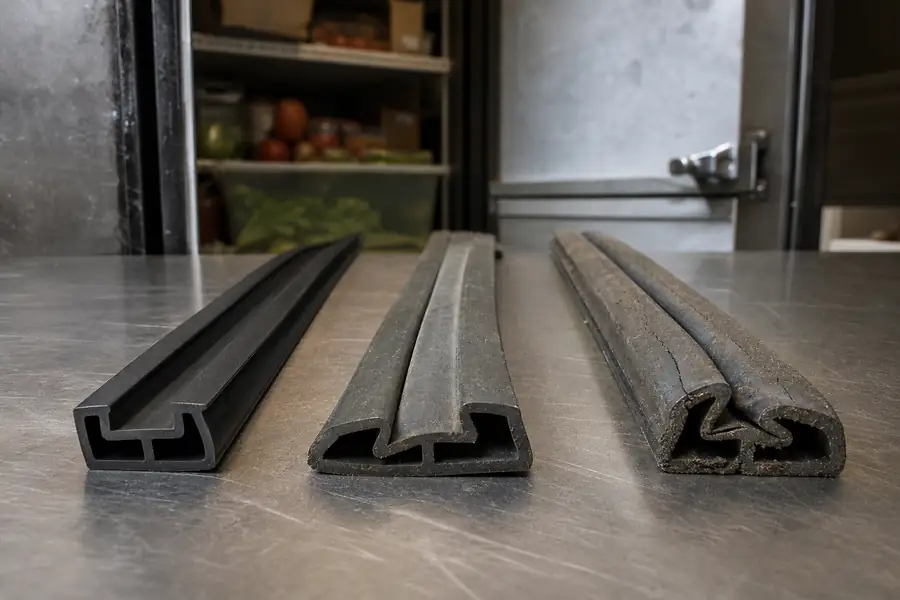
Not every gasket is made of the same compound, and the material affects how it ages. PVC gaskets are common and cost-effective but stiffen faster in cold, high-cycle doors, while rubber and Santoprene blends tend to stay flexible longer under the same conditions, which shows up as a longer service life on otherwise identical doors.
Cleaning chemistry
Daily wipe-downs with strong sanitizers or degreasers break gasket material down faster than mild soap and water. A Longmont cafe sanitizing its reach-in door seal aggressively every shift, which is common and often necessary for health code reasons, will likely see that gasket dry out and crack sooner than a kitchen using a gentler routine.
Whether the door closes properly
A gasket only seals as well as the door holds it against the frame, so worn hinges or a weak closer shorten gasket life even when the material itself is fine. If a door sags on its hinges or the cam-lift closer no longer pulls it fully shut, the gasket gets pinched, stretched, or left with a gap on one side, and it wears out well before its material would otherwise allow.
Placing your own unit in the range
To figure out where your unit sits in the 2 to 5 year range, weigh the five factors above against each other instead of guessing from age alone. A three-year-old gasket on a high-cycle freezer with harsh daily sanitizing is probably closer to the end of its life than a five-year-old gasket on a low-traffic cooler with mild cleaning.
Factor
Pushes toward the short end (near 2 years)
Pushes toward the long end (near 5 years)
Door cycles
100+ openings a day
Under 20 openings a day
Temperature
Freezer, 0°F or below
Cooler, 35-40°F
Material
PVC on a high-cycle door
Rubber or Santoprene blend
Cleaning
Daily harsh sanitizer
Mild soap and water
Door alignment
Sagging hinge, weak closer
Tight hinge, square close
For walk-in coolers and freezers specifically, door traffic at a loading dock or a busy prep line often matters more than raw age. Work the Gasketeers do under Walk-In Cooler & Freezer Gaskets usually turns up hinge and closer wear before the gasket material itself is the real problem.
The signs that the range has run out
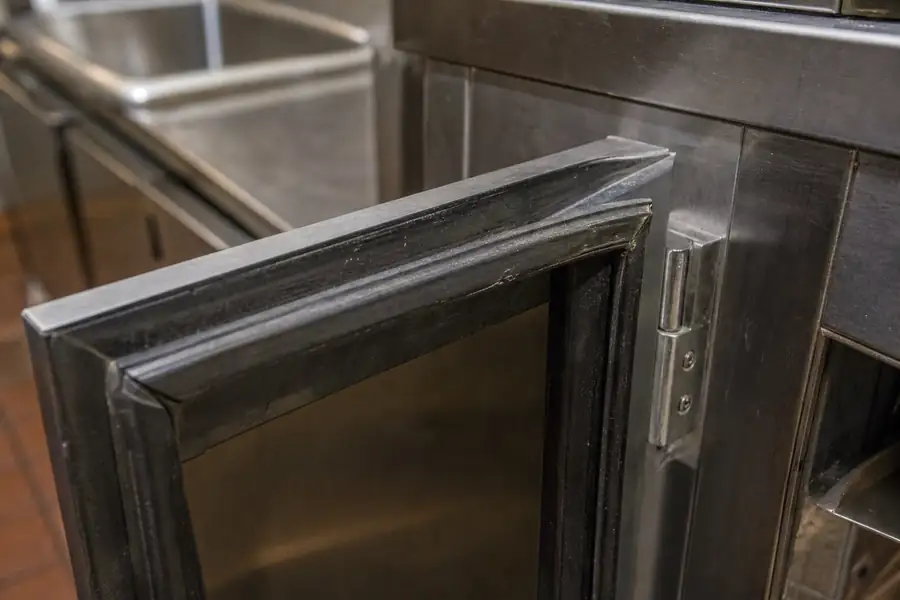
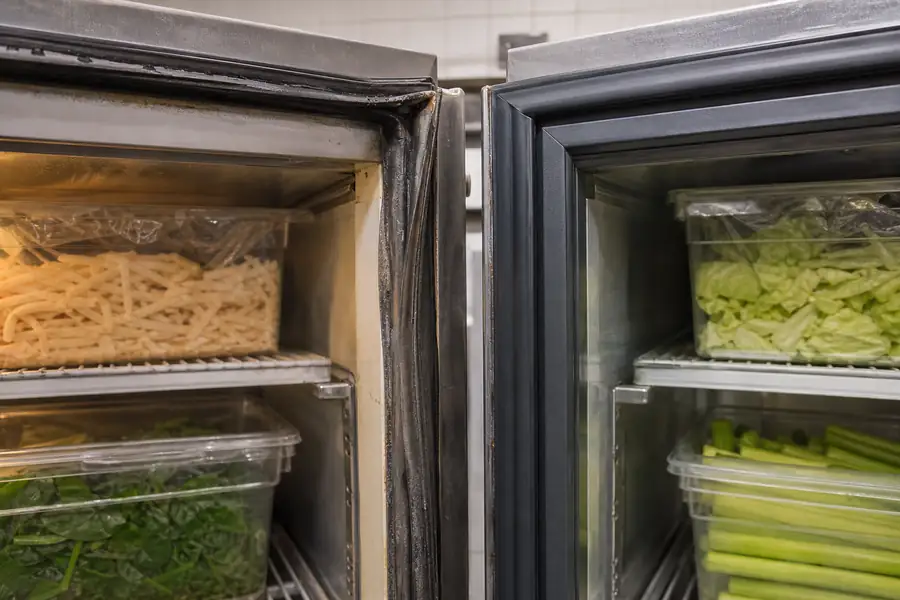
A commercial refrigerator gasket has reached the end of its range when the door stops holding a tight seal, whatever the calendar says. Frost building around the gasket edge, visible cracks or flattening in the material, and warm spots near the door frame are the clearest signals that replacement, not more cleaning, is the fix.
Condensation on the outside of the door or cabinet is another tell. It means warm, moist kitchen air is finding its way past the seal and meeting cold metal, which is exactly what a sound gasket is supposed to prevent.
The dollar bill test still works as a rough check: close the door on a dollar bill at several points around the frame and pull it out. If it slides free with no resistance in spots, the seal has gaps that a gasket at the end of its life typically develops, which matters most when a Louisville brewery kitchen is staring down an inspection deadline.
What we see fail earliest and why
Corner joints and the bottom edge of the gasket fail earliest on most commercial units, based on repairs The Gasketeers handles across Boulder County kitchens. Corners take the sharpest bend every time the door closes, and the bottom edge collects the most moisture, grease, and cleaning chemical residue, so both wear out well before the flat middle sections of the same gasket.
Glass display door merchandisers tend to show wear fastest of all, simply because customers and staff open them more often per hour than any walk-in or reach-in door in the kitchen. Prep table lid seals, by contrast, often outlast the rest of a kitchen's gaskets, since lids get opened in short bursts during prep and stay shut the rest of the shift.
Budgeting for replacement rather than reacting to it
Treating gasket replacement as a planned expense instead of an emergency repair is cheaper for almost every kitchen, because a failing seal runs up compressor costs and spoilage risk every day it's ignored before anyone notices. If your busiest reach-in or walk-in gaskets are three years old and taking heavy daily use, start budgeting for a replacement now instead of waiting for frost or a warm case to force the issue.
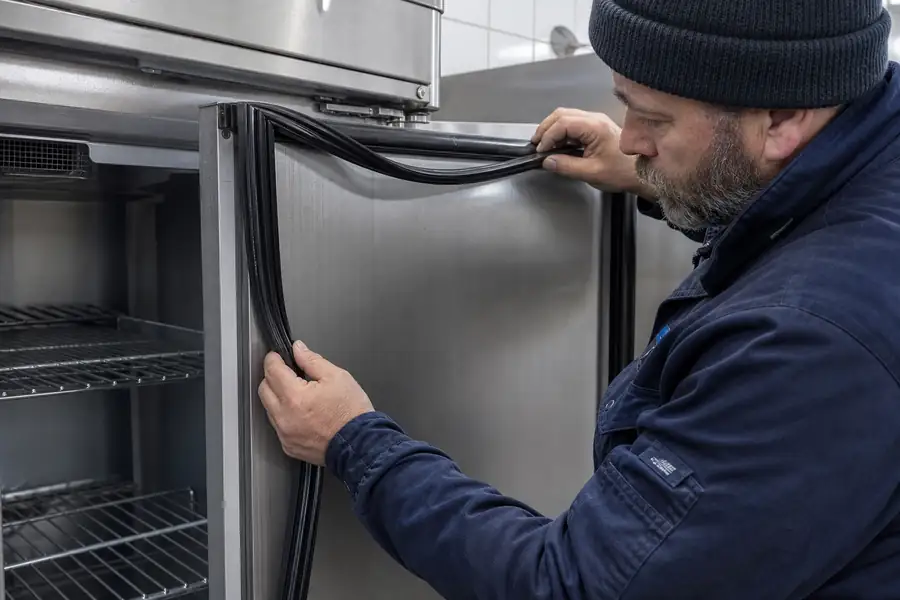
The Gasketeers can check your current seals and door hardware and tell you honestly where each one sits in its range, rather than selling a replacement before it's needed. Request a free gasket quote and we'll give you a straight answer on timing along with the price.
Frequently asked questions
How long do refrigerator gaskets last?
Commercial refrigerator gaskets typically last 2 to 5 years, with the exact number set by how often the door opens, how cold the unit runs, the gasket material, cleaning chemicals, and whether the door still closes square. A high-traffic glass display case can wear out a gasket in under two years, while a lightly used prep table lid seal can last well past five.
When should you replace a commercial refrigerator gasket?
Replace a commercial refrigerator gasket as soon as you see frost collecting around its edges, cracks or flat spots in the material, or a gap where air passes through when the door is shut. Waiting past these signs usually means higher power bills and a greater risk of product loss, so it is worth acting the first time you notice them rather than scheduling around a calendar date.
Do gaskets wear out even if they look fine?
Yes. A gasket can look intact while it has already lost the flexibility and magnetic pull needed to hold a tight seal, especially at the corners where the material bends most. That is why a visual check alone is not reliable, and a simple test like pulling a dollar bill from the closed door at several points catches wear that is easy to miss by eye.
How often do walk-in cooler gaskets need replacing?
Most walk-in cooler gaskets need replacing somewhere in the same 2 to 5 year window as other commercial refrigeration gaskets, though low-traffic walk-ins with mild cleaning routines often land toward the longer end. Door traffic at loading docks and prep lines, along with hinge and closer condition, usually matters more to a walk-in's actual lifespan than the gasket's age alone.