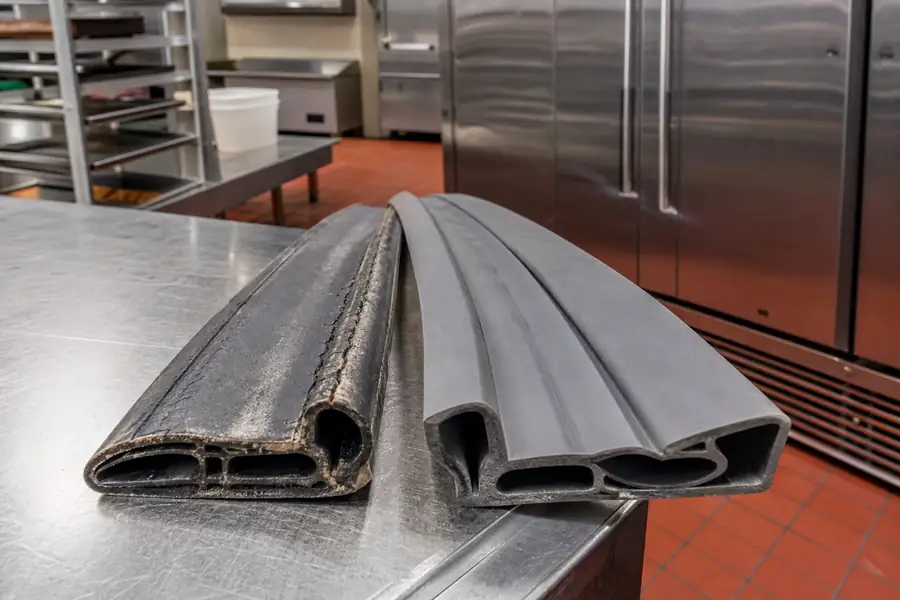
Quick answer: If your cooler or freezer is running warm but the door closes tight, with no visible gap, frost line, or draft at the gasket, the seal is probably not your problem. A commercial refrigerator not cold with a gasket that looks and feels fine usually traces back to an iced evaporator, a dirty condenser, a stalled defrost cycle, a refrigerant or compressor fault, or a controller reading the wrong temperature, and those all need a refrigeration mechanic, not a gasket replacement.
We hear from Boulder County kitchens every week convinced a bad seal is why the walk-in is running warm. Sometimes it is. Just as often the door is fine and something else inside the box is failing. Here is how to tell the difference before you spend money on a part that will not fix anything.
Before you buy a gasket, rule these out
Five faults account for most "cooler running warm" calls that have nothing to do with the door seal. Each leaves different clues than a gasket problem and needs a different kind of contractor to fix.
The Gasketeers handles the door seals, hinges, closers, and sweeps on the services we repair that keep a unit's opening airtight. We do not touch refrigerant lines, compressors, evaporator coils, or control boards. That is the boundary that keeps a specialist useful: we know gaskets cold, and we know exactly when the problem in front of us is not one.
Need a gasket replaced?
Call us or send your unit's model number. Free quotes across Boulder County, usually same week.
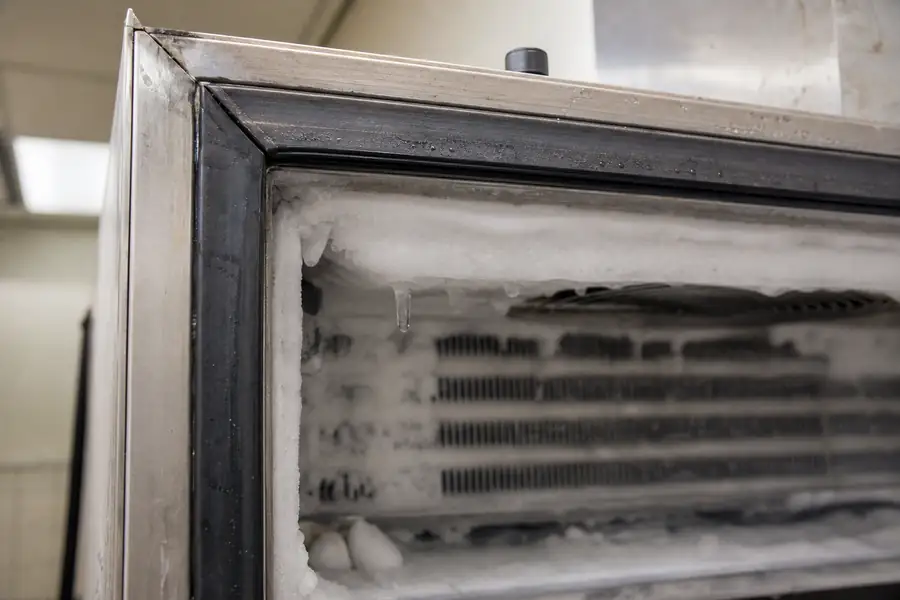
An evaporator coil buried in ice cannot pull heat out of the air, so the box runs warm even though the compressor works overtime. The evaporator is the finned unit near the ceiling of a walk-in or the back of a reach-in that absorbs heat from the air inside the box. A heavy, frozen coil with icicles next to a door with no visible gap points to a defrost or airflow failure, not a worn seal.
2. A blocked or dirty condenser
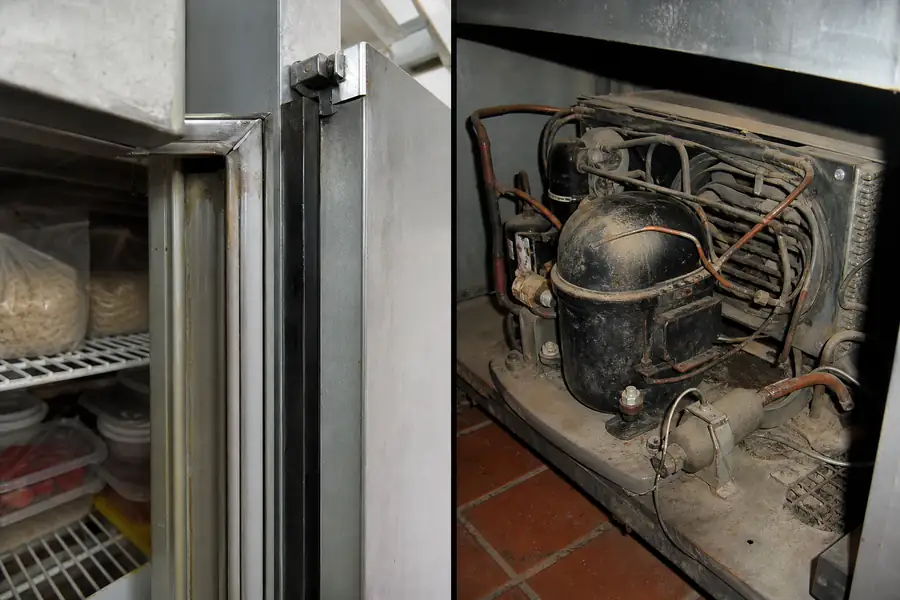
A condenser caked in dust, grease, or kitchen lint cannot reject heat, so refrigerant backs up and the box runs warm no matter how tight the door seals. The condenser sits outside the refrigerated space and dumps the heat pulled from the box into the surrounding air. Kitchens with fryers and flat-tops nearby clog condensers fast; matted fins or a dust-caked fan mean a cleaning and airflow issue for a refrigeration tech, not a gasket shop.
3. A defrost cycle that is not running
A defrost cycle that fails to run on schedule lets frost accumulate on the evaporator until it chokes off airflow entirely. Defrost is a timed or sensor-triggered heating period that melts frost before it builds up enough to block airflow, and when the timer, heater, or termination sensor fails, frost just keeps piling up. This looks like an iced evaporator because it usually causes one; the giveaway is a unit that cooled fine recently and has steadily warmed over a few days, which points to defrost control, not gasket wear.
4. A refrigerant or compressor fault
Low refrigerant or a weak compressor leaves a unit unable to reach or hold its set temperature no matter how well the door seals. The compressor circulates refrigerant through the system, and an undersized, short-cycling, or leaking unit cannot remove heat fast enough to stay cold. A compressor running almost constantly while the box still reads several degrees warm, with no frost buildup, points to the refrigeration circuit itself, work that requires a licensed refrigeration technician, not The Gasketeers.
5. A controller or sensor reading wrong
A faulty temperature controller or sensor can show a safe reading while the box is actually warm. The controller is the digital or dial thermostat reading a probe inside the box, and a drifted sensor can lie even as product inside climbs in temperature. Spot-check with a separate thermometer placed away from the door and any fan; a gap of more than a couple of degrees between readings points to the controller, which is electrical work, not a seal problem.
How to tell these apart from a door problem in two minutes
A two-minute door check tells you whether to call a gasket shop or a refrigeration mechanic first.
Check
Points to a door problem
Points to a system problem
Light test (close door, look for light around the frame)
Light leaks around the gasket
No light leak anywhere
Dollar bill test (close door on a bill at several points)
Bill pulls out with little resistance
Bill holds firm everywhere
Frost pattern
Frost concentrated near the door edge
Frost or ice covering the whole coil
Compressor behavior
Runs long but eventually catches up
Runs constantly and never catches up
Sweating
Condensation along the door frame or gasket
Condensation on walls or ceiling away from the door
If the door passes the light and dollar bill tests but the box still runs warm, stop looking at the gasket. The fault is somewhere else in the system.
What we do and what we do not
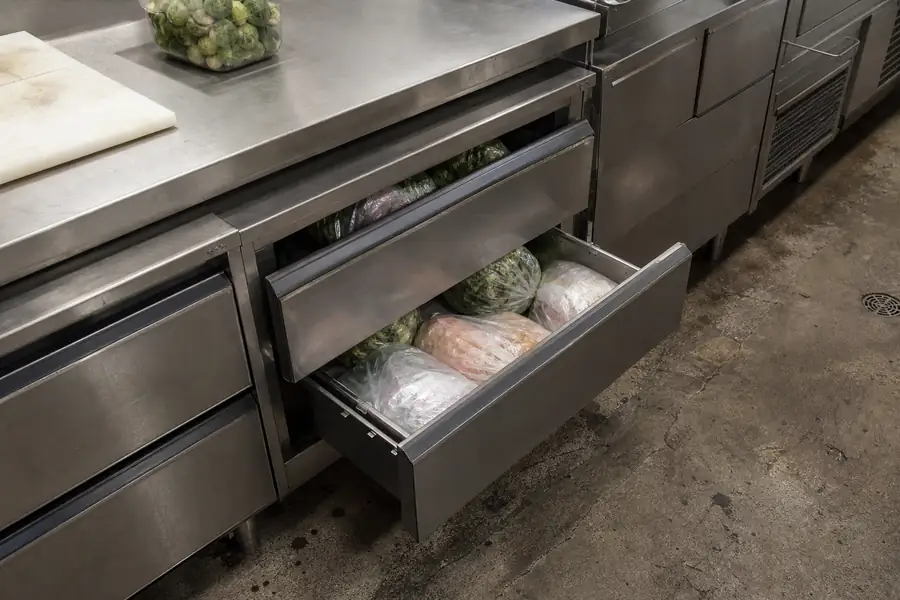
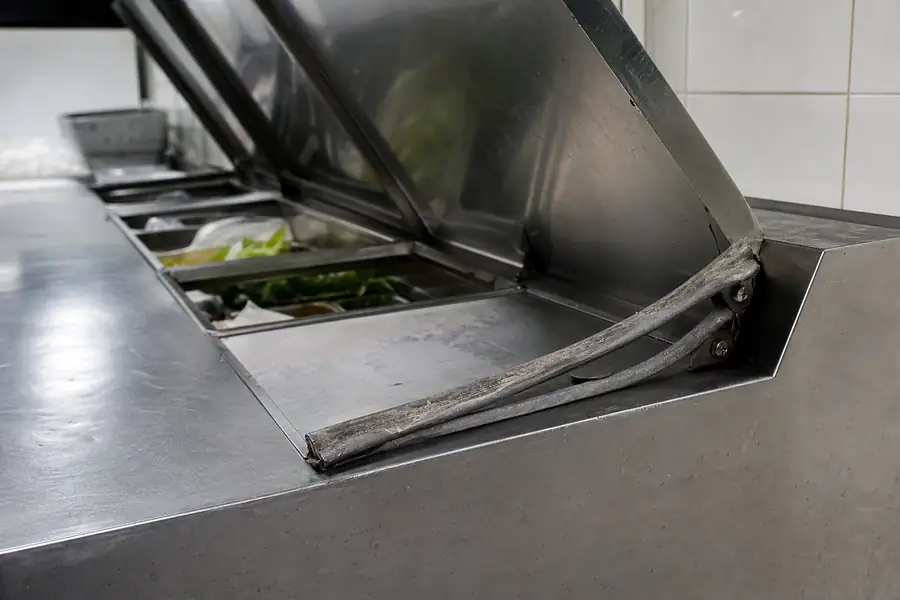
The Gasketeers repairs and replaces the parts that keep a door sealed tight: the gasket itself, plus the hinges, cam-lift closers, and sweeps that keep it aligned. That covers walk-in coolers and freezers, reach-in units including reach-in cooler and freezer gaskets, glass display cases, prep tables, and refrigerated drawers, including custom-fabricated gaskets for discontinued or obsolete equipment.
We do not work on refrigerant lines, compressors, coils, defrost timers, or controllers. If one of the five faults above is the cause, you need a refrigeration mechanic licensed for refrigerant and electrical work, not a gasket specialist. Describe what you are seeing when you contact The Gasketeers, and if the door checks out fine, we will say so instead of selling you a gasket you do not need.
When it genuinely is the door after all
Most door problems show up as a visible gap, a soft or cracked gasket, a door that swings shut slowly, or frost and sweat concentrated right at the frame. A gasket gone stiff or pulled loose lets warm, humid kitchen air leak in continuously, and the compressor runs nonstop trying to make up for it.
If both the light and dollar bill tests fail, along with a warm case flagged during a health inspection in Longmont or a spiking power bill in a Louisville kitchen, that is a door and hardware problem worth fixing before it costs more. Keep this guide to the five cooler problems a new gasket will not fix next to your maintenance log so you check the door first the next time a unit runs warm.
Frequently asked questions
Why is my commercial refrigerator not cooling?
Most commercial refrigerators that stop cooling have an iced evaporator, a blocked condenser, a failed defrost cycle, a refrigerant or compressor fault, or a miscalibrated controller behind the problem, not the door seal. Check the door first with a light and dollar bill test, and if it passes, the cause is almost certainly inside the refrigeration system itself.
Is my cooler problem the gasket or the compressor?
If the door shows a visible gap, a torn or stiff gasket, or fails a dollar bill test, the seal is a likely culprit. If the door checks out fine but the compressor runs constantly without the box ever reaching temperature, the compressor or refrigerant charge is the more likely cause.
Why is my walk in cooler warm but running?
A walk-in that runs constantly but stays warm usually means the system cannot move enough heat out of the box, which points to a dirty condenser, low refrigerant, a weak compressor, or a stalled defrost cycle rather than a leaking door. A door problem typically shows up as localized frost and sweat right at the frame, not a uniformly warm box.
Who do I call for commercial refrigeration repair?
Call a licensed commercial refrigeration mechanic for anything involving refrigerant, compressors, coils, defrost controls, or electrical components. Call a gasket specialist for the door seal, hinges, closers, and sweeps once you have confirmed the door itself is the source of the problem.