The Seal Looks Fine and Still Leaks: Hardening and Compression Set
No tears, no gaps, still losing cold. Compression set and hardening are the failure modes you cannot see, and dry Front Range air brings them on faster.
Quick answer: A refrigerator gasket hardened by age or dry air can show no rips, gaps, or mold and still be the reason a walk-in or reach-in runs warm. Two failure modes, hardening and compression set, leave the rubber looking intact while it quietly stops sealing the door. Hardening means the material has stiffened and lost the flex it needs to hug the frame. Compression set means the gasket has been squeezed flat for so long that it stays flat, permanently, even with the door standing open.
Both are common across Boulder County kitchens, and both get missed constantly because checking the gasket usually means a quick glance for tears. A gasket can pass that glance and still be the biggest reason a unit is losing cold air and running its compressor overtime. The Gasketeers see this pattern on reach-ins and walk-ins alike: the seal looks fine, and the box is still warm. The fix is not always full gasket replacement, but it starts with testing for hardening and compression set instead of just looking for damage.
The Two Failures Behind a Refrigerator Gasket Gone Hard
A refrigerator gasket fails in two distinct ways that never show up as a visible defect: it hardens, or it takes a permanent compression set. Either one lets air move past the door even though the seal has no tear, crack, or missing section.
Hardening
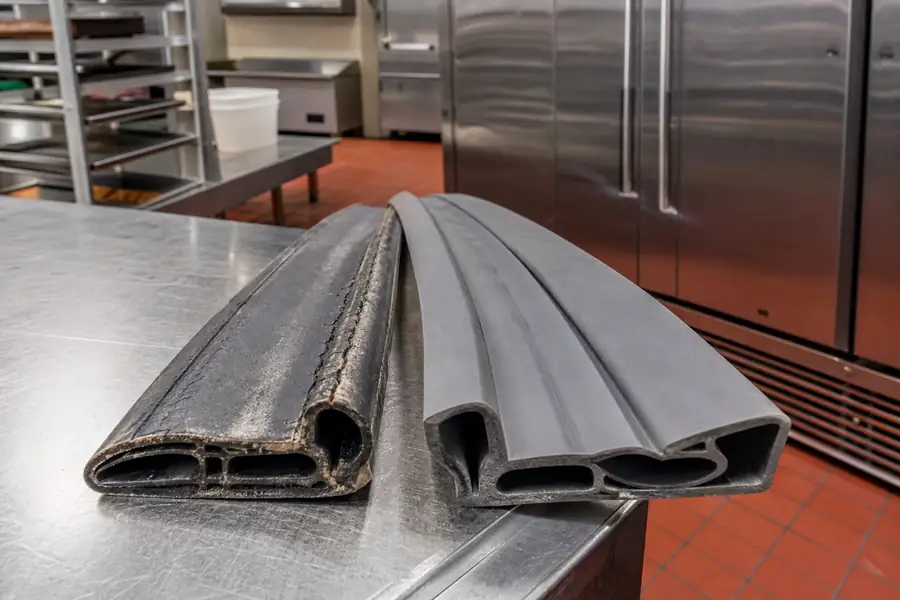
Hardening happens when the rubber compound loses the plasticizers and oils that keep it flexible, usually from age, cold cycling, and exposure to dry air. A hardened gasket feels stiff and slightly brittle and no longer flexes enough to close the small gap between door and frame on each cycle.
Compression Set
Compression set is what happens when a gasket has been held pressed against the frame for months or years until the rubber stops springing back. A gasket not compressing evenly around the whole perimeter, flat in some spots and still round in others, is usually compression set rather than damage.
Need a gasket replaced?
Call us or send your unit's model number. Free quotes across Boulder County, usually same week.
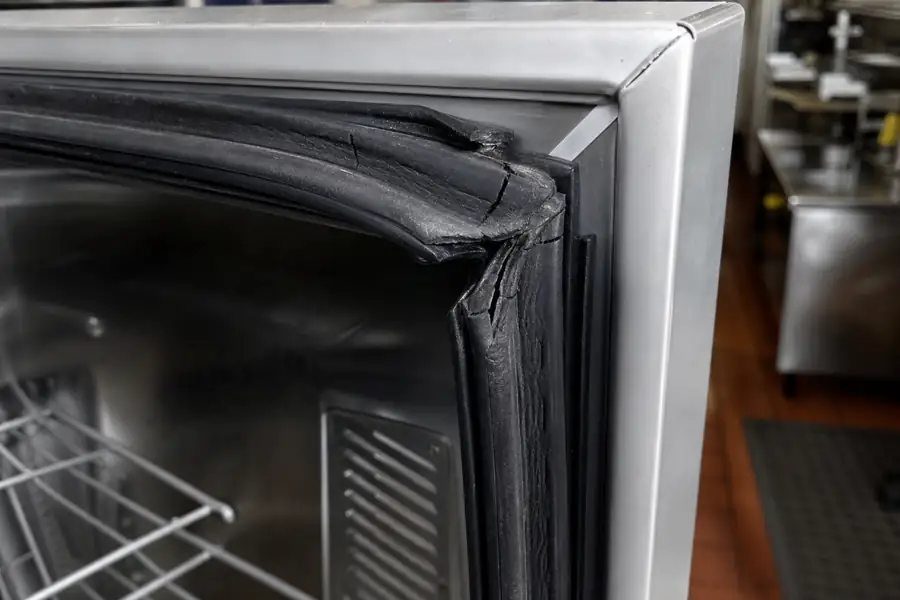
A visual check misses hardening and compression set because neither failure changes how the gasket looks, only how it behaves under pressure. The rubber is still there, still black, still attached at every corner, and still fails to seal, which is exactly why an old gasket still leaking gets blamed on the compressor instead.
Three Tests That Catch a Hardened Gasket or Compression Set
Catching hardening or compression set takes touch and light, not a glance. Three quick checks reveal both failures reliably.
The Thumb Test
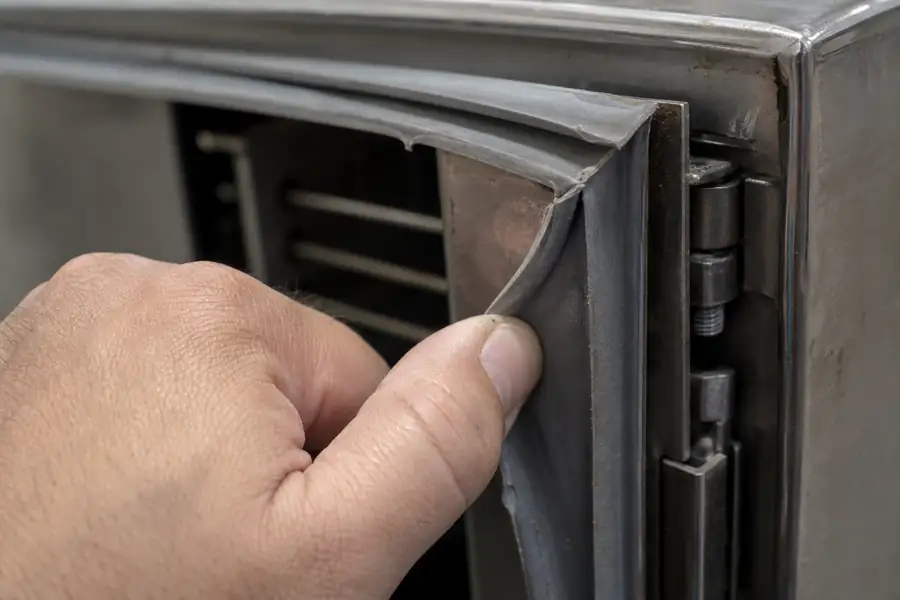
Press a thumb firmly into the gasket bulb at several points and release. A healthy gasket springs back within a second or two. A hardened gasket returns slowly and feels stiff; a gasket with compression set does not spring back at all.
Compression Width Around the Perimeter
Close the door on a strip of paper at several points, top, bottom, and both sides, then pull the paper out at each spot. Even, firm resistance everywhere means the gasket is compressing evenly. Where paper slides out easily, the gasket has lost its seal there, usually where compression set has flattened it.
Light Leak From Inside
With interior and kitchen lights on, close the door and check for daylight around the frame from inside the box. Light showing through a spot with no visible tear confirms hardening or compression set rather than physical damage.
What Accelerates a Hardened Gasket or Compression Set
Most commercial doors cycle hundreds of times a week, and a gasket three to five years old on a busy reach-in has been compressed tens of thousands of times, enough on its own to start a permanent set.
Low Humidity
Boulder County's dry climate pulls moisture and plasticizers out of gasket rubber faster than a humid kitchen would see, so a refrigerator seal gone hard shows up here on a shorter timeline than the usual age-based rule of thumb.
Cleaning Chemistry
Harsh degreasers and bleach-based cleaners strip the same oils that keep gasket rubber pliable, so a door wiped down daily with the wrong cleaner hardens faster than one cleaned with a gasket-safe product.
Being Left Compressed Against a Warm Frame
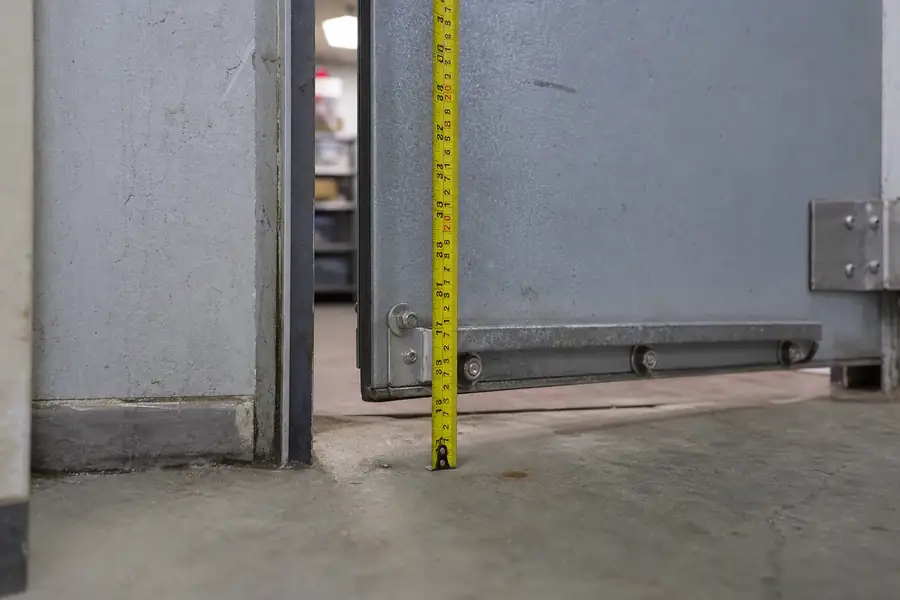
A door propped against a warped frame, or held tight by an overtightened cam-lift closer on a walk-in cooler door, keeps one section of the gasket under constant load. That section takes a compression set far sooner than the rest, which is why a seal can fail unevenly, fine on three sides and dead on the fourth.
Getting a Refrigerator Gasket Hardened by Age or Dry Air Assessed
An intact but hardened or compression-set gasket still costs a kitchen in higher compressor runtime, product temperature drift, and frost building at the exact spot where the seal has gone flat, even though nothing on the door looks broken. Getting it properly assessed means testing for hardening and compression set, not just scanning for tears, and checking the door hardware at the same time, since a closer or hinge holding the door slightly off square accelerates compression set on one side.
The process is straightforward: tell The Gasketeers the unit and brand, they measure and confirm what the door actually needs, and you get a clear, no-obligation quote before any work happens. If a reach-in or walk-in in Boulder, Longmont, or Louisville is showing frost, sweating, or a warmer-than-usual case despite a gasket that still looks fine, text photos of the door and the data plate to (970) 507-8034, or book a seal assessment through the contact page.
Frequently asked questions
How do you know if a refrigerator gasket is bad?
A visual check for tears and mold only catches part of the problem. A gasket is also bad if it fails the thumb test by not springing back, if a strip of paper pulls out with little resistance at any point around the door, or if light shows through the seam from inside with the door closed.
What is compression set in a gasket?
Compression set is a permanent change in a rubber gasket where it stays flattened in the shape it was compressed into instead of springing back to its original round profile once pressure is released. It happens after long periods of being held closed against a frame and causes leaks in gaskets that show no visible damage.
Why is my fridge warm if the seal looks fine?
A commercial refrigerator can run warm with a seal that looks fine because the gasket has hardened or taken a compression set, both of which let air leak past the door without any visible tear or gap. The compressor works harder to compensate, and product temperature can drift before the cause is traced back to the seal.
How do you test a door seal?
Press a thumb into the gasket bulb and check how quickly it springs back, close the door on a strip of paper at several points around the frame and pull to check resistance, and look for light leaking through the seam from inside the unit with the door shut. Any one of these tests can reveal hardening or compression set that a simple glance would miss.