If your walk-in cooler or freezer closes by rolling along an overhead track instead of swinging on hinges, you've run into a real gap in the published advice. Almost every walk-in door troubleshooting guide assumes a hinged door with a magnetic gasket and a cam-lift closer. A sliding walk in cooler door gasket works on a different axis, and it fails in different spots, so the checklist that fixes your neighbor's swing-door cooler won't help much on yours.
The Gasketeers handles both door styles under one walk-in cooler and freezer door gaskets service, but the diagnosis differs. This guide covers where a sliding door actually seals, where it wears first, and what a technician checks that has nothing to do with a magnet or a closer. For a quick side-by-side, see sliding vs swing walk-in door gaskets.
Key takeaways
Sliding doors seal along a vertical vinyl bulb at the leading edge and a strip at the bottom, not a continuous magnetic gasket around all four sides.
There's no cam-lift closer pulling a sliding door shut, so a gap usually points to the track or rollers, not the latch.
Wear concentrates at the leading edge and bottom guide, the two spots taking the most traffic.
The standard dollar-bill pull test for magnetic gaskets doesn't apply to sliding doors.
Bi-parting doors add a second seal edge where two leaves meet in the middle.
Two Doors, Two Sealing Problems
A swing door and a sliding door both keep cold air in, but they get there differently, so a worn seal looks and behaves differently on each. A swing door relies on a magnetic gasket running the full perimeter, pulled snug by a cam-lift closer as it latches. A sliding door has no closer and no continuous perimeter gasket. It seals by riding flush against a frame or fixed panel along one vertical edge and one horizontal edge, with pressure coming from how level and tight the door hangs on its track.
That changes where a problem shows up. On a swing door, a gap usually traces to a stretched gasket or a closer that quit pulling tight. On a sliding door, the same warm-air leak usually traces to the track, the rollers, or the bottom guide before it traces to the rubber itself.
Need a gasket replaced?
Call us or send your unit's model number. Free quotes across Boulder County, usually same week.
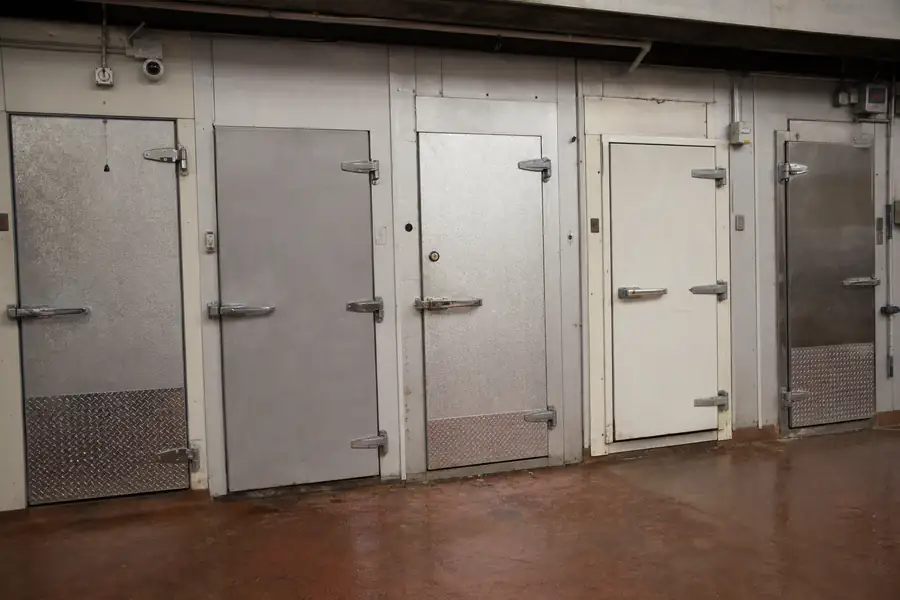
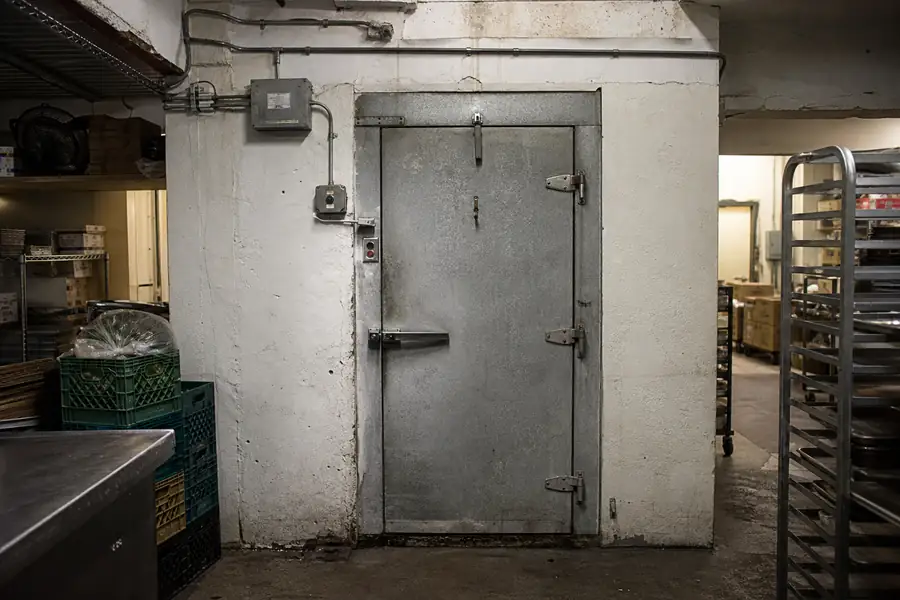
A swing door seals through a magnetic gasket snapped into a channel around its perimeter, held shut by hinges and a cam-lift closer that lifts and pulls the door tight as it swings closed. Wear tends to be even across all four sides, since the whole gasket ages at roughly the same rate. When hinges sag or a closer loses tension, that's a job for door hardware repair rather than a new gasket, even though the symptom looks identical to a bad seal.
The Sliding Walk-In Cooler Door Gasket
Where It Actually Seals
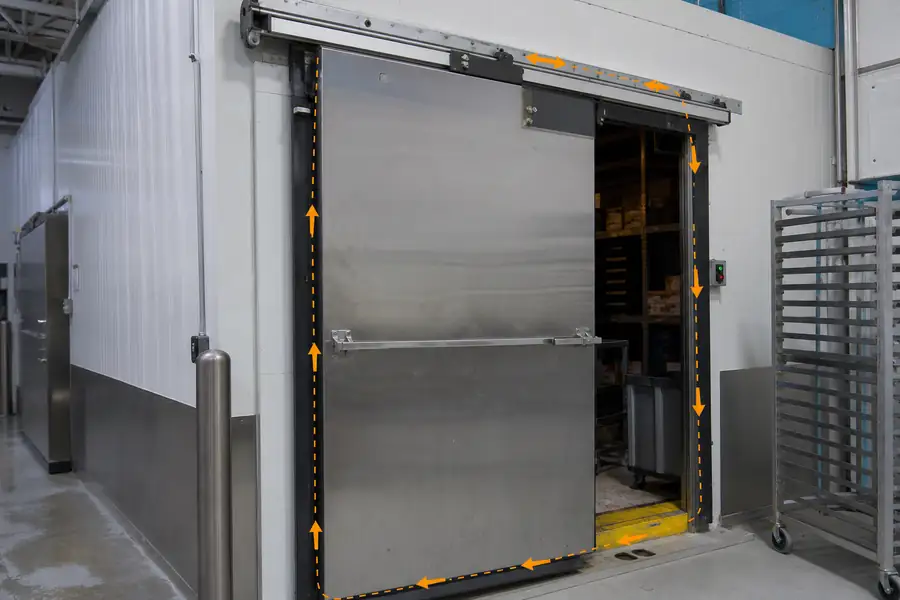
A sliding walk-in cooler door gasket runs along the leading vertical edge of the door and across the bottom, not around the full perimeter the way a swing door's gasket does. The top and trailing edge, the side that slides into the wall pocket or past the fixed jamb, rarely carry a working seal at all, because gravity and the overhead track handle that job instead.
The Leading Edge and the Strike
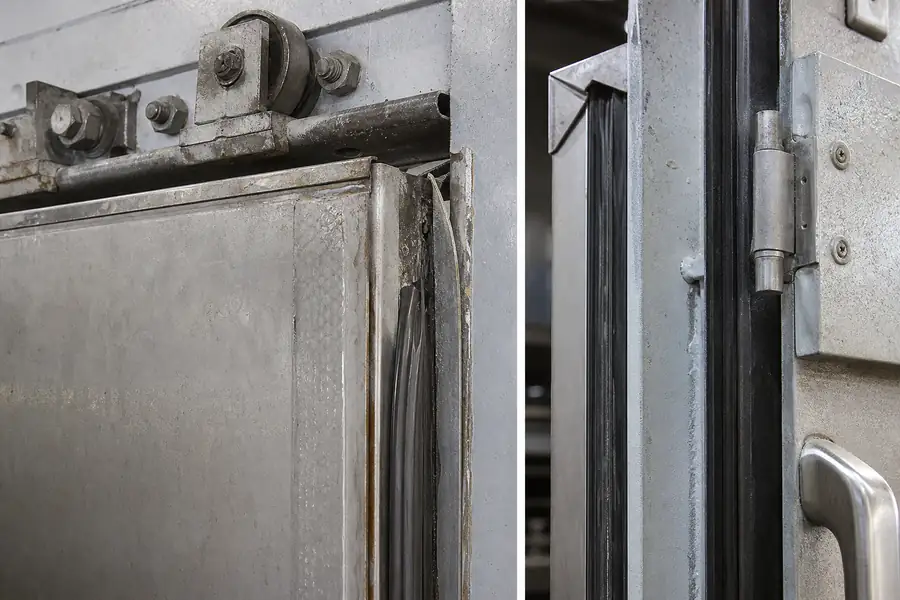
The leading edge is the vertical face that strikes the frame or fixed panel at full closed, and it's the main seal point on the whole door. It's also the edge that takes the abuse: carts, pallet jacks, and shoulders bump it all day, which flattens, tears, or peels the vinyl bulb faster than anywhere else.
The Track and the Hanger
Sliding doors hang from an overhead track on a set of rollers, and the seal only works if those rollers keep the door riding level and tight to the frame as it closes. Worn or out-of-round rollers let the door sag, opening a gap at the top or letting the leading edge strike the frame at an angle. That's a hardware problem, not a gasket problem, and it's exactly what door hardware repair addresses: squaring up the roller and track hardware before a new seal goes on.
The Bottom Guide and the Floor
A bottom guide or floor channel keeps the door from swinging side to side as it slides, and it needs to stay clear for the door to reach full closure. Ice, grit, or a bent guide plate stops the door a half inch short of closed, which looks exactly like a bad seal but is really a floor-level clearance problem.
Why Sliding Door Seals Wear Unevenly
Sliding door seals wear in one concentrated zone, not evenly around the door, because only the leading edge and bottom guide take real contact pressure. The trailing edge and top barely touch anything, so they can look fine for years while the leading edge bulb is cracked or missing chunks. That's the opposite of a swing door, where the gasket ages together on all four sides. If you only check the top and sides the way you would a swing door, you'll miss the section that's actually failing.
What You Cannot Check the Same Way
The dollar-bill pull test used on a magnetic gasket doesn't translate to a sliding door, because sealing pressure comes from track alignment, not magnetism. Check instead whether the leading edge sits flush against the strike with no gap along its full height, whether the door rolls freely and lands in the same spot every time, and whether the overhead track is clear of debris or bends that would tip the door out of plumb.
Bi-Parting Doors
A bi-parting door is a sliding walk-in door built as two leaves that meet in the middle, rather than one panel sliding past a fixed jamb. Wider walk-ins and backroom coolers, including units from Kolpak, Nor-Lake, and Master-Bilt, often use this layout when a single sliding panel would be too wide to handle. The seal problem shifts to the center: both leaves need a meeting-edge seal that lines up evenly, and if either leaf hangs out of level, the gap opens at the center instead of at one side. That meeting edge takes more cycling and impact than either leaf's outer edge, so it's usually the first part to wear.
Getting a Sliding Walk-In Door Assessed
A sliding walk-in cooler door gasket problem is easiest to diagnose with a close look at the leading edge, the track, and the bottom guide, which is hard to describe over the phone. Photos of the seal path, the overhead track and rollers, and the unit's data plate let a technician scope the job before a truck rolls. From there, the process is the same as any walk-in: tell us about the unit, get measured and quoted, and get sealed and cold again. If a sliding door at your facility is leaking cold air or won't close flush, contact The Gasketeers to get it looked at.
Frequently asked questions
Do sliding walk-in cooler doors have gaskets?
Yes. A sliding walk-in cooler door has a seal, usually a vinyl bulb strip along the leading edge and a strip across the bottom, rather than a continuous magnetic gasket around all four sides like a swing door has.
How do you seal a sliding cooler door?
A sliding cooler door seals when its leading edge sits flush against the frame and the bottom guide stays clear, which depends on the rollers and track keeping the door level as much as it depends on the seal strip itself.
Why does my sliding cooler door not close fully?
A sliding cooler door that stops short of fully closed is most often caught on a worn or misaligned track, a bent bottom guide, or ice and debris in the floor channel, not a stretched gasket. Worn rollers can also hang the door at a slight angle so the leading edge never lines up flush.
What is a bi parting cooler door?
A bi-parting cooler door is a sliding walk-in door made of two leaves that slide apart from the center and meet again when closed, instead of one panel sliding past a fixed jamb. The seal where the two leaves meet takes the most wear and is usually the first spot to fail.
Does The Gasketeers work on sliding walk-in doors?
Yes, sliding walk-in doors are part of the walk-in cooler and freezer door gasket work The Gasketeers does in Boulder County, alongside swing and bi-parting doors.