What Boulder County Inspection Records Say About Cold Holding
Boulder County publishes its restaurant inspection records. We read them. Here is what the cold holding results show, and where a door seal fits into that picture.
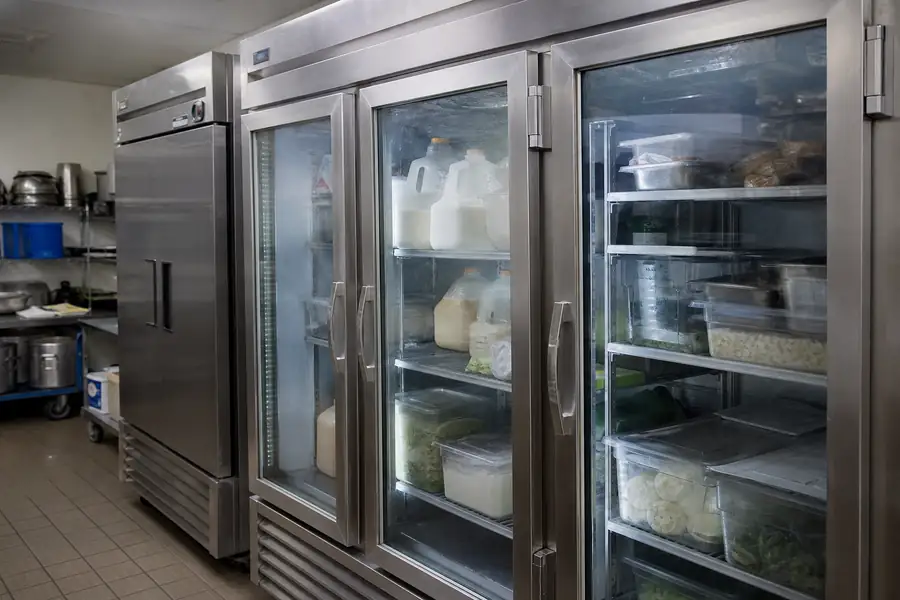
Boulder County publishes its own restaurant inspection records, and anyone can read them. We did. The question we wanted answered was simple: how often does cold holding, the requirement that potentially hazardous food stay at or below 41°F, show up as a problem in local kitchens, and where does equipment condition fit into that picture.
The Gasketeers, the Boulder County gasket specialists behind thegasketeers.com, provide gasket service across Boulder County and see the same pattern in kitchens week after week: a case or a walk-in that won't hold temperature, and a door that doesn't seal tight. Public inspection data lets us check whether that pattern shows up at the county level too.
Boulder County's inspection records are public and go back to 2013.
Cold holding is one specific, named item on the inspection form, not a vague catch-all.
The dataset has no "gasket" or "door seal" violation code. None exists.
A worn door gasket is a mechanical cause that can sit behind a cold holding citation, though the records can't prove that link directly.
Boulder County Publishes Its Own Restaurant Inspection Records
Boulder County Public Health posts retail food establishment inspection results on Colorado's open data portal, data.colorado.gov, covering roughly 1,800 distinct facilities with records stretching from 2013 through 2025.
Each inspection lists the facility, the date, and a set of standardized items the inspector checked, marked in or out of compliance. Cold holding is one of those items, alongside hot holding, handwashing, and others unrelated to refrigeration equipment.
Need a gasket replaced?
Call us or send your unit's model number. Free quotes across Boulder County, usually same week.
The records span 2013 to 2025 and include every licensed retail food establishment the county inspects, from full-service restaurants to grocery delis and school cafeterias. That range gives more than a decade of inspection history to work from, not a single snapshot year.
The Cold Holding Item and How It's Scored
Cold holding is scored as in compliance or out of compliance at the time of inspection, based on a measured food temperature, not an estimate. We counted only this item, excluding hot holding, cooling logs, date marking, and any item unrelated to cold food temperature, since mixing those in would blur the picture.
What Boulder County Restaurant Inspection Cold Holding Data Shows
Cold holding appears as a cited item across multiple years of Boulder County's inspection history, not as an isolated event tied to one season or one type of kitchen.
We are finalizing the exact counts against the full re-pulled dataset so every number here is reproducible from the same source. The pattern itself is already clear: cold holding is a recurring finding, not a rare one, and it shows up across restaurant types, not just in older kitchens.
The Honest Limitation: There's No Gasket Violation Code
Boulder County's inspection form has no code for a worn door gasket, a dragging hinge, or a closer that won't pull a door shut. That category simply does not exist in the data, and no honest reading of it can claim otherwise.
Why Door Seal Problems Surface as Temperature Findings Instead
A failing seal does not get its own line item because inspectors check outcomes, not causes. A warm case or a walk-in running above temperature shows up as a cold holding violation regardless of whether the compressor, the thermostat, or the door is the reason. The record tells you the food was too warm. It does not tell you why.
Where a Door Seal Fits in the Picture
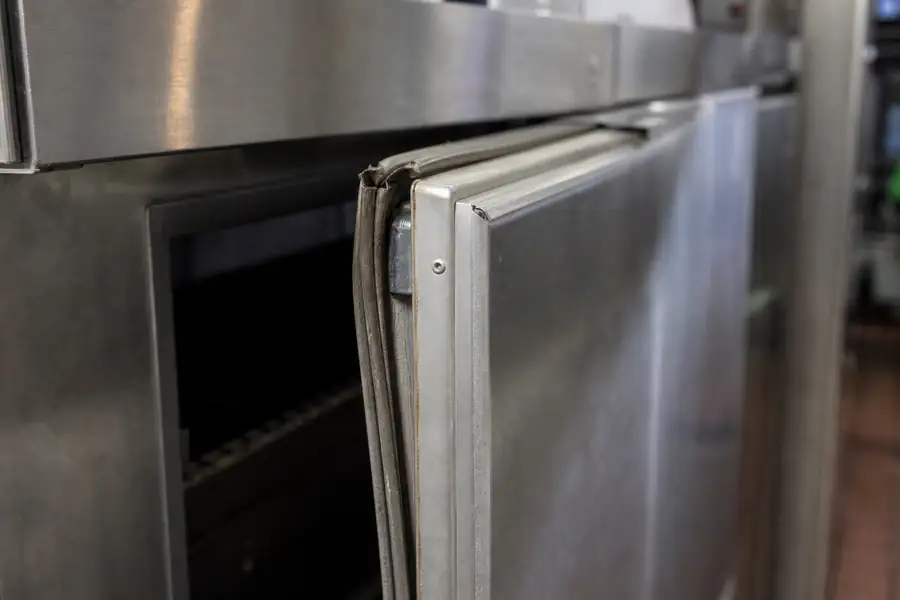
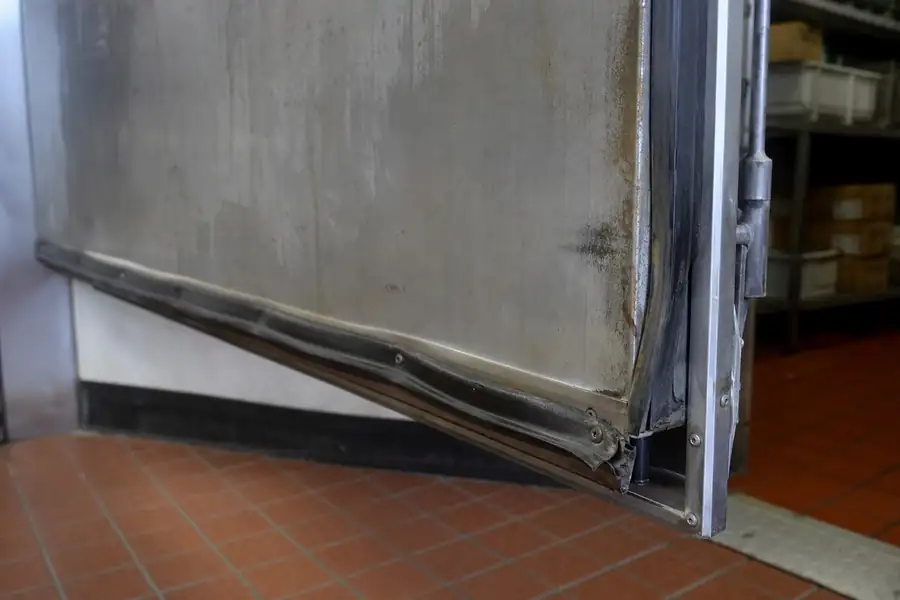
A door gasket that no longer seals lets warm, humid kitchen air leak into a cooler or freezer constantly, forcing the compressor to run far more than it should just to hold temperature. In busy kitchens with doors opening dozens of times a shift, that leak point matters more, not less. None of this means every citation traces back to a seal; compressor problems, overloaded units, and thermostat drift cause the same symptom. But a worn gasket is one of the most common, least expensive causes, and the one most kitchens never check before an inspection.
What the Food Code Actually Requires of Equipment Condition
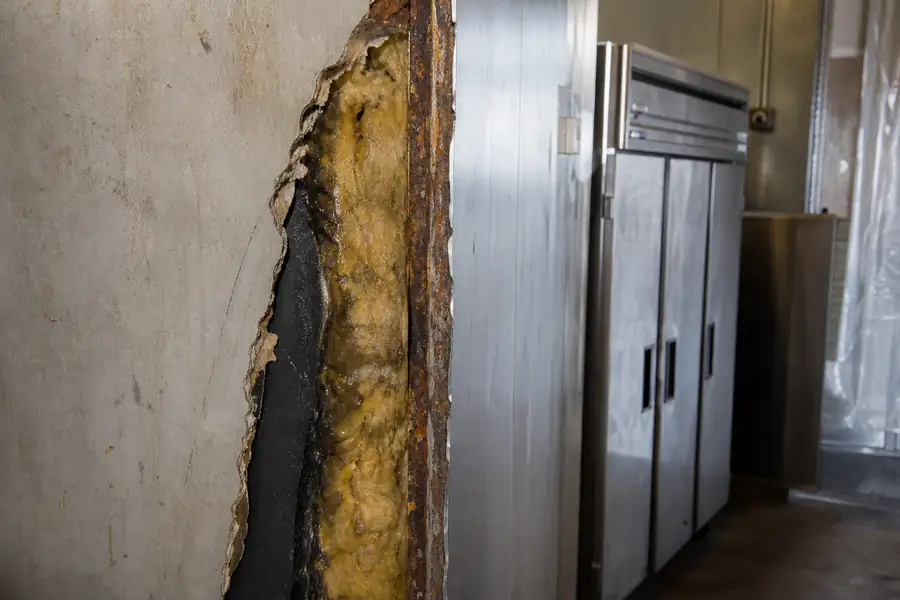
Food code frameworks require refrigeration equipment to actually hold food at safe temperatures, and they require that equipment, including doors, gaskets, and hardware, be maintained in good repair so the unit can do that job. A cooler with a torn gasket that still happens to hold temperature on a slow day is not a fix; it is a unit one busy shift away from a citation.
Checking Your Own Doors Before Your Next Inspection
A few checks take less time than reading this article and can catch a problem before an inspector does.
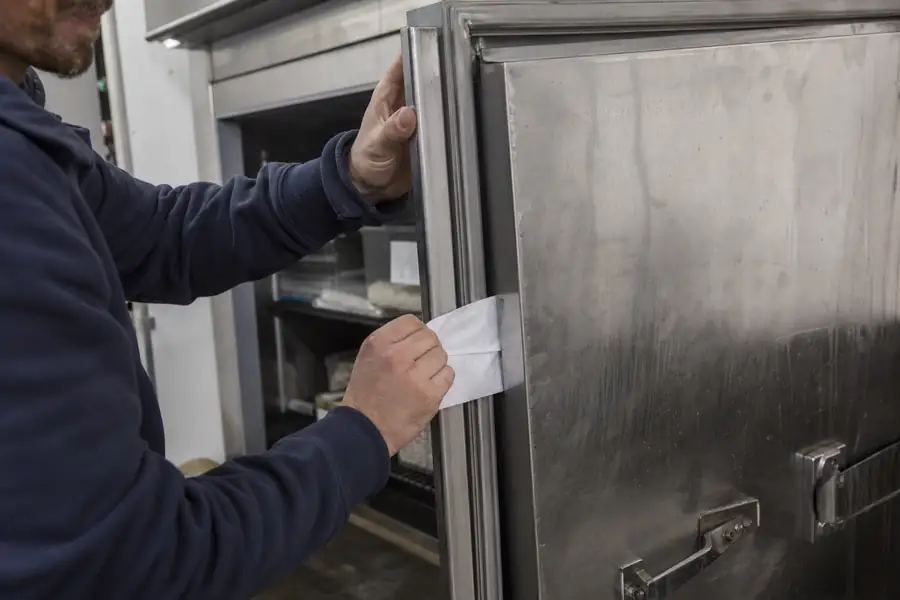
Close the door on a dollar bill at several points around the frame; if it pulls free easily, the seal is not gripping.
Look for visible gaps, cracks, or flattened rubber along the gasket, especially at the corners and hinge side.
Check for condensation or frost around the door frame, a sign warm air is getting past the seal.
If any of those show up, it is worth having the door, hinges, and closer looked at together, since a misaligned door can wear out a new seal just as fast as an old one. The Gasketeers cover the full range of door hardware and gasket work through their gasket and door hardware services, and a straightforward way to start is through the contact page with your unit's brand and symptoms on hand.
Method and Source, in Full
Source: Boulder County retail food establishment inspection records published on Colorado's open data portal, data.colorado.gov, reviewed July 30, 2026, covering roughly 1,800 facilities with records from 2013 through 2025. Query: all inspection line items coded as cold holding, excluding hot holding, cooling logs, date marking, and unrelated items, counted by inspection visit. The exact counts and query logic will be published alongside the finalized results so every figure above can be checked against the same public source. A shareable summary of this Boulder County cold holding inspection data breakdown, including the chart, will be posted once that verification pass is complete.
Frequently asked questions
How often do restaurants fail health inspections in Colorado?
Failure rates vary by county and year, and Colorado does not publish one statewide figure. Boulder County's own public inspection records are the most reliable way to see how often local kitchens get cited, and cold holding shows up repeatedly across years in that dataset.
What is a cold holding violation?
A cold holding violation is an inspector's finding that potentially hazardous food was being held above the safe cold temperature threshold at the time of the inspection. It is scored as a measured fact, based on a thermometer reading, not an estimate or a visual check.
Where can I see Boulder County restaurant inspections?
Boulder County Public Health's inspection records are published on Colorado's open data portal at data.colorado.gov, where they are searchable by facility and date. The records go back to 2013 and list each inspection's results by item, including cold holding.
Can a bad gasket cause a health violation?
A worn door gasket does not appear as its own violation on an inspection form, but it can be the mechanical reason a unit runs warm enough to fail the cold holding check. Warm kitchen air leaking past a torn or flattened seal forces the compressor to work harder and makes it easier for food inside to drift above a safe temperature during a busy shift.