Refrigerated Drawers That Stick, Frost Up or Run Warm
Drawer seals work in a way door seals do not, and they fail differently. Why chef base and undercounter drawers stick, frost at the back and lose temperature.
Quick answer: A refrigerated drawer not sealing is almost never a magnet problem like a cooler door. The gasket gets compressed by the slide mechanism pulling the pan into the frame instead. Sticking, frost at the back, and warm product usually trace back to slide wear or a gasket that has swollen, flattened, or lifted off its track, because once the slide travel changes, the seal never gets the same squeeze twice.
Most calls to The Gasketeers start with a reach-in or walk-in door. Drawers get overlooked because the symptoms look different: a pan that will not push flush, ice forming only along the back wall, or a drawer reading a few degrees warmer than the cabinet above it. All three share one cause: gasket versus slide, pulling against each other instead of together.
Why a refrigerated drawer seals differently from a door
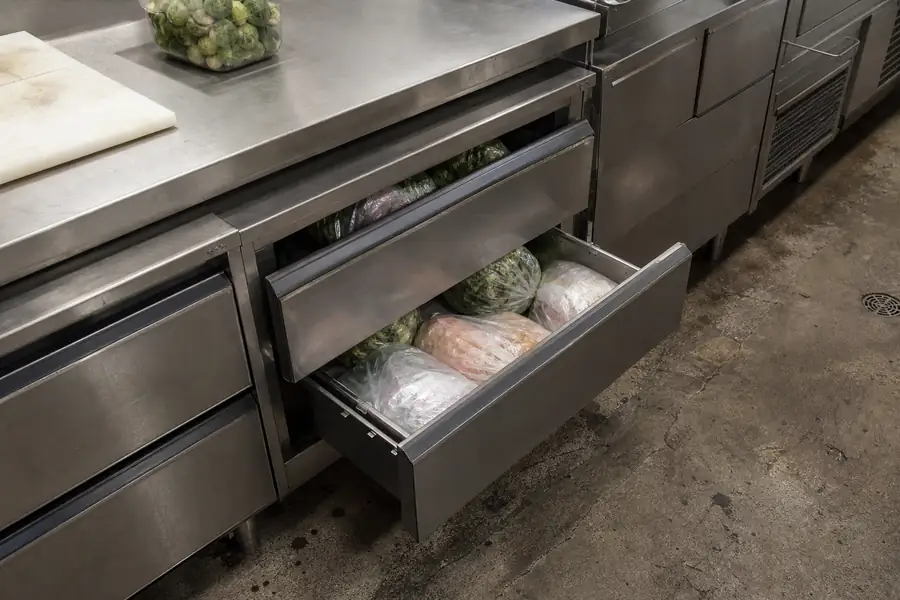
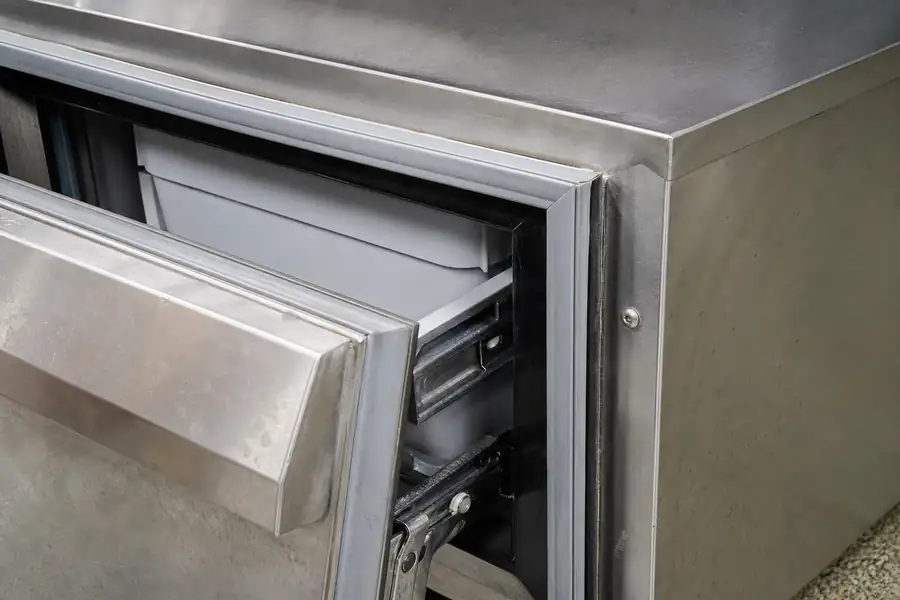
A refrigerated drawer does not hold its seal shut with a magnetic strip or a spring hinge the way a cooler door does. No magnet, no hinge. The gasket sits on the front flange of the drawer pan, and the slide mechanism, the track and roller assembly the pan rides on, pulls that flange into the cabinet frame and compresses the seal. That's closer to how a filing cabinet drawer closes flush than how a refrigerator door swings shut.
Because the seal only compresses correctly if the slide travels the same distance every time, any wear in the slide changes how hard the gasket gets pressed. That is a different failure path than a door gasket, which fails mainly through magnet loss or a sagging hinge. A technician checking a refrigerated drawer gasket has to look at the slide and the seal together, not the gasket on its own.
Need a gasket replaced?
Call us or send your unit's model number. Free quotes across Boulder County, usually same week.
A drawer that sticks or drags before it clicks shut usually means the slide and the gasket are fighting each other instead of working together.
Slide wear
Slide wear is the most common reason a refrigerated drawer sticks. The rollers or bearings wear unevenly over years of use, and the drawer stops traveling square into the cabinet. Instead of compressing the gasket evenly across its width, the pan binds against one corner of the seal and drags the rest of the way shut.
A seal that has swollen or lifted
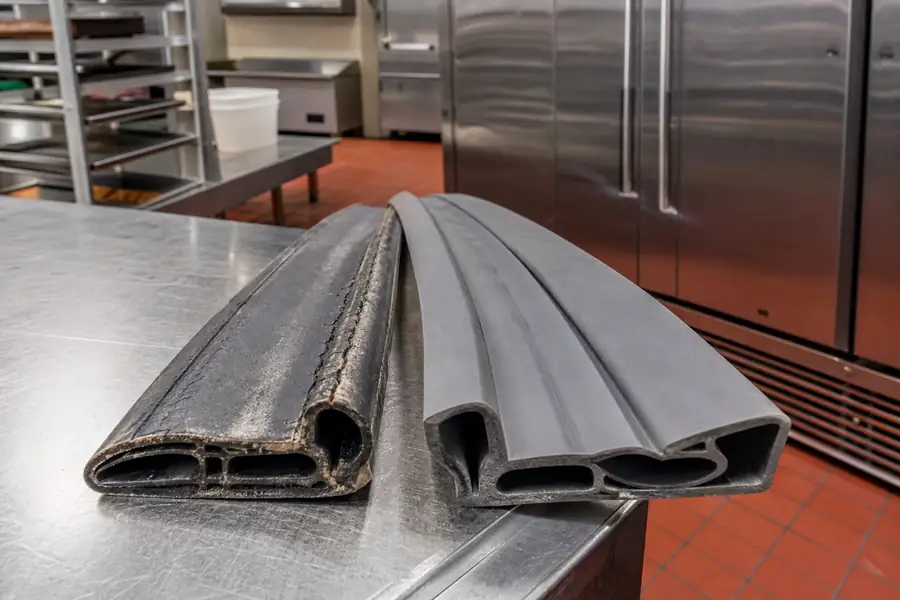
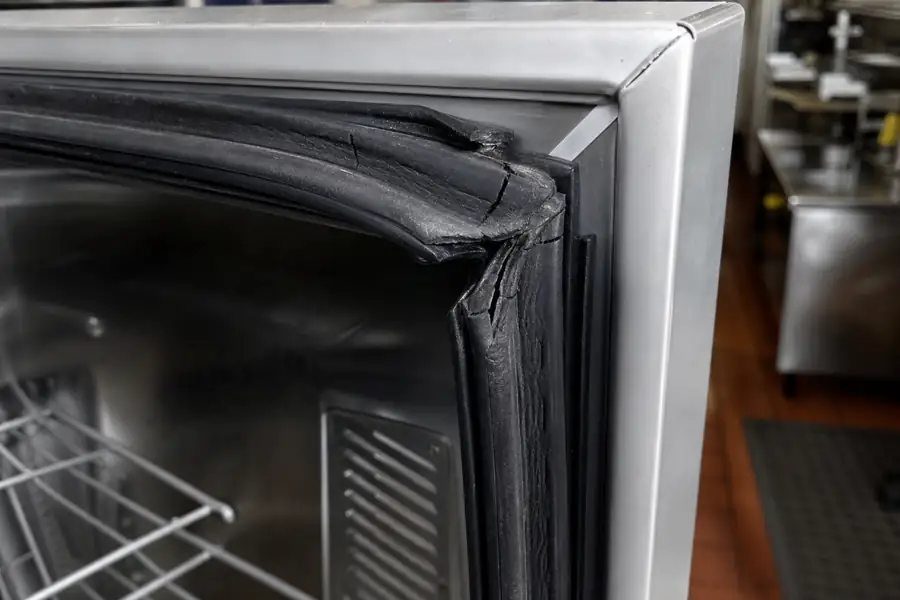
A gasket that has swollen, gone flat, or lifted off its track creates the same drag from the other direction. Cleaning chemicals and food oils soften gasket material over time, and a swollen seal no longer springs back into shape between closings. A flattened or lifted gasket catches on the frame edge instead of sliding past it, which is the drag an operator feels right before the drawer finally seats. This shows up across chef bases and undercounter drawers from Delfield, Randell, True, Silver King, and Continental alike.
Frost at the back of the drawer
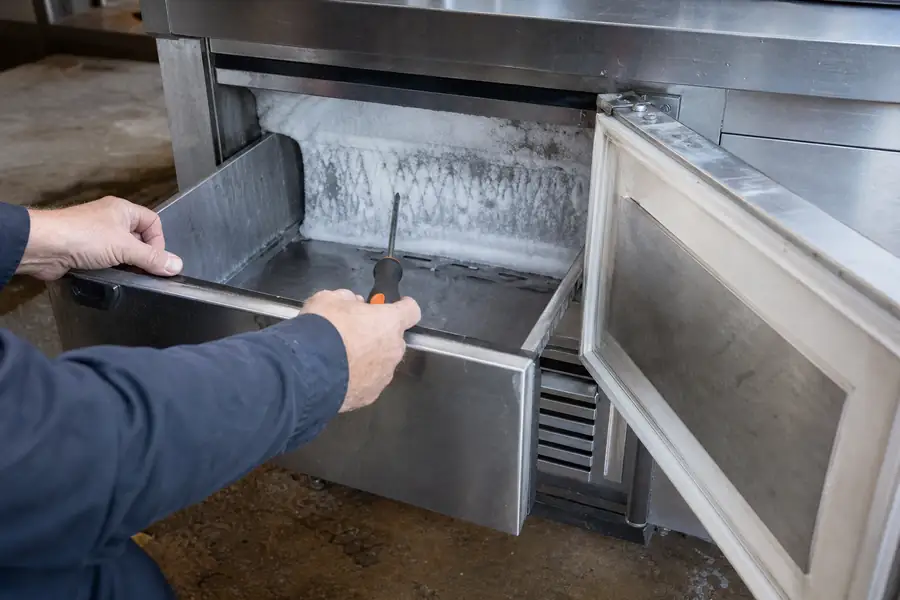
Frost that builds along the back wall of a drawer, rather than across the whole pan, points to a gap at the rear of the seal, not a defrost cycle problem. The slide pulls hardest at the front of the pan, near the handle, where a cook's pull lands strongest, so the back of the gasket gets the least compression to begin with. A worn or misaligned gasket opens its first real gap there, letting warm, humid kitchen air sneak in and frost on contact with the coldest surface in the drawer. That pattern is one of several refrigerated drawer problems showing up across Boulder County kitchens, and it rarely resolves on its own.
The drawer runs warmer than the cabinet
A refrigerated drawer that reads several degrees warmer than the cabinet above it is pulling in warm air around the seal on every compressor cycle. That's a steady drain, not a one-time event. Each time the compressor kicks on, cold air gets drawn out past the gap and replaced by warmer kitchen air, so the average temperature in that drawer creeps up even without visible frost. A gap narrow enough to exchange air but not wide enough to show obvious ice is the hardest version of this problem to spot without a thermometer in the drawer itself.
What line abuse does to drawer seals
Line abuse wears out a drawer gasket faster than ordinary use because the seal absorbs direct impact instead of a gentle magnetic close. Cooks shut drawers with a knee or a hip during a rush, set hot pans down on the gasket edge, and drag wet pans across the seal, leaving oils and sugars that break down the material over time. Propping a drawer open with a towel during prep does the same kind of damage, holding the gasket compressed at an odd angle until it loses its shape.
Chef bases and the heat problem underneath
A chef base sits under a griddle or range, so its drawer gasket works against radiant heat that a stand-alone reach-in drawer never has to deal with. A chef base is a low-profile refrigerated drawer unit built specifically to double as the stand for a piece of cooking equipment. The heat from above softens gasket material faster than normal kitchen temperatures would, and a compressor that is already running longer to fight that heat has less margin left to cover a sealing gap on top of it.
Replacing a drawer seal without pulling the unit
Most refrigerated drawer gaskets can be replaced without pulling the whole unit out of its cabinet. The pan comes out on its track, the old gasket is removed from the channel around the front flange, and a new seal cut to the same profile is pressed into place before the pan is reseated. Whether the slide itself also needs adjustment, or just the gasket, is something a technician confirms once the drawer is open and the wear pattern is visible.
Getting a drawer set assessed
The fastest way to tell whether a refrigerated drawer not sealing is a gasket problem or a slide problem is to have it looked at in person. Tell The Gasketeers the brand and model off the data plate, and a technician can measure the seal and the slide interface directly rather than guessing from a description over the phone. Text photos of the gasket and the slide to (970) 507-8034, or contact The Gasketeers for a no-obligation assessment before a sticking drawer turns into a warped track.
Frequently asked questions
Why is my refrigerated drawer sticking?
A sticking refrigerated drawer usually means the slide mechanism is worn and no longer travels square, or the gasket has swollen or lifted off its track and is catching on the frame. Both problems make the drawer bind before it seats, and both tend to get worse the longer they go unaddressed.
Do refrigerated drawers have gaskets?
Yes, refrigerated drawers have a gasket mounted on the front flange of the drawer pan, but it seals by compression from the slide mechanism rather than by a magnetic strip like a cooler door. The gasket still needs to be intact and properly seated for the drawer to hold temperature.
Why is there frost in my chef base?
Frost inside a chef base drawer, especially along the back wall, usually means warm kitchen air is getting past a worn or misaligned gasket at the point where it compresses least. Chef bases are more prone to this because the heat from the cooking equipment above softens the gasket material faster than a stand-alone drawer unit would see.
How do you replace a drawer gasket?
A technician slides the pan out on its track, removes the old gasket from the channel around the front flange, and presses a new seal cut to the same profile into that channel before reseating the pan. Most drawer gaskets can be swapped this way without pulling the entire unit out of its cabinet.