Gasket Materials Compared: PVC, TPE, Santoprene, Silicone and EPDM
Five materials, five service lives. What each commercial gasket compound handles, where it fails first, and which ones belong in a freezer versus a prep table lid.
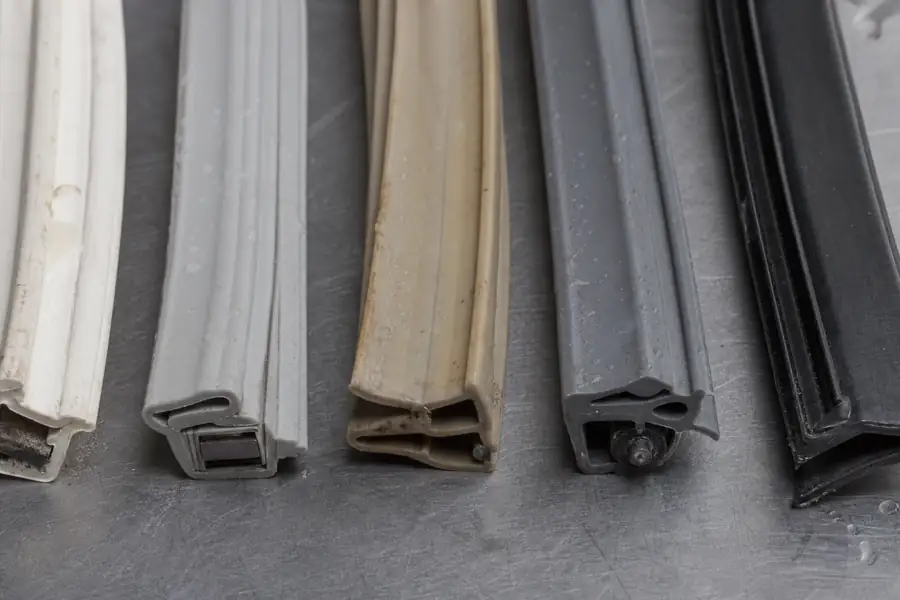
Two quotes land on your desk for the same walk-in cooler door, and the only real difference is the material inside the gasket. PVC, TPE, Santoprene, silicone and EPDM all look like the same black or white strip until you know how each one ages. The Gasketeers fabricate in all five, and the callbacks we get tell us exactly which compound belongs on which door. This guide breaks down commercial gasket materials by how they actually fail in a working kitchen, not by spec-sheet trivia, starting with the full lineup of gasket materials we work in.
Why the compound matters more than the price
The price gap between two gasket quotes almost always comes down to the compound, not markup. PVC costs less to produce than silicone or Santoprene, but it also gives out sooner in a deep freezer or under heavy door traffic.
Every gasket does the same job: press against the frame's magnet strip and hold cold air inside the box. What separates the five materials is how they handle thousands of open-and-close cycles, sustained cold, and the grease and sanitizer chemistry that hits a kitchen door every shift. Matching material to duty, not price alone, is the real decision.
Need a gasket replaced?
Call us or send your unit's model number. Free quotes across Boulder County, usually same week.
PVC (polyvinyl chloride) is the most common gasket compound in foodservice because it's inexpensive to fabricate and holds a crisp profile at moderate temperatures. It ships standard on a lot of reach-in coolers, prep tables and glass merchandisers.
Where it performs
PVC does its best work in reach-ins, prep table lids, and display cases running standard refrigerator temperatures rather than deep-freezer cold. It handles moderate cycling well on typical cam-lift door hardware.
How it fails: hardening, shrinkage, cracking
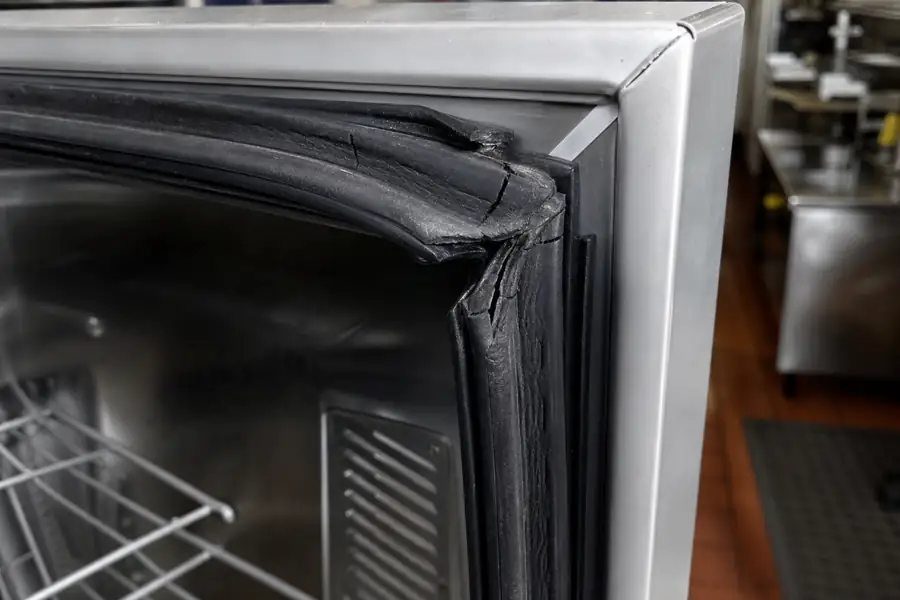
Cold and time make PVC brittle. It hardens, shrinks slightly at the corners, and eventually cracks along the fold where the door closes hardest, letting frost creep in even though the rest of the seal still looks fine. Dry Front Range air speeds this up, since PVC loses plasticizer faster in low humidity than it does in a coastal kitchen.
TPE
TPE (thermoplastic elastomer) is a step up from PVC in flexibility and cold tolerance, which is why it shows up more on glass display doors and heavy-traffic reach-ins. Instead of hardening, TPE tends to lose its memory over time, meaning the gasket stops springing back to full profile after repeated compression. It can look intact while it no longer seals tight against the frame, which reads to an operator as "the door won't close right" rather than an obvious crack.
Santoprene and TPV
Santoprene is a thermoplastic vulcanizate (TPV) that combines much of silicone's flexibility with a lower fabrication cost. It's a common upgrade for walk-in cooler and freezer doors opened dozens of times a shift, because it holds its shape better than PVC or TPE under constant cycling. When it fails, it's usually fine surface cracking across the flex point rather than the corner splits typical of PVC, and the seal can still look serviceable while it's already leaking warm air.
Silicone
Silicone is the most temperature-stable of the common commercial gasket materials, which is why it turns up on the coldest, hardest-working doors: walk-in freezers and equipment that swings between deep cold and warm cleaning cycles. It stays flexible at low temperatures longer than PVC, TPE, or Santoprene.
Its weak point is mechanical, not thermal. Silicone resists stiffening but tears more easily than a firmer compound if a door gets slammed or caught on a rolling rack, and it doesn't self-heal a nick the way a heavier rubber can.
EPDM and rubber compounds
EPDM (ethylene propylene diene monomer) is a synthetic rubber known for standing up to grease, cleaning chemicals, and UV exposure better than the plastic-based compounds. It's a common choice on older walk-in units and doors near a fryer or grill station where degreaser use is heavy. EPDM's failure mode is gradual surface hardening and loss of elasticity at the mounting flange, the strip that tucks into the door's retaining channel, so the gasket starts working loose at the corners first.
The magnetic insert is a separate component
The magnet strip inside a gasket is a separate part with its own lifespan, and it fails independently of the surrounding compound. A gasket can flex fine while the magnet inside has weakened enough that the door no longer pulls itself shut against the frame. That's why a brand-new gasket sometimes doesn't fix a door that won't seal: if the magnet is the actual problem, replacing the rubber or vinyl around it changes nothing.
Matching material to duty
The right commercial gasket material depends on three things: how cold the unit runs, how often the door opens, and what it gets cleaned with. Getting any one of those wrong is what sends an operator back to us within a year asking why a "brand new" gasket already looks tired.
Material
Best For
Cold Tolerance
Typical Failure
PVC
Reach-ins, prep tables, display cases
Moderate
Hardening, corner cracking
TPE
Glass doors, high-traffic reach-ins
Moderate-good
Loss of compression memory
Santoprene (TPV)
High-cycle walk-in doors
Good
Surface fatigue cracking
Silicone
Walk-in freezers, deep cold
Best
Tearing from impact
EPDM
Heavy grease or chemical exposure
Good
Flange hardening, loosening
Low temperature
Sustained sub-freezing duty favors silicone or Santoprene over PVC, since both stay flexible longer in continuous cold instead of stiffening after a season or two. A walk-in freezer that's cracked two gaskets in three years usually had the wrong compound the first time.
High cycle count
Doors that open dozens of times a shift, like a busy glass merchandiser or a line-side walk-in, wear out on compression cycles more than cold alone. TPE and Santoprene generally hold their spring-back longer under that traffic than standard PVC.
Chemical exposure
Heavy degreaser and sanitizer use near a fryer line or dish pit calls for EPDM or silicone over PVC, since plastic-based compounds tend to soften or discolor faster with repeated chemical contact. Mention your cleaning routine when you request a quote so the fabrication matches your kitchen.
What we fabricate in and why
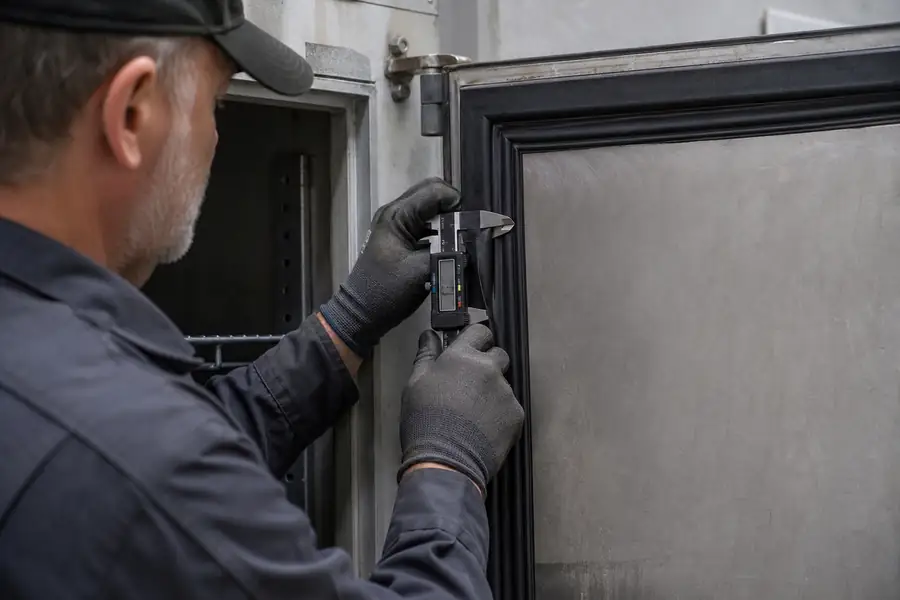
The Gasketeers fabricate replacement gaskets in PVC, TPE, Santoprene, silicone, and EPDM, matched to the unit and the kitchen it sits in rather than defaulted to whatever the original manufacturer used decades ago. A discontinued gasket, or a brand that no longer exists, doesn't mean the door is unfixable.
When a unit is old or obsolete and the exact factory part is gone, we work from the profile of the existing gasket to fabricate a matching replacement instead of pushing a full unit swap. Our custom and obsolete unit gaskets service covers True, Traulsen, Hoshizaki, and other major commercial refrigeration brands still sealing doors in Boulder County kitchens.
If two quotes on your desk list different materials, ask which one suits your unit before you sign off, not after the new gasket already looks tired. Contact The Gasketeers for a clear, no-obligation quote, and keep this commercial gasket materials comparison handy for the next bid that lands on your desk.
Frequently asked questions
What are commercial refrigerator gaskets made of?
Commercial refrigerator gaskets are made from PVC, TPE, Santoprene (a TPV rubber), silicone, or EPDM, shaped into a snap-in or screw-in profile with a magnetic strip inside. The compound used depends on the unit type, its operating temperature, and how often the door opens.
Is silicone better than vinyl for a gasket?
Silicone handles sustained cold better than PVC (vinyl) and stays flexible longer in freezer conditions, but it tears more easily under rough handling. PVC costs less and works fine on moderate-temperature units like reach-ins and prep tables, so which is "better" depends on what the door does all day.
What temperature can a PVC gasket handle?
There's no single number that applies to every PVC formulation, but as a general rule PVC performs well on reach-in coolers, prep tables, and display cases running standard refrigerator temperatures, and starts to stiffen and crack sooner in sustained deep-freezer conditions. If a unit runs consistently cold, a Santoprene or silicone gasket typically outlasts a PVC one in that same door.
Which gasket material lasts longest?
No single material wins in every kitchen, since the compound that lasts longest on a freezer door isn't necessarily the best fit for a high-traffic display case. Silicone and Santoprene generally outlast PVC and TPE in cold, high-cycle applications, while EPDM tends to outlast plastic-based compounds where heavy grease and cleaning chemicals are the main stress.