How Often to Inspect a Seal, by Equipment Type and How Hard It Works
A prep table lid opened 400 times a shift does not need the same inspection interval as a back-bar cooler. Intervals set by duty cycle rather than by calendar.
Ask five facility managers how often to inspect refrigerator gaskets and you'll get one answer: whenever the cleaning crew gets to it, usually once a month or once a quarter. That interval might work for a walk-in cooler and still be wrong for the prep table three feet away. A prep table lid gets lifted and dropped hundreds of times in a single lunch rush, while a back-bar cooler might open twenty times all day. One schedule for every door in a kitchen means the busiest seals get checked too late and the slowest ones get checked for no reason.
Duty cycle, not the calendar, drives how often a gasket needs checking.
Very high-cycle doors like prep table lids and line drawers need a weekly look.
Moderate-cycle doors like walk-in doors and glass merchandisers can run on a monthly check.
Low-cycle doors like back-bar and storage reach-ins can usually go a full quarter between checks.
Harsh cleaning chemicals, dry winter air, and a door that won't self-close shorten every interval on this list.
Why calendar intervals get this wrong
A flat monthly or quarterly check misses the doors that fail first because it ignores how many times each door actually opens. A prep table lid lifted for every ticket during lunch and dinner service can flex past 400 times in a single shift. A back-bar reach-in behind a slow bar might see twenty openings in that same stretch. Over a month that gap turns into tens of thousands of cycles on one door and a few hundred on the other, and the same fold line in a PVC gasket, the flexible vinyl seal running around the door frame, work-hardens and cracks far sooner under the heavier load.
You don't need a tally counter to estimate duty cycle. Look at how many tickets touch that door per hour, how many staff reach into it per shift, and whether it sits on the line, in prep, or in back storage. A door propped open through service barely wears the seal at all, but it loads the compressor with warm air for as long as it sits open, a separate cost from seal wear.
The Gasketeers offer gasket services by equipment type for exactly this reason: a one-size interval, like a one-size gasket, doesn't survive contact with a real kitchen. How long a gasket itself lasts under each duty cycle is a related but separate question, covered in the companion piece on commercial gasket lifespan. This page is about how often to look at the seal, not how long it holds up before it needs replacing.
Need a gasket replaced?
Call us or send your unit's model number. Free quotes across Boulder County, usually same week.
How often to inspect refrigerator gaskets, by duty cycle
The table below sorts each door into a duty-cycle tier once you've estimated its daily cycles. These intervals come from what Gasketeers technicians observe across inspections in Boulder County kitchens, reviewed and signed off by a lead technician. They're field-based recommendations, not manufacturer specifications, and a technician visit can tighten or loosen them for your specific equipment.
Duty cycle
Typical equipment
Estimated daily cycles
Recommended inspection interval
Very high
Prep table lids, line reach-in drawers
300-500+
Weekly
High
Reach-in doors on the cook line
100-250
Every 2 weeks
Moderate
Walk-in doors, glass merchandisers
20-80
Monthly
Low
Back-bar, undercounter, storage reach-ins
5-20
Quarterly
Very high cycle: prep table lids and line drawers
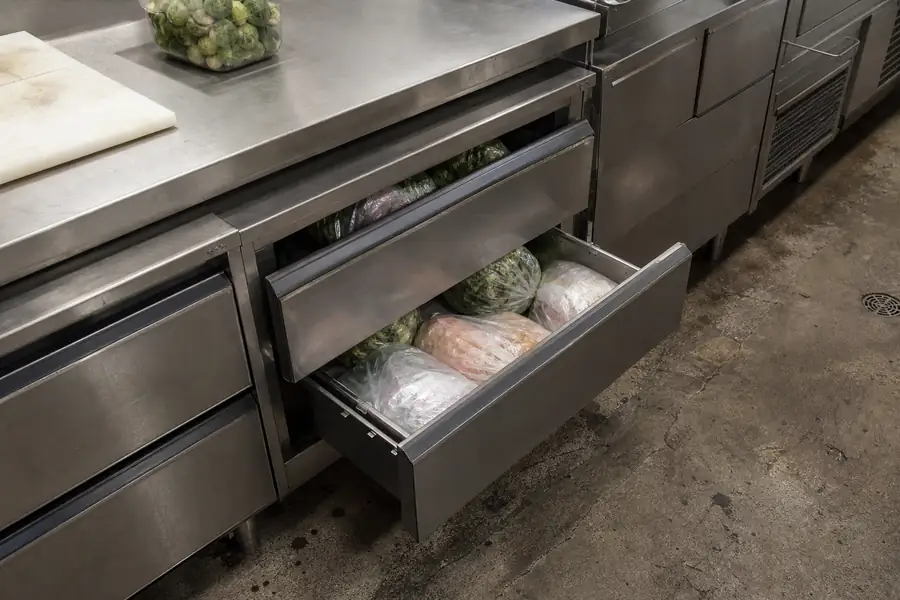
Prep table lids and line drawers take the hardest beating of any seal in a commercial kitchen, so a weekly look makes sense. The lid gasket on a sandwich or pizza prep unit gets slammed, leaned on, and splashed with everything from vinaigrette to hot sauce, which wears the seal faster than a door that simply swings shut. The Prep Table Gaskets The Gasketeers fabricate are sized for that abuse, but even a correctly fitted seal benefits from a weekly check for flattening along the fold, cracking at the corners, and a lid that no longer drops flush.
High cycle: reach-in doors on the line
Reach-in doors on the cook line open almost as often as prep lids during a rush, just without the direct splash contact, so a two-week interval usually catches problems in time. Check the same signs as above, plus whether the handle and latch still pull the door fully shut.
Moderate: walk-in doors, glass merchandisers
Walk-in doors and glass merchandiser doors see steady, moderate traffic rather than rush-hour spikes, so a monthly check is usually enough. Fogging on a merchandiser's glass or frost along a walk-in door frame between visits means the interval needs to move up, not wait for the next scheduled look.
Low: back-bar, undercounter, storage reach-ins
Back-bar coolers, undercounter units, and storage reach-ins open the least of any door in the building, so a quarterly check usually catches wear in time. Low cycle doesn't mean no wear: a back-bar unit near a heat source or direct sun ages faster than the cycle count alone would suggest.
What shortens every interval
Three conditions push every interval on this list shorter, regardless of duty cycle.
Cleaning chemistry
Harsh sanitizers and degreasers applied directly to the gasket surface break down PVC faster than duty cycle alone predicts. If a station wipes strong chemical concentrate across the seal instead of around it, move that door's interval up a tier.
Dry air
Boulder County's dry winter air pulls moisture out of PVC gaskets faster than a humid climate would, and a drying seal cracks sooner than the table above predicts. Doors near an exterior wall or a frequently used back door feel this first.
Doors that do not self-close
A door that doesn't swing shut on its own stays compressed against a misaligned frame or drags across the sweep every time it's used, wearing the seal faster than the cycle count suggests. That's usually a hinge or closer problem riding along with the gasket, not the gasket failing on its own.
Building this into a maintenance calendar
The simplest way to make these intervals stick is pairing each duty-cycle tier with a routine the kitchen already runs. Tie the weekly prep-lid check to an existing weekly deep clean, and the monthly walk-in check to whatever walkthrough already happens that often. Whoever handles that routine can glance at the fold lines and corners while already at the door, instead of a separate gasket-only visit getting scheduled and skipped.
Booking a survey instead of guessing
The fastest way to get intervals that match your actual kitchen, instead of the general ranges above, is a whole-kitchen seal survey. Tell The Gasketeers which units you run, and a technician walks every door, notes the duty cycle, and hands back one schedule instead of five separate guesses.
To set up a survey or get a no-obligation quote on a seal that's already showing wear, contact The Gasketeers.
Frequently asked questions
How often should commercial refrigerator gaskets be inspected?
Most commercial refrigerator gaskets need a visual check somewhere between weekly and quarterly, depending on how many times the door opens each day. High-traffic doors like prep table lids and line reach-ins hold up best on a weekly look, while low-traffic doors like back-bar coolers can usually go a full quarter.
How long do commercial gaskets last?
Lifespan depends on the same duty-cycle factors that set the inspection interval, plus exposure to heat, cleaning chemicals, and dry air. A gasket on a high-cycle door wears out far sooner than an identical gasket on a low-cycle door, even if both were installed the same day.
What is a preventive maintenance schedule for refrigeration gaskets?
A preventive maintenance schedule for refrigeration gaskets assigns an inspection interval to each door based on how hard it works, then folds the check into a routine the kitchen already runs, such as a weekly deep clean or a monthly walkthrough. The goal is catching cracking, flattening, or gaps before they show up as frost, sweating, or a warm case.
Do prep table gaskets wear faster?
Yes. Prep table lids open far more often than almost any other refrigeration door in a commercial kitchen, sometimes several hundred times per shift, and that constant lifting, dropping, and splash contact wears the seal faster than a door that simply swings shut a few dozen times a day.