No Data Plate, No Part Number: Identifying a Discontinued Cooler
The plate is painted over, the manufacturer is gone and the part number is dead. Here is how a discontinued unit still gets an exact gasket, without guesswork.
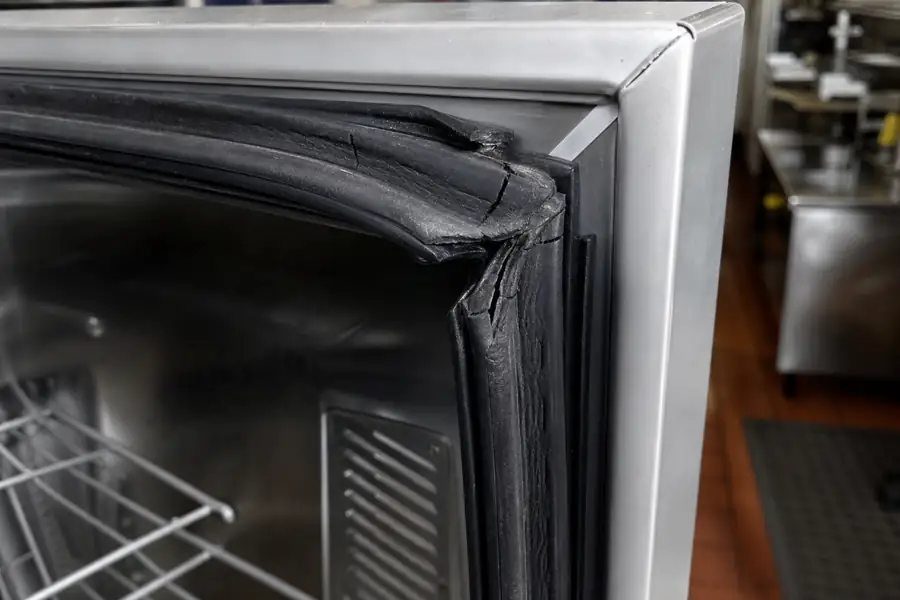
Your walk-in still holds temperature and the compressor still cycles the way it should, but the gasket around the door is cracked, and the data plate you need to order a replacement is painted over, rusted through, or was never legible to begin with. Every supplier you call asks for a model or part number that no longer exists. Finding a gasket for a discontinued refrigerator does not actually depend on any of that information. The Gasketeers build custom seals from the gasket itself, not from a catalog lookup, which is why age or a defunct manufacturer rarely rules out a repair.
A missing or unreadable data plate does not mean a gasket cannot be made.
The retaining channel and the old seal's cross-section carry the fitting information, not a part number.
Secondary tags on the compressor, frame, or kick plate sometimes survive after the main plate doesn't.
A defunct manufacturer has no effect on fabrication, since the process works from the physical seal, not a parts department.
Even a fully missing gasket can still be matched from direct measurements of the door and channel.
When There's No Part Number for a Discontinued Refrigerator
Plenty of commercial units still running in Boulder County kitchens were installed before searchable serial numbers were standard, and others came from manufacturers that closed or dropped a product line years ago. On both kinds of equipment, the data plate is often the first thing to go: painted over during a remodel, corroded near a floor drain, or wiped down with degreaser every night until the print disappears entirely. Search a part number that no longer exists and every supplier site returns nothing. That's the point where most operators assume the whole unit is done for, and where custom and obsolete gasket fabrication actually starts.
Need a gasket replaced?
Call us or send your unit's model number. Free quotes across Boulder County, usually same week.
A dead data plate is not always the end of the identification trail. A few other spots on the unit sometimes carry information the main plate lost.
Behind the door, on the frame, under the kick plate
Some manufacturers riveted a second, smaller tag behind the hinge side of the door, along the inside edge of the frame, or under the removable kick plate at the base of a reach-in. These secondary tags see less grease and light than the front plate and occasionally survive decades after it wears away.
Compressor and component plates
The compressor almost always carries its own manufacturer tag, since it is a separate part bolted into the cabinet rather than stamped by the cooler's original builder. A Tecumseh or Copeland tag will not identify the cooler itself, but it can help date roughly when the unit was built, which narrows down what era of seal profile to expect.
Original paperwork and old service stickers
An old invoice, warranty card, or a sticker left by a previous repair company sometimes lists a make and model the unit's own tag no longer shows. Health department stickers occasionally note equipment details too, filed away in a folder nobody has opened in years.
Why None of That Is Actually Necessary
None of that detective work is required to get a working gasket. A fabricated seal is built from the gasket itself and the channel it sits in, not from a model number typed into a supplier's search bar. For readers who want the measuring steps in more detail, this companion guide on measuring the gasket profile directly covers how to check a seal without any factory information at all. The identification work above is useful for other reasons, mainly dating the equipment and general condition, but it changes nothing about how a replacement gasket gets made.
Working From the Gasket Instead of the Catalogue
A custom-fabricated gasket for a discontinued refrigerator starts with the physical parts still on the door, not a parts catalogue. Three things get checked before anything gets cut.
The retaining channel
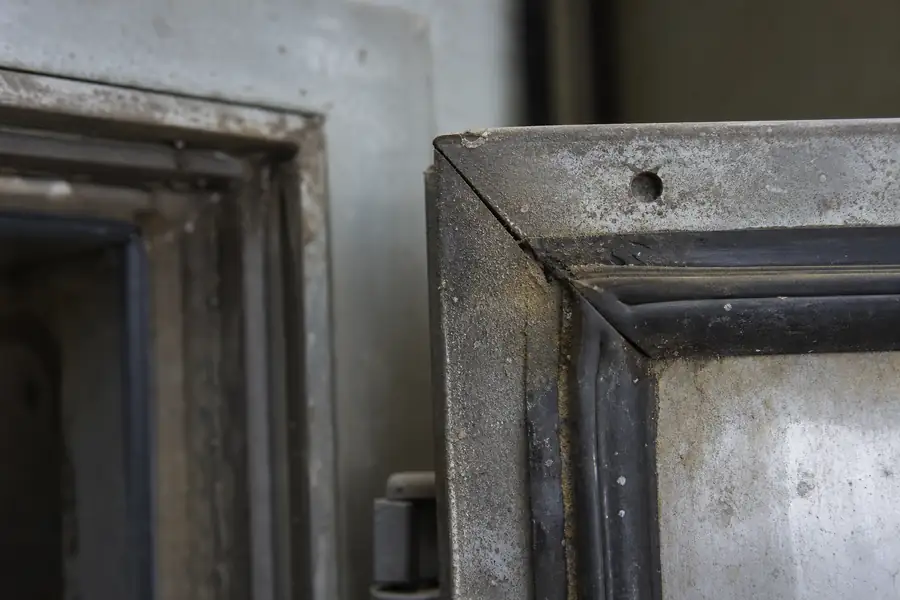
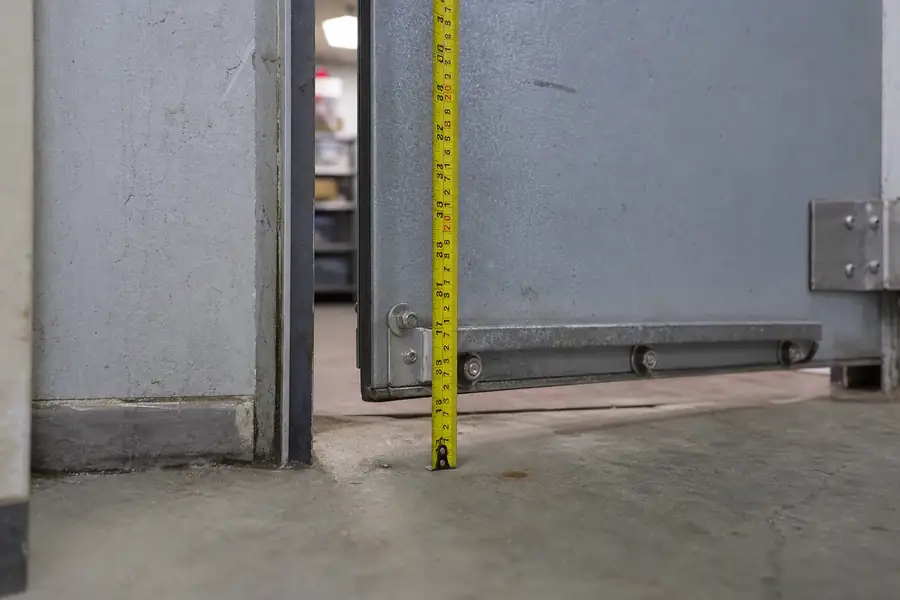
The channel is the groove running around the inside of the door frame that holds the gasket's flange in place. Its width and depth set the size of bead a new gasket needs, and that measurement stays the same regardless of who built the cooler or when. Two units from completely unrelated manufacturers can share the same channel dimensions.
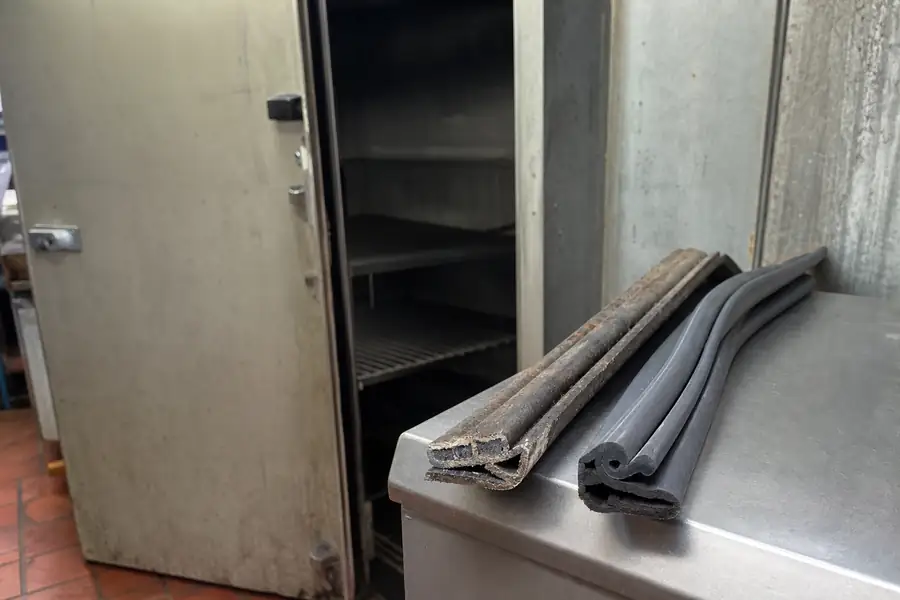
A section cut from the old seal
A six-inch piece cut from a flat run of the old gasket, even one that is stiff, cracked, or partly torn, gives an exact cross-section to reproduce. This beats guessing from a catalog picture, because the actual rubber or vinyl shows every rib, hollow, and magnet channel exactly as it was made. Before a custom run gets cut, it is worth a quick check against The Gasketeers' own gasket catalogue in case the profile happens to match a common OEM-spec size already in stock, which is faster and cheaper than a custom order.
The mitre and the corner form
Corners get joined differently across manufacturers, some welded, some mitred at an angle, some molded as one continuous piece. Matching the corner form matters as much as matching the flat profile, because a gasket cut or glued at the wrong angle bunches or gaps right where the door needs the tightest seal.
What Can Be Matched, and What a New Gasket Won't Fix
A surviving sample, even a damaged one, is usually enough to reproduce the seal profile, magnet configuration, and corner form of a gasket for an old commercial fridge. What a new gasket cannot fix is the door, frame, or hinge underneath it. A warped door skin, a bent frame, or a hinge worn loose from years of use still needs its own repair, separate from the seal.
Usually matched from an old sample
Not fixed by a new gasket
Seal profile and rib pattern
Warped or bowed door panel
Magnet strength and placement
Bent or racked door frame
Corner mitre or weld style
Worn hinge, closer, or sweep
What Happens If the Old Gasket Is Gone Entirely
If nothing usable is left of the original gasket, a technician measures the door opening and the retaining channel directly on site instead of working from a sample. That means checking channel width and depth, door height and width, and rough corner style, then cross-referencing those numbers against standard profile shapes before cutting anything custom. It takes a little longer than working from a section of the old seal, but it still does not require a data plate, a part number, or a manufacturer that is still in business.
Sending Us a Unit Nobody Else Will Touch
For a cooler that has stumped every supplier you have called, the process for getting a gasket for a discontinued refrigerator does not change from what happens on any newer unit. Tell us what the equipment is and what is wrong with the door, send a few photos of the frame and whatever is left of the old gasket through the contact page, and you will get measurements confirmed and a straightforward quote back before anything gets ordered. A discontinued reach-in in a Longmont cafe or a decades-old walk-in in a Louisville brewery kitchen gets the same fabrication process as a unit still under warranty, because the seal itself, not the badge on the door, is what actually gets matched.
Frequently asked questions
Can you get gaskets for discontinued refrigerators?
Yes. A gasket for a discontinued refrigerator gets fabricated from the physical seal profile and retaining channel on the unit itself, not from a manufacturer's parts list. The Gasketeers regularly build replacement gaskets for equipment whose original maker no longer exists.
How do I find a gasket with no part number?
Start by checking for secondary tags behind the door, under the kick plate, or on the compressor, since those sometimes survive even when the main data plate does not. If nothing turns up, a technician can measure the door opening, the retaining channel, and a section of the old gasket directly to build a match without any part number at all.
What if my refrigerator manufacturer is out of business?
A defunct manufacturer does not change how a replacement gasket gets made. Fabrication works from the physical channel and seal profile still on the door, which stays the same whether the original company is still operating or closed years ago.
Can a custom gasket be made from an old one?
Yes, and it is usually the fastest way to get an exact match. A six-inch section cut from the old gasket, even a stiff or cracked one, shows the exact rib pattern, thickness, and magnet layout needed to fabricate a new seal that fits the same channel.