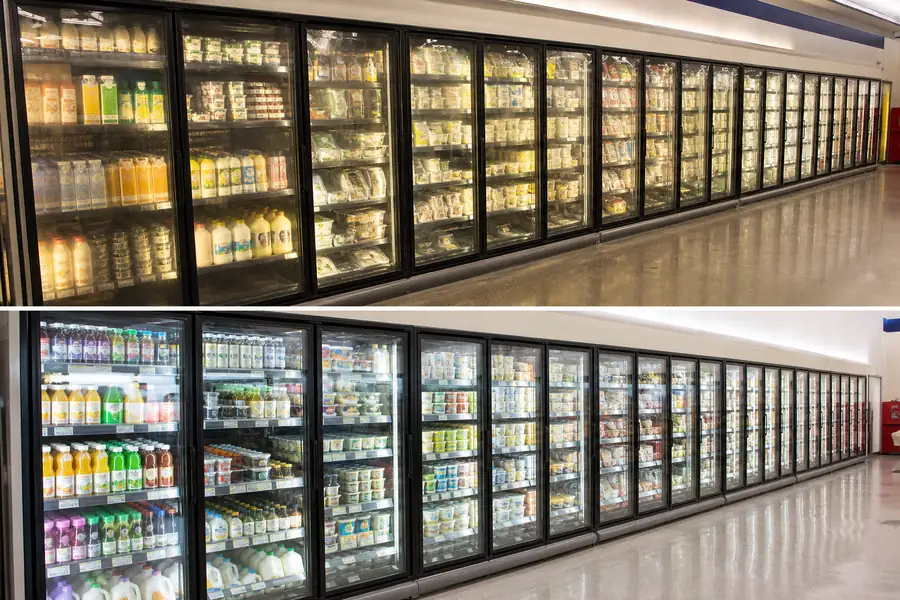
A Boulder County grocery with a run of fogging glass doors: how we surveyed twelve doors, what varied between them, and how the work was staged around trading hours.
A grocery facility manager rarely calls about one bad seal. Usually it is a whole row of glass display doors across dairy, produce, and deli fogging up at once, cases running a few degrees warm, and a health inspection on the calendar. That is what brought The Gasketeers into a Boulder County grocery store for a glass display door gasket replacement covering twelve doors in a single scheduled visit. The work fell under the shop's glass display door gaskets service, and this case study walks through how a multi door gasket replacement actually gets surveyed, staged, and finished around a store that never fully closes.
Key points from the job:
Twelve glass display doors were surveyed and resealed in one visit, not twelve separate service calls.
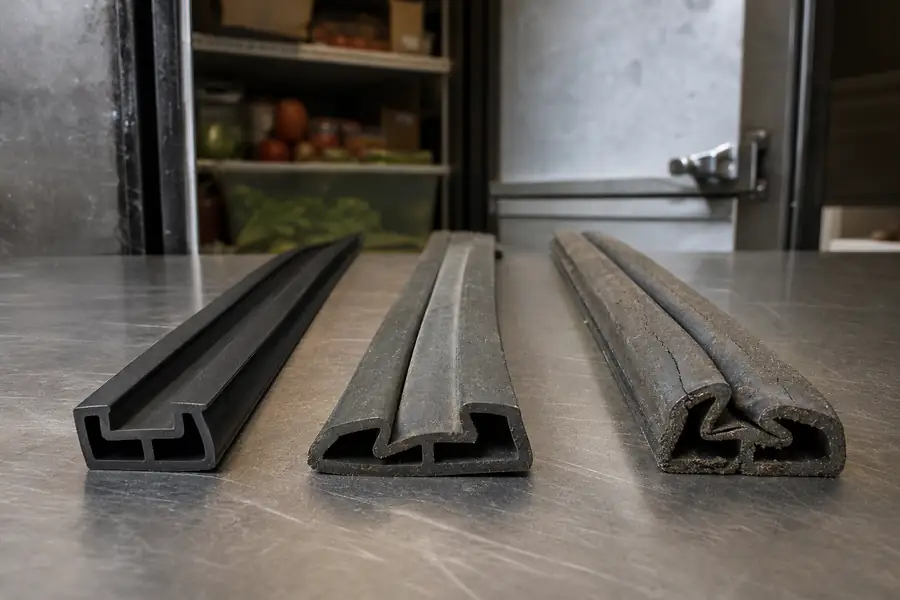
No two doors had identical gasket wear or profile, even where the cases looked matched from the front.
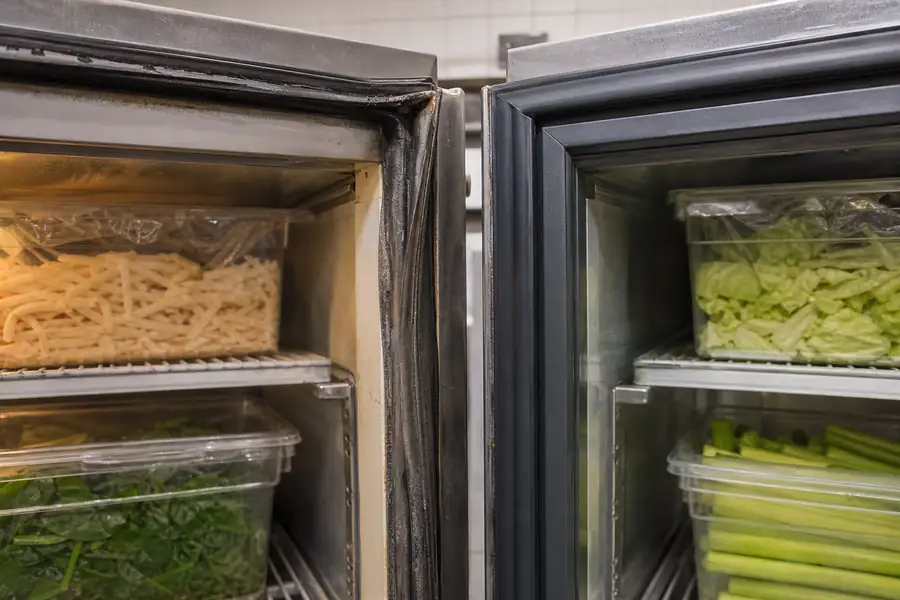
Fogging and warm product across the row traced back to worn and mismatched door seals, not the compressors.
Work was staged section by section so cases stayed stocked and accessible during trading hours.
Replacement gaskets were matched door by door rather than ordered as one universal size.
The Walk-Through Before a Glass Display Door Gasket Replacement
A multi door gasket replacement starts with a full walk-through of every door, not a phone estimate. The crew measured each frame, checked hinge alignment and closer tension, and logged gasket condition door by door across the produce, dairy, and deli sections. Glass display doors take more abuse than a walk-in or reach-in seal ever will, since shoppers open and close them dozens of times an hour, and that constant flexing wears the gasket lip faster at the pull side than at the hinge side.
Glass door cooler fogging happens when a worn or gapped gasket lets warm, humid store air slip past the seal and hit the cold glass, condensing on contact. Several doors in the row were fogging along the bottom third, which is where a sagging or shrunk gasket usually loses its grip first. A couple of others were running warm at the top shelf even though the case itself was cycling normally, which pointed straight back to the seal instead of the refrigeration system.
Need a gasket replaced?
Call us or send your unit's model number. Free quotes across Boulder County, usually same week.
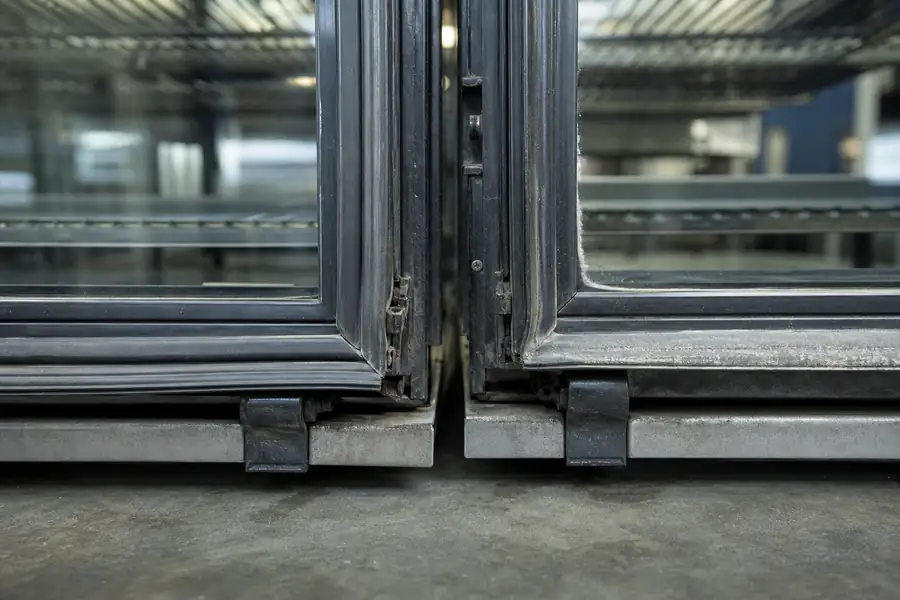
Even inside one continuous merchandiser row, gasket wear and profile varied door to door. Some of the units were original True glass display doors installed together, but others had been swapped in over the years as individual doors failed, so the row was really several different frame depths and seal profiles wearing the same paint job. That is common in grocery stores that have been open a decade or more: doors get replaced piecemeal, and nobody tracks which model went where.
A grocery merchandiser door seal that fits one case in the row will not always fit the case two doors down, even if a shopper cannot tell them apart from the aisle. Ordering one gasket size for all twelve doors on a job like this almost guarantees a few bad fits.
Staging a Multi Door Gasket Replacement Around Store Hours
A twelve-door glass display door gasket replacement gets staged in sections, not shut down all at once, so the store keeps selling product through the job. The crew worked a few doors at a time, moved product where needed case by case, and sequenced the row so open shelves and working doors were always available to shoppers and stocking staff. Doors along the deli case were handled early, ahead of the lunch rush, and the dairy and produce sections followed once that section was clear.
This staging is the difference between a manageable project and a store that loses selling space for a day. It also means the facility manager is not choosing between the repair getting done and the doors staying usable during business hours.
Parts Fitted and Turnaround
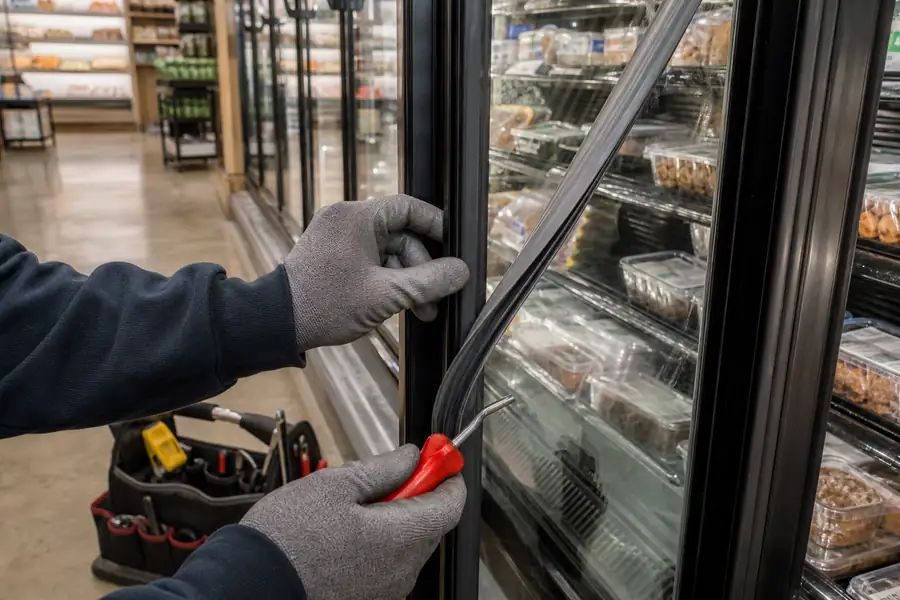
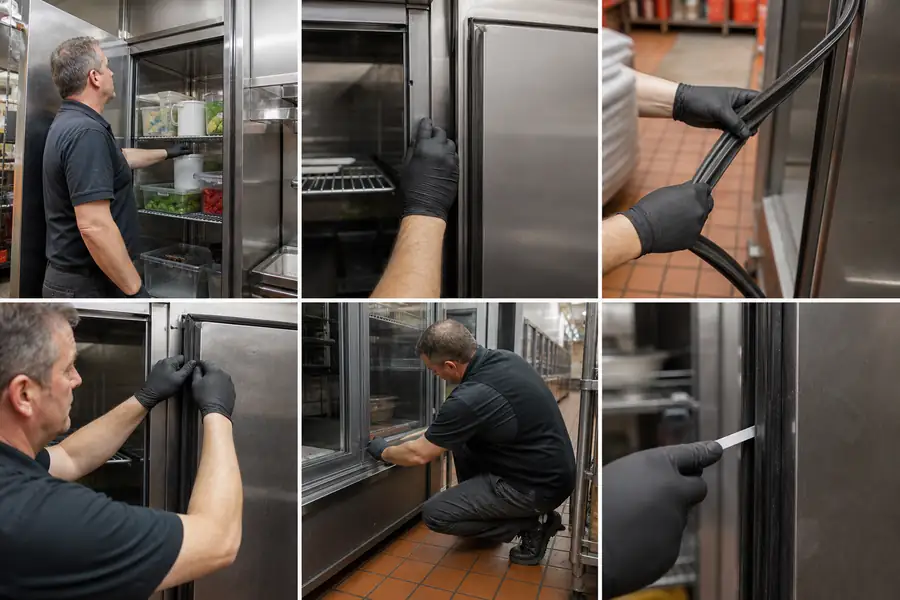
Each door got a gasket matched to its measured profile, not a generic universal size pulled off a shelf. Some of the units took a standard snap-in gasket, which channels into a groove around the door frame without screws; a few of the older or mismatched doors needed a screw-in profile instead, since the frame channel had worn or been altered by a previous repair. Hinges and closers were checked on every door too, since a gasket seals correctly only if the door is still swinging square and latching with even pressure across the whole frame.
The full twelve-door run was completed within the scheduled visit window, with the crew moving section by section rather than treating the row as one job to finish all at once.
What a Glass Display Door Gasket Replacement Means for a Full Row
Fixing gaskets across a whole run in one visit gets every case back to holding temperature at the same time, instead of chasing warm spots door by door over several weeks. That matters more in a grocery store than almost anywhere else, since one warm door in a merchandiser row can quietly spoil product long before anyone notices a temperature swing on a single unit. The full survey sheet, before and after photos, and the door-by-door variation found on this job are documented in the grocery glass door row case study, with store details withheld at the operator's request.
Facility managers running a similar row of aging or mismatched glass display doors can request the same kind of walk-through survey. Contact The Gasketeers to get a multi-door run surveyed and priced as one project rather than a string of separate service calls.
Frequently asked questions
How is a multi door gasket replacement quoted differently from a single reseal?
A single door gets measured and quoted on its own, but a multi door job gets surveyed as a full run first so every door's frame and gasket condition is logged before any pricing goes out. That survey is what catches the variation between doors that look identical from the sales floor, which keeps the quote accurate instead of guessed from one sample door.
Why did doors in the same row need different gaskets if the cases look identical?
Grocery merchandiser rows are often built up over years, with individual doors replaced one at a time as they fail rather than all at once. That leaves a row where the cabinets match but the door frames underneath came from different manufacturing runs or even different manufacturers, each needing its own gasket profile.
Do you shut down the whole display case row during a glass display door gasket replacement?
No. A twelve-door job like this one gets staged in sections so most of the row stays stocked and accessible while a few doors are worked on at a time. Sections tied to peak shopping times, like a deli case before lunch, get scheduled early so they are finished before the store gets busy.
What causes glass door cooler fogging if the compressor is running fine?
Fogging almost always means warm, humid air is reaching the cold glass because the door seal has a gap, a sag, or lost its grip along part of the frame. The refrigeration system can be working perfectly and the case will still fog and drift warm at the door if the gasket is not sealing tight against the frame.
Can older or discontinued glass display doors be included in the same multi door job?
Yes. Older or discontinued glass display doors can usually be resealed using a gasket fabricated from the existing seal profile rather than sourced from the manufacturer, so an aging door does not need to be excluded from a multi-door run just because the original part is no longer available.