Longmont Brewery Walk-In: Resealing a Door That Never Stopped Moving
A Longmont brewery walk-in with a door in constant use: the seal and hardware we found, what we replaced, and how we scheduled around a production week.
A taproom walk-in cooler in Longmont doesn't get quiet moments. Staff are in and out grabbing kegs, cases, and hop additions from open to close, and the door barely gets a chance to seal before someone pulls it open again. That kind of nonstop traffic is exactly when a brewery walk in cooler door repair colorado job stops being a someday fix and becomes the thing standing between a taproom and a warm cold room.
The Gasketeers took this one on for a Longmont brewery whose walk-in door had been fighting a losing battle against its own hardware for months. That's the scheduling problem behind this Longmont brewery walk-in case study, and the fix that solved it without shutting the cold room down mid-week.
The Symptom: A Cooler Door That Never Got a Break
The door on this walk-in was seeing dozens of openings a shift, and it was losing the fight to reseal every single time. Staff running kegs to the bar, cases to the cooler, and grain bags to storage meant the door rarely sat closed for more than a few minutes before swinging open again.
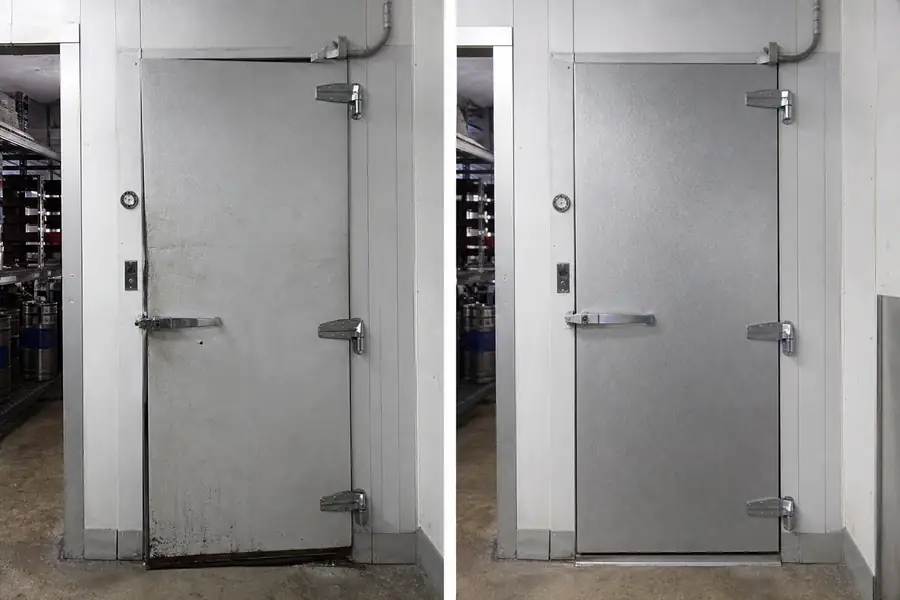
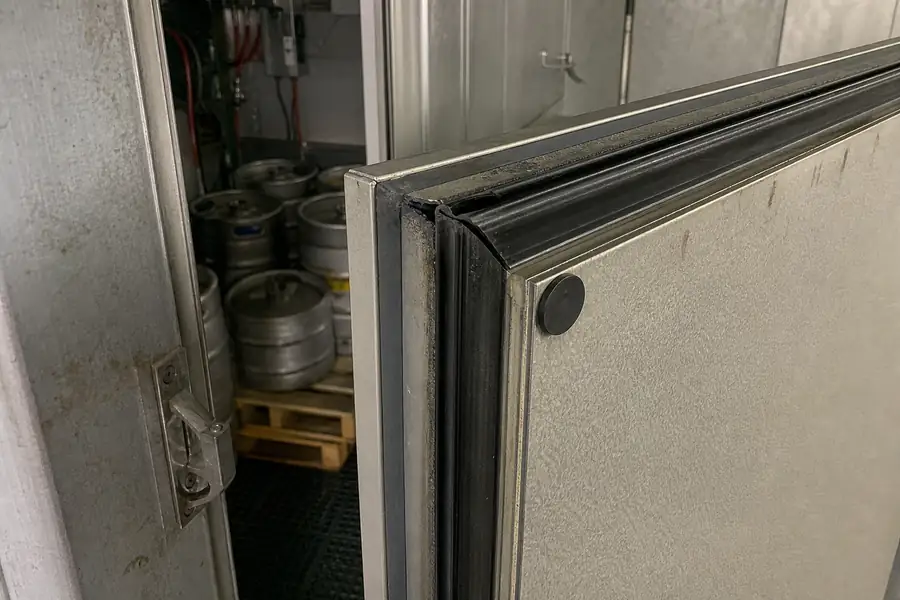
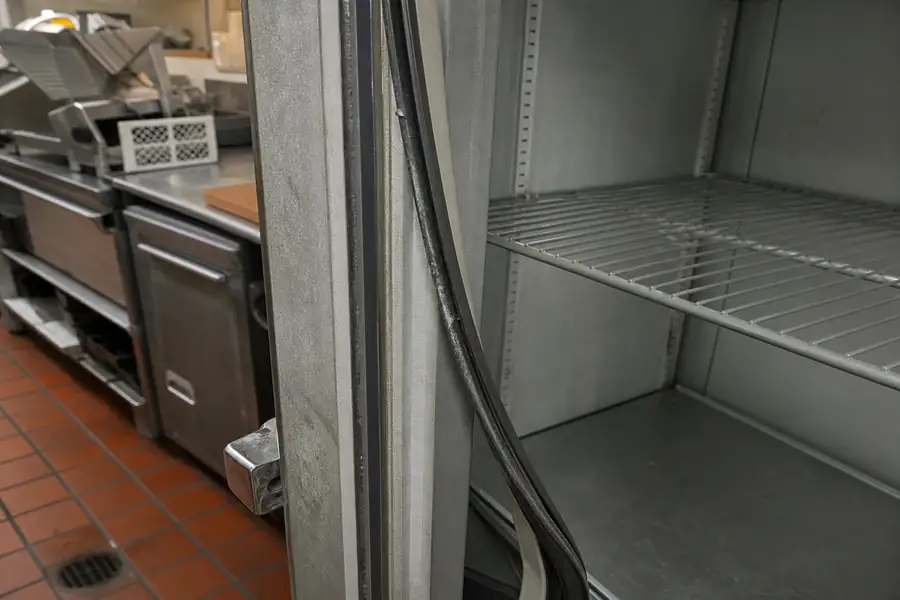
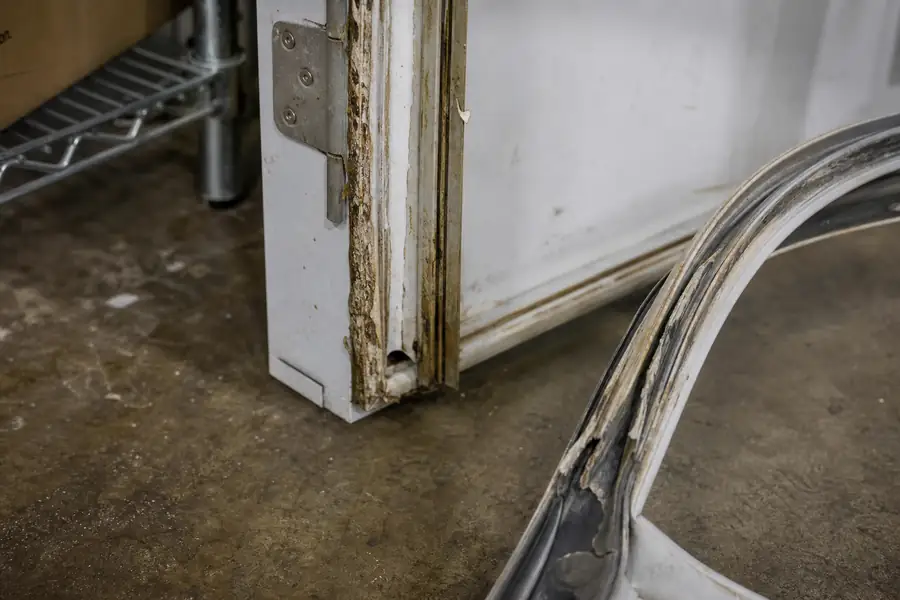
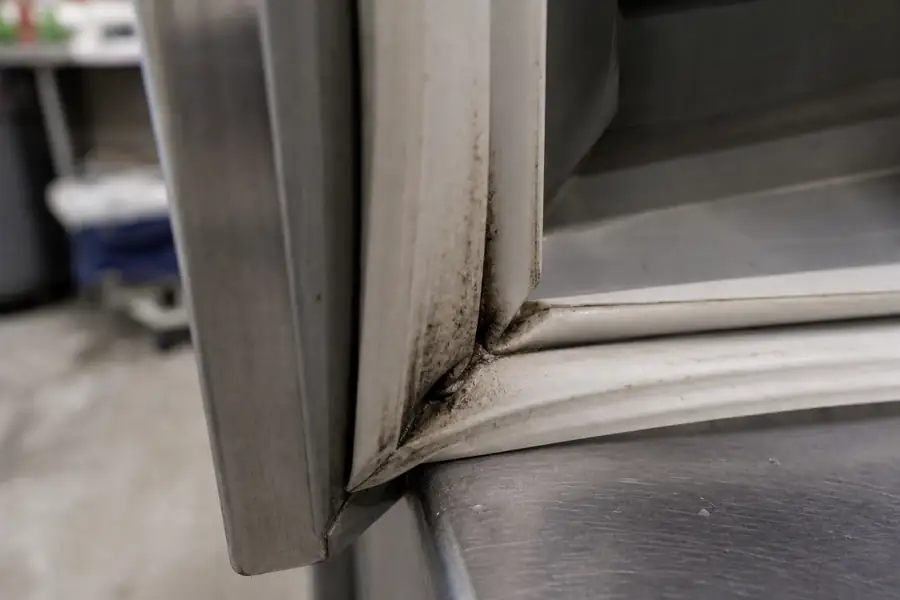
That traffic pattern shows up fast on a worn seal. Frost was building along the bottom third of the gasket, condensation was streaking the frame near the hinge side, and the compressor was running longer stretches than it should to hold temperature. None of that is a refrigerant problem. It's what happens when walk-in door gaskets lose their compression and stop forming a tight seal against the frame, letting warm, humid taproom air roll into the box every time the door opens and never fully getting pushed back out.
Need a gasket replaced?
Call us or send your unit's model number. Free quotes across Boulder County, usually same week.
The gasket had gone flat where the door meets the frame at chest height, the spot that takes the most contact on every open and close. But the gasket wasn't the whole story. A door gets pulled through the same arc thousands of times a month in a brewery this busy, and that kind of use sags hinges and loosens the closer's pull long before most kitchens would notice.
On this door, the closer wasn't drawing the door fully home on the last few degrees of travel, which meant even a brand-new gasket would have sealed on one side and gapped on the other. Checking the whole assembly, not just the rubber, is standard practice for a reason:
Gasket surface for flat spots, tears, or hardened rubber
Hinge alignment and sag from repeated door swings
Closer tension and whether the door latches fully on its own
Sweep condition at the floor where forklift and cart traffic wears fastest
A gasket swap alone would have bought a few weeks of improvement at best. Fixing the seal and the hardware together is what makes the repair actually hold.
Scheduling a Walk-In Repair Around Brew Day
A brewery can't just close the cold room for an afternoon. Kegs need to move, packaged beer needs to chill, and a brew day already has its own tight timeline before a repair crew shows up. Working around that schedule, rather than asking the brewery to work around the repair, was the actual test of this job.
The process followed the same three steps The Gasketeers uses on every walk-in: get the unit details and symptoms up front, measure the door and quote the fix, then come in and seal it. For this Longmont taproom, that meant timing the hardware work for a window between a brew day and the next packaging run, so the door was never out of service during peak keg traffic. Breweries across Longmont run on tight production calendars, and a repair that ignores that calendar isn't much of a repair.
Brewery Walk-In Cooler Door Repair in Colorado: What Changed
Once the new gasket and adjusted hardware were in, the door sealed flush on the first close instead of needing a second push, and the frost line at the threshold stopped rebuilding within days. That's the pattern a properly fitted seal and squared-up hardware produce on a high-traffic brewery door: less warm air pulled in per opening, less work for the compressor to recover that loss, and less moisture sitting on product near the door.
The unit fell into the same family of walk-ins common in Boulder County taprooms, brands like Kolpak, Nor-Lake, and Beverage-Air show up often, and none of that made the job harder. A worn or misaligned seal is fixable on nearly any make, current or discontinued, because the fix is built from the door's own profile rather than a factory part number.
Why This Keeps Happening in Longmont's Growing Brewery Scene
Longmont has roughly a dozen breweries of its own, with about 40 across Boulder County, and taproom walk-ins see far more door traffic than a typical restaurant cooler ever does. More staff moving product, more customers waiting on pours, and more openings per hour all add up to gaskets and hinges wearing out faster than the equipment's age would suggest.
That's the pattern behind a lot of the calls The Gasketeers gets from brewery kitchens in this area: an owner assumes the unit itself is failing, when the real culprit is a door that's simply been asked to do more work than most walk-ins ever see.
Getting a Walk-In Door Looked At Before It Costs You More
If a taproom cooler door is icing at the bottom, sweating near the frame, or just not clicking shut the way it used to, that's usually a seal and hardware issue rather than a sign the unit needs replacing. Reach out through the contact page to get a brewery walk-in door quoted, or call or text (970) 507-8034 to talk through what's happening with the door before booking anything.
Frequently asked questions
Can a brewery walk-in door be resealed without shutting down the cold room for a day?
Yes, in most cases the repair window is scheduled around production rather than the other way around, timed for a gap between brew days, packaging runs, or heavy keg traffic. The exact window depends on the brewery's own calendar and what needs to move that week.
How do you tell if the problem is the gasket or the door hardware?
A worn gasket usually shows flat, torn, or hardened rubber along the contact edge, while a hardware problem shows up as a door that doesn't latch flush on its own or sags on its hinges. Most failing walk-in doors have some of both, since a sagging door wears its gasket unevenly.
Do you work around brewing and packaging schedules?
Yes, that's typically the first thing discussed before a repair date gets set for a taproom or production brewery. The goal is to get the door sealing correctly without pulling the cold room out of service during a busy production stretch.
What brands of walk-in coolers do you service in Longmont breweries?
Common brands in Boulder County taprooms include Kolpak, Nor-Lake, and Beverage-Air, but the repair isn't limited to those. A worn or misaligned door seal can typically be matched or custom-fabricated from the existing profile regardless of make, including older or discontinued units.
How much does a brewery walk-in door repair cost in Colorado?
Cost depends on the size of the door, how much hardware needs adjusting or replacing alongside the gasket, and whether the seal is a standard size or needs custom fabrication. Getting a specific number means having the door measured and quoted rather than guessing from a phone call.