Can a Commercial Gasket Be Repaired, or Does It Need Replacing?
Small tears, lifted corners, hardened seals and dead magnets: which gasket faults can genuinely be repaired, which are wasted effort, and how to tell in two minutes.
A commercial refrigerator gasket can often be repaired when the damage is a lifted corner, a single split in otherwise pliable vinyl, or a loose screw-in strip. Once the rubber has hardened, the magnet has died, or the vinyl has started to crumble, a commercial refrigerator gasket repair done with tape or glue buys you a few weeks at most before the door needs a real seal again. Knowing which situation you're looking at saves time, and keeps you from making the eventual fix harder.
The Gasketeers pull taped and glued gaskets out of walk-ins and reach-ins across Boulder County every week, and the adhesive residue left behind in the retaining channel tells its own story about what worked and what didn't.
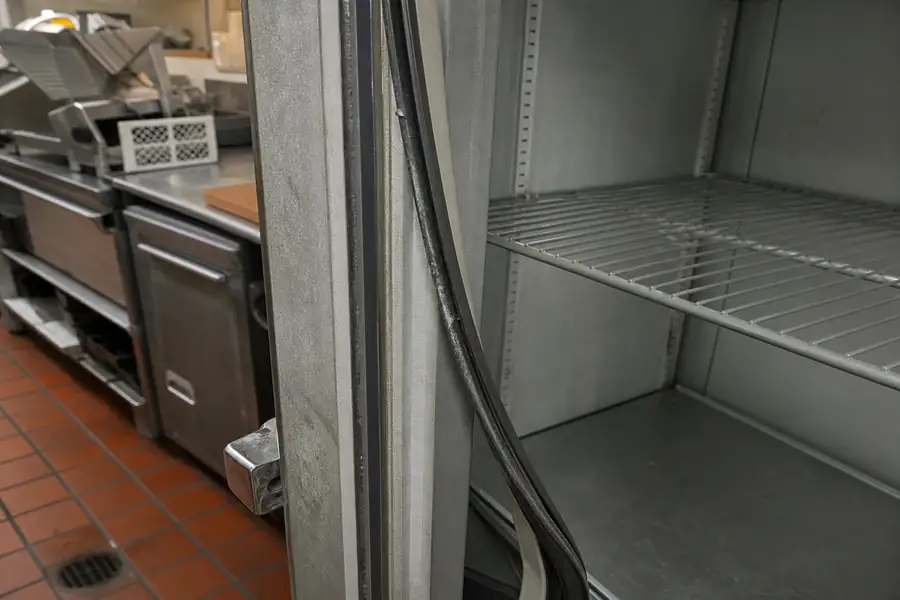
Lifted corners and single splits in pliable vinyl are the failures worth repairing.
Hardened, shrunk, or crumbling gaskets don't respond to tape or glue, whatever the label promises.
A dead magnetic strip is a problem inside the vinyl, not a surface fix.
Repair tape and glue can leave residue that damages the retaining channel for the next gasket.
A running compressor and a warm case cost more every week than replacing the seal properly.
The Two-Minute Triage
You can tell most of what you need to know about a failing seal with your hands, before you order anything. Run a finger along the full length of the gasket first.
Feel for stiffness: does the vinyl bend easily, or does it feel like hardened plastic where the door closes most often?
Check every corner for a gap where the material has pulled loose from the frame or the channel.
Test the magnet by holding a butter knife near the strip; a healthy magnet grabs it from an inch away.
If it's a screw-in gasket rather than a snap-in one, check whether the screws have simply backed out.
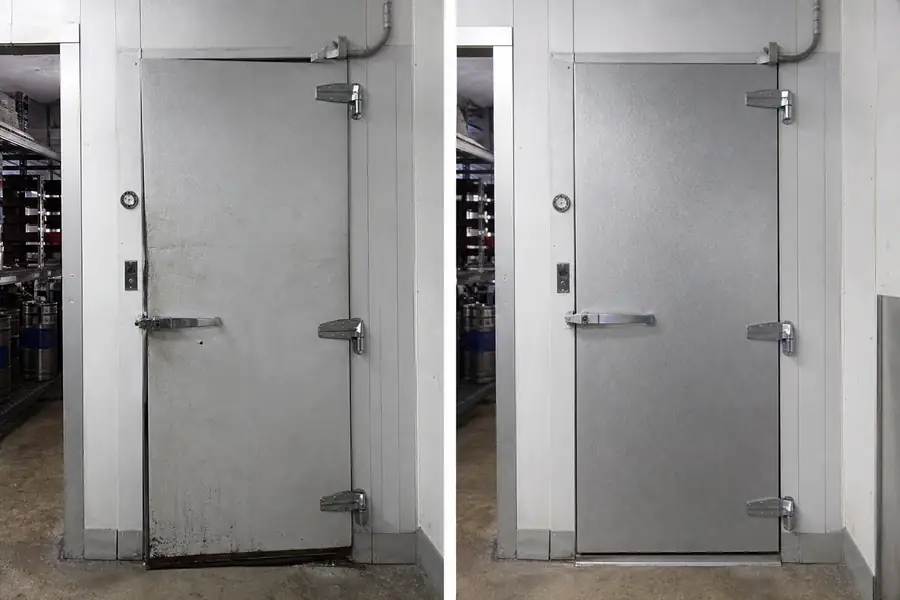
If the vinyl is still soft everywhere except one corner or one short split, you're likely looking at a genuine repair. If it's stiff, cracked in multiple spots, or the magnet is weak along the whole run, you're looking at replacement, and gasket replacement across Boulder County is usually faster than most operators expect.
Need a gasket replaced?
Call us or send your unit's model number. Free quotes across Boulder County, usually same week.
What Actually Qualifies as Commercial Refrigerator Gasket Repair
Real commercial refrigerator gasket repair works in three specific situations, and all three share one thing: the vinyl itself is still flexible.
A Lifted Corner That Has Come Out of the Channel
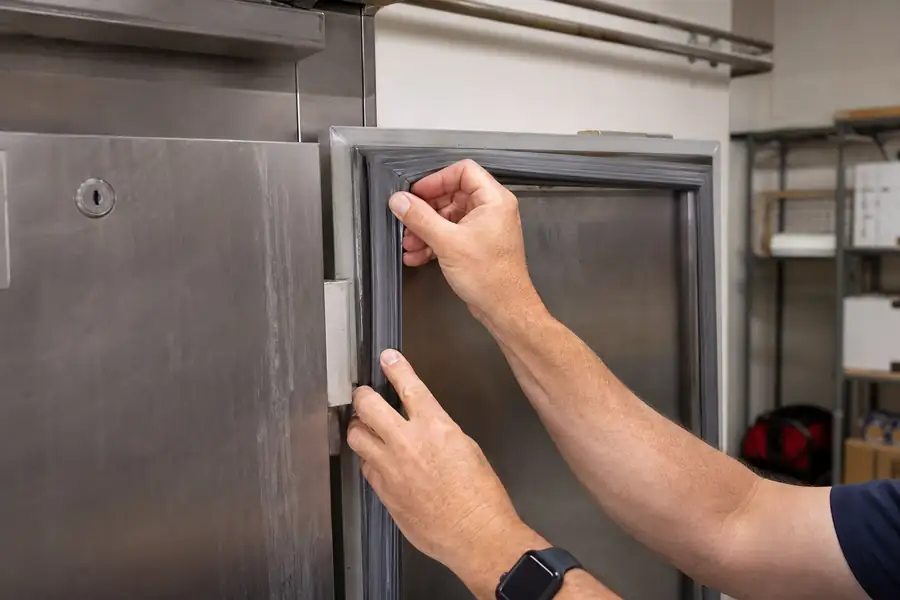
Corners take the most abuse on any door, from years of grabbing the handle and swinging it open. If the vinyl has simply pulled free of the retaining channel but is still soft, reseating it is a genuine free fix. Press the bead back into the groove, working from one end of the lift to the other, and it usually stays put.
A Single Split in an Otherwise Pliable Seal
A short tear from a snagged pan or a slammed door can be closed with refrigerator gasket glue, as long as the surrounding vinyl is still soft and the split hasn't stretched into a gap. This buys time, not permanence. Treat it as a bridge to your next scheduled replacement, not a solution.
A Loose Screw-In Run
Older prep tables and some reach-ins use screw-in gaskets rather than the snap-in profile most newer units have. If the seal has started gapping at the frame but the vinyl is fine, tightening or replacing the screws often resolves it without touching the gasket at all.
What Cannot Be Repaired, Whatever the Product Claims
Four failure patterns don't respond to tape, glue, or patience. Pushing a repair on any of them just means a second service call later, after the door has kept running warm in the meantime.
Compression Set and Hardening
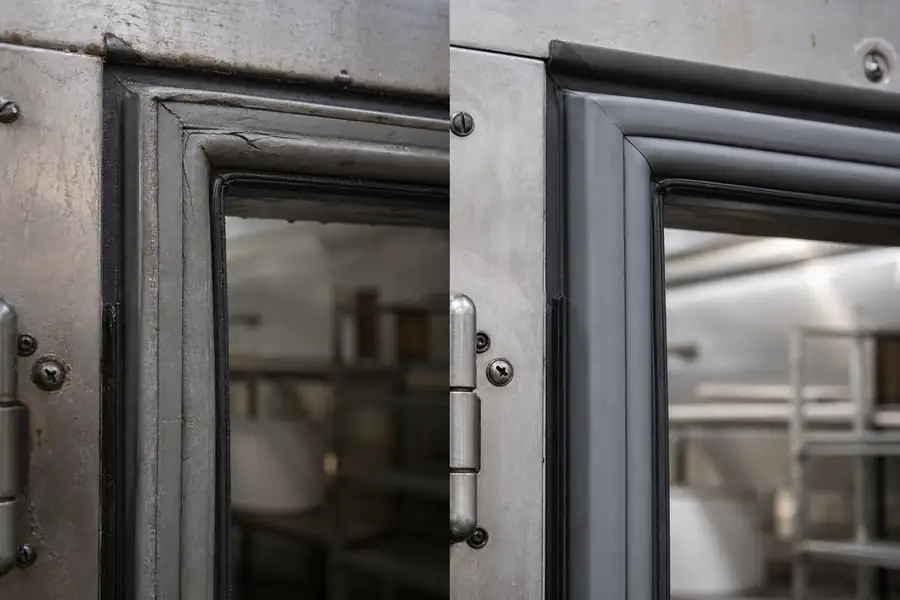
Compression set is what happens when rubber loses its memory after years of being squeezed shut in the same spot; it stays flattened even when the door is open. No adhesive restores flexibility to vinyl that has lost its shape this way.
A Failed Magnetic Strip
The pull that holds a gasket against the frame comes from a magnetic strip embedded inside the vinyl, not from the material itself. Once that strip weakens or breaks, tape can hold a door shut for a while, but it isn't sealing anything, and the compressor keeps running to compensate.
Perished or Crumbling Vinyl
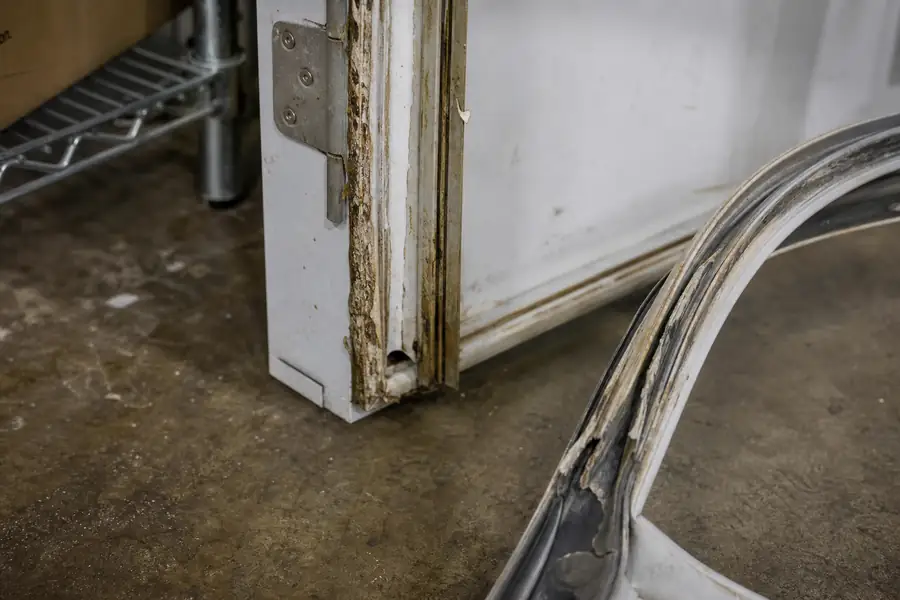
Cold cycling and age break vinyl down from the inside, and once it starts crumbling at the edges, glue has nothing solid left to bond to. This is common on units that have been in service for a decade or more.
A Gasket That Has Shrunk
Vinyl shrinks slightly over years of temperature swings, and a shrunk gasket leaves permanent gaps at the corners that no amount of stretching fixes. Once it's shrunk, it's a replacement job.
Tape and Adhesive: What They Cost You Later
Refrigerator gasket repair tape has real, measurable demand because it genuinely buys time on a lifted corner or a minor gap, and there's no shame in using it that way for a week or two. The problem shows up later, when a technician goes to pull the old gasket for replacement and finds adhesive baked into the retaining channel.
That residue has to be scraped out before a new gasket seats correctly, and rushed removal can gouge or warp the channel itself. On some doors, a channel damaged this way needs more than a new gasket, it needs the frame reworked too. Tape and glue are fine as a stopgap. They're a poor long-term plan, and the channel usually pays for it.
Partial Replacement on a Multi-Sided Gasket
Whether a single side of a multi-sided gasket can be replaced on its own depends on how that gasket is built and mounted. Some snap-in profiles run as one continuous loop around the frame, which makes a partial swap impractical. Others are seamed at the corners in a way that allows one damaged run to be replaced without touching the rest.
This is worth asking about before assuming a whole-door gasket is needed. It's also where older or no-longer-manufactured equipment gets tricky, since a mismatched profile on one side won't seal against the original on the other three.
The Economics, Plainly
A worn seal doesn't fail all at once, it fails slowly, and the compressor picks up the difference every hour of every day it runs. Warm air leaking past a gap makes the compressor cycle more often just to hold the safe temperature zone, which shows up as a higher power bill long before anyone notices ice on the coil or condensation on the glass.
Weigh that ongoing cost against the time a proper seal replacement takes, and the math tends to favor fixing it rather than living with a leaky door for another few months while a strip of tape holds the line.
Getting a Straight Answer on Yours
The fastest way to know whether you're looking at a genuine commercial refrigerator gasket repair or a full replacement is to send a photo of the corner, split, or gap in question. If your unit is old enough that the model plate doesn't mean much anymore, that's exactly where custom and obsolete unit gaskets earn their keep, since a discontinued part number doesn't mean the door is unfixable.
Yes, in specific cases: a lifted corner that's come out of the channel, a single split in otherwise soft vinyl, or a loose screw-in run can all be genuinely repaired. Hardened, shrunk, crumbling, or demagnetized gaskets can't be fixed this way and need replacing.
Does refrigerator gasket tape work?
Repair tape works as a short-term fix for a minor gap or a lifted section while the surrounding vinyl is still flexible. It's not a lasting solution, and adhesive left behind can damage the retaining channel when the gasket is eventually replaced.
What glue works on a refrigerator gasket?
Refrigerator gasket glue can close a single small split in pliable vinyl, but it only bonds well to material that isn't hardened, shrunk, or crumbling. On failed vinyl or a dead magnetic strip, glue has nothing sound left to hold onto.
How do you fix a gasket that has come out of the groove?
If the vinyl is still soft, press the lifted section firmly back into the retaining channel, working along the length of the lift until it seats evenly. This is one of the few gasket problems that's a genuine free fix, as long as the material itself hasn't hardened or cracked.