Frost and Ice at a Walk-In Freezer Door: Four Possible Causes
Ice at the threshold, frost around the frame, a door freezing shut each morning: how to tell a seal problem from a sweep, threshold or frame heater problem.
Quick answer: A walk-in freezer door usually ices up because the gasket has hardened or gapped, the door sweep has lifted off the threshold, the threshold heater isn't heating the surface the gasket actually touches, or the door isn't latching flush against the frame. Every time that door opens, warm kitchen air meets a surface running below freezing and drops its moisture right there as frost or ice.
Four causes account for nearly every case The Gasketeers see on service calls in Boulder, Longmont, and Louisville kitchens: a seal that no longer compresses, a sweep that has lifted or worn through, a threshold heater that isn't doing its job, or a door that isn't closing all the way. Two of those are quick gasket fixes. One is a hardware alignment issue. One might need an electrician. Here's how to tell them apart before someone chips the door open with a scraper again.
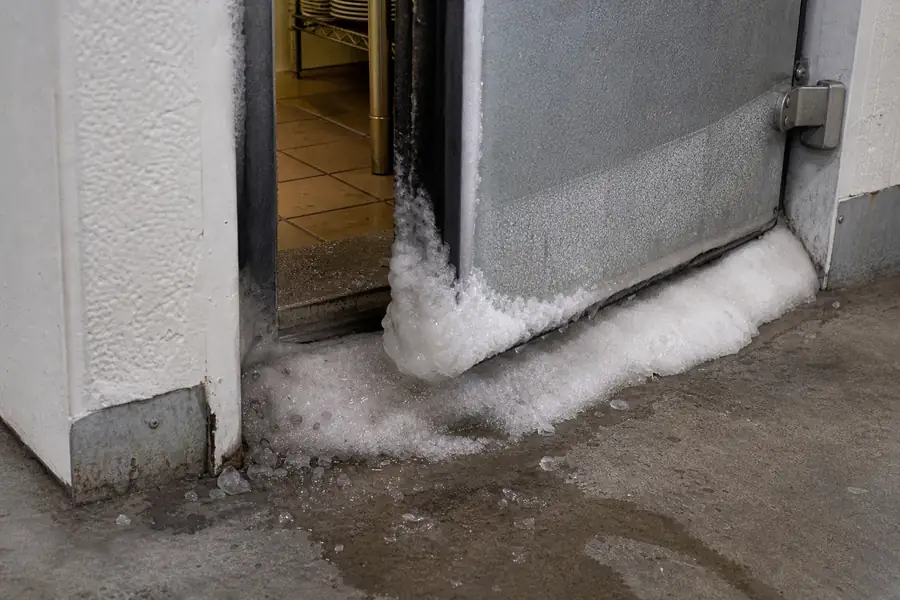
Where the ice is forming tells you why your walk-in freezer door is icing up
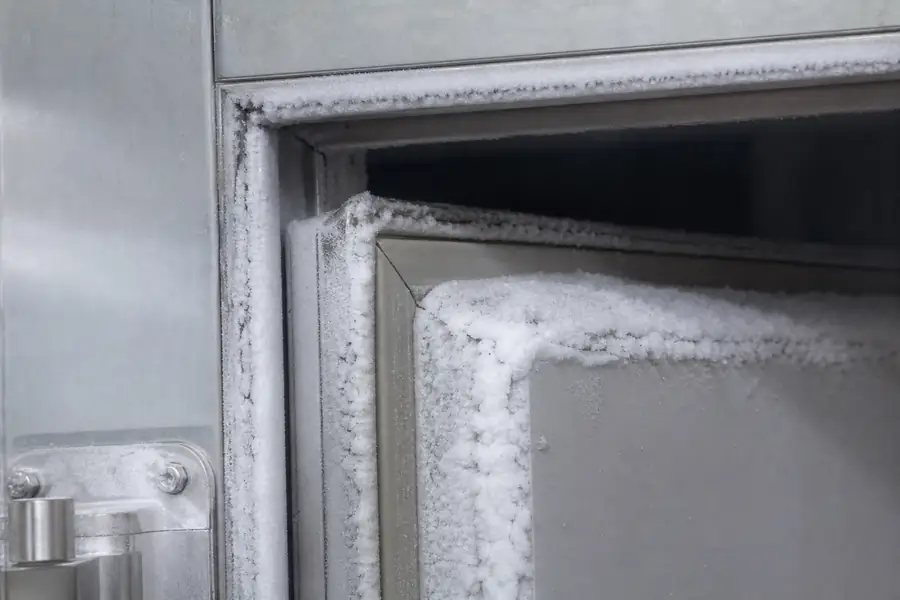
The location of the ice narrows the cause before you touch a tool. Ice that builds low, right at the threshold, points to the sweep or the threshold heater. Frost along the sides and top of the frame usually means the gasket has stopped compressing. A door that freezes fully shut overnight, the kind staff have to pry open with a shoulder, often means more than one of these is happening at once.
Ice Location
Likely Cause
Quick Check
Along the threshold
Lifted sweep or cold threshold surface
Slide a hand under the sweep for a cold, wet strip
Frame sides and top
Hardened or gapped gasket
Close a dollar bill in the door and pull it out
One corner only
Door not closing flush
Check the hinge side for sag or a bent latch
Door frozen fully shut
Combination of the above
Inspect the seal, sweep, and threshold together
Need a gasket replaced?
Call us or send your unit's model number. Free quotes across Boulder County, usually same week.
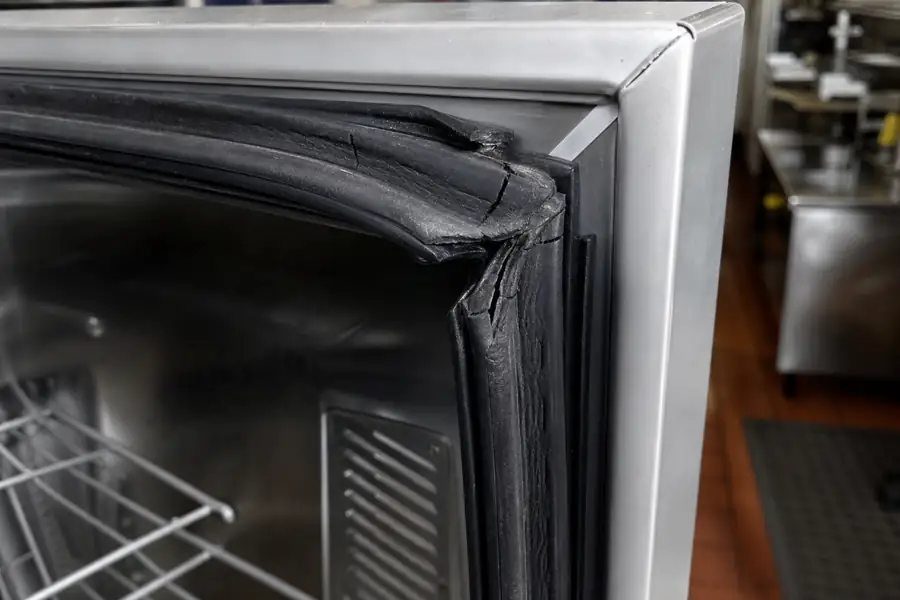
A gasket that has hardened or shrunk stops sealing the moment it can't compress against the frame, letting warm, moist air leak in and freeze on contact with the cold jamb. This is the most common reason a freezer door ices up, and it's why walk-in freezer door gaskets are the first thing worth checking before assuming a bigger problem.
Hardened seal at low temperature
Rubber gets stiffer as it gets colder, and a gasket that felt fine at room temperature can go rigid at zero degrees and stop hugging the frame. That opens a thin gap all the way around the door, wide enough to pull in moisture every time it's opened.
A gap at one corner only
If the dollar-bill test slides out easily at one corner but holds everywhere else, the gasket itself may still be fine and the door is pulling away from the frame at that spot. That points to hinge sag or a warped door skin rather than the seal, which changes the fix from a gasket swap to a hardware adjustment.
Cause 2: the sweep has lifted or worn
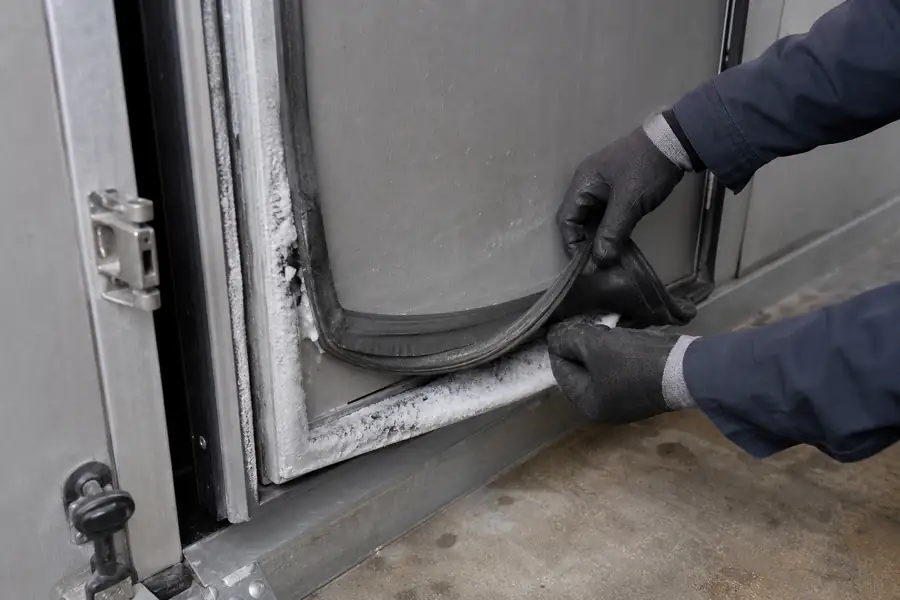
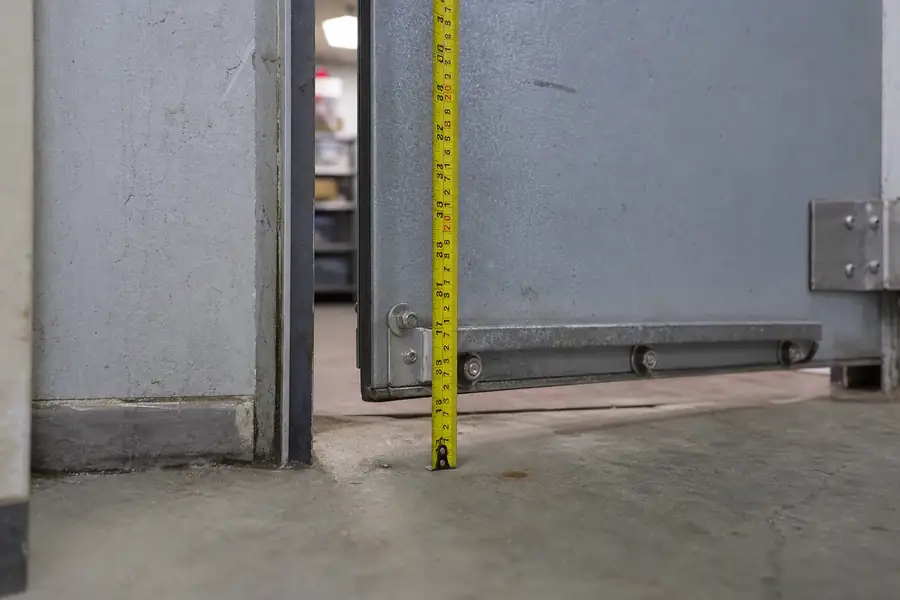
The door sweep is the strip mounted along the bottom of the door that closes the gap between the door and the threshold, and when it lifts, curls, or wears thin, cold air spills out at floor level while warm air pulls in right where the ice starts. On Kolpak, Nor-Lake, Master-Bilt, and Bally boxes alike, the sweep takes more physical abuse than any other part of the seal because it gets rolled over by carts and hand trucks all shift long.
A sweep that still looks intact from a few feet away can be riding a quarter inch above the threshold, and that gap is enough to build a ridge of ice by morning.
Cause 3: the threshold is damaged or the heater is not heating it
A threshold heater warms the metal strip the door closes against so moisture can't freeze onto it, and if that surface stays cold, ice forms there no matter how good the gasket is. Many walk-in freezers use a low-wattage electric heater built into or under the threshold for this reason, and when it fails or sits in the wrong spot, the threshold becomes the coldest surface in the doorway.
Why heater position matters more than heater output
A threshold heater only works if it heats the surface the gasket and sweep actually touch, not the general area nearby. One documented technician diagnosis, detailed in our walk-in freezer door frost and ice case review, found a heater installed above the threshold under a metal trim strip that ran fine electrically but did nothing for the ice, because it never contacted the surface the door sealed against. That's a known failure mode, not something true of every unit, but it explains why a heater can test as working and still leave a door icing up.
How to check without tools
Feel along the threshold with a bare hand after the compressor has cycled: a warm heater makes the metal noticeably warmer than the surrounding floor, while a cold or evenly cool strip means the heater isn't doing its job or isn't reaching the sealing surface at all.
Cause 4: the door is not closing fully
A door that doesn't swing shut flush against the frame leaves a permanent gap no gasket can close, and that's a hinge, closer, or latch problem rather than a seal problem. Sagging hinges let the door hang low on the latch side, a worn cam-lift closer can stop pulling the door tight in the last inch, and a bent latch keeps the door from seating square against the gasket even when the gasket itself is in good shape. Fixing these usually falls under door hardware repair rather than a gasket swap, and skipping it means a brand new seal still won't stop the ice.
Why chipping ice off makes next winter worse
Chipping or prying ice off a frozen door tears and compresses the gasket material at exactly the spot that needs to flex to seal. Each chip job leaves the rubber a little more cracked and a little less pliable, so the door ices up faster and harder the next time cold weather sets in. What starts as an occasional morning nuisance turns into a daily ritual, and the gasket that could have been replaced for a modest cost ends up needing full replacement anyway, along with whatever hardware got bent freeing the door.
What we can fix and what needs an electrician or refrigeration contractor
The Gasketeers repair and replace door gaskets, sweeps, hinges, closers, and latches, which covers three of the four causes above. Threshold heater wiring, electrical faults, and any refrigeration-system issue behind a warm or icy walk-in fall outside that scope and need a licensed electrician or refrigeration contractor. If a threshold heater tests cold, the practical first step is still confirming the seal and sweep are sealing correctly, since a good gasket and sweep sometimes carry a marginal heater through a season while the electrical work gets scheduled.
Getting a freezer door assessed
A freezer door icing up daily is worth a look before another cold season turns a minor gap into a torn gasket and bent hardware. Text photos of the door, the threshold, and the data plate to (970) 507-8034, or contact The Gasketeers to request a free, no-obligation gasket quote. Most Boulder County kitchens get measured, quoted, and sealed within a day of that first call.
Frequently asked questions
Why is my walk-in freezer door freezing shut?
A freezer door freezes shut when warm, moist air keeps reaching a cold sealing surface, usually because the gasket has hardened, the sweep has lifted, or the door isn't closing flush against the frame. Each time the door opens, that moisture lands on the cold metal and refreezes, gradually welding the door to the frame.
Why is there ice around my walk-in freezer door?
Ice around the frame points to a gasket that's no longer compressing, while ice concentrated at floor level usually means the sweep or threshold heater isn't sealing that section. The exact location of the ice is the fastest way to narrow down which part has failed.
What is a walk-in freezer door heater?
A walk-in freezer door heater is a low-wattage electric element built into or under the threshold that keeps the metal surface warm enough to prevent moisture from freezing onto it. It only works if it's positioned to heat the exact surface the gasket and sweep touch, not just the general area nearby.
How do you stop frost on a freezer door?
Stopping frost means restoring a full seal at every point the door meets the frame: a supple gasket that still compresses, a sweep that sits flush on the threshold, and a door that latches all the way shut. If frost keeps forming after those are in good shape, a failed or misplaced threshold heater is the next thing to check, which may require an electrician.