Boulder Restaurant Reach-In: From Failed Temperature Check to Sealed
A Boulder kitchen with a reach-in that would not hold temperature: what we found on the door, what we fitted, and how long the unit was out of service.
A commercial refrigerator gasket replacement in Boulder CO usually starts with a temperature check, not a repair order. That's what happened at a restaurant in Boulder County, where a reach-in cooler on the line had started running warm along the top shelf, and the kitchen manager caught it during a routine spot check before it turned into a bigger problem. The Gasketeers got the call the same week.
What follows is the record from this Boulder restaurant reach-in case study: the symptom the kitchen saw, what got checked and in what order, what was found on the door, and what was fitted to fix it.
A reach-in running warm with the compressor cycling nonstop usually points to the door seal, not the refrigeration system.
Frost buildup on one side of the door and sweating on the frame are early warning signs of a failing gasket.
The diagnostic order matters: seal condition, magnet pull, and door alignment come before hinges and closer, before anything else gets blamed.
A worn gasket gets replaced with a new one cut to the same profile. The unit does not need to be replaced.
Sealing the gasket without checking the hinge and closer is a half fix. Both get addressed together so the repair holds.
The Symptom: A Reach-In That Failed Its Temperature Check
The kitchen's reach-in cooler was holding several degrees above its safe zone on the top shelf, even though the compressor never seemed to shut off. That pattern, a warm shelf paired with a compressor that runs constantly, is one of the clearest signs a door seal has failed rather than the cooling system itself.
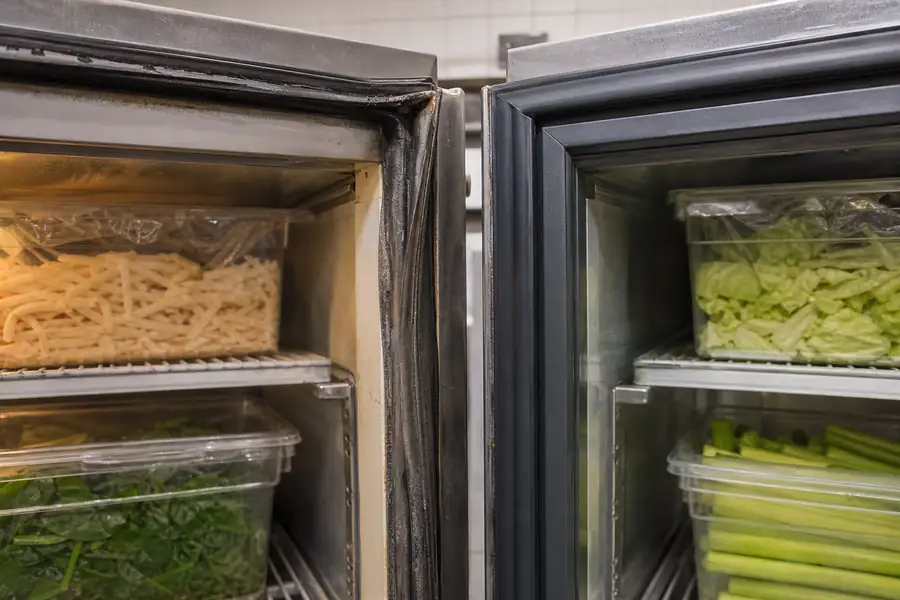
Staff had noticed frost creeping along one edge of the door gasket and a faint sweat line on the metal frame beside it. Frost forms where warm kitchen air sneaks past a gap in the seal and hits the cold interior. Once that air gets in continuously, the compressor runs longer to hold temperature, and the unit still loses the fight on the shelf closest to the leak.
Need a gasket replaced?
Call us or send your unit's model number. Free quotes across Boulder County, usually same week.
The technician started at the seal itself, not the compressor. A worn gasket is the cheapest part on the door and the most common cause of a warm reach-in, so it gets checked first.
The check used is simple: a sheet of paper gets closed in the door at several points along the frame, then pulled. If it slides out with little resistance, the gasket isn't holding a seal at that spot. On this door, the paper pulled free easily along the bottom third, matching the frost pattern the kitchen had already spotted.
From there the technician checked the door itself: whether it hung square in the frame, whether the hinges had loosened enough to let the door sag, and whether the closer was pulling the door fully shut. A gasket alone can't compensate for a door that's hanging crooked. That's why reach-in gasket replacement jobs always include a hardware check, not just a seal swap.
What Was Found and What Got Fitted
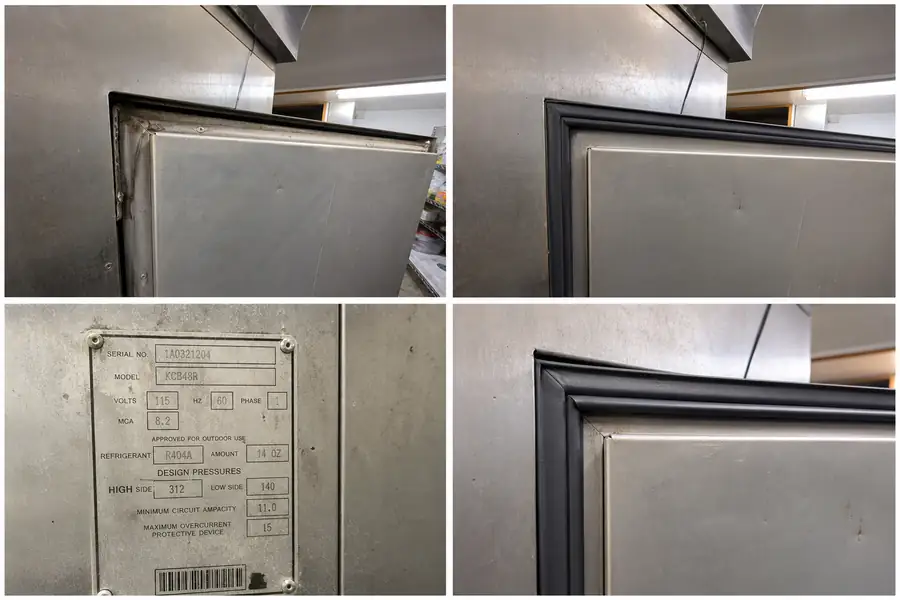
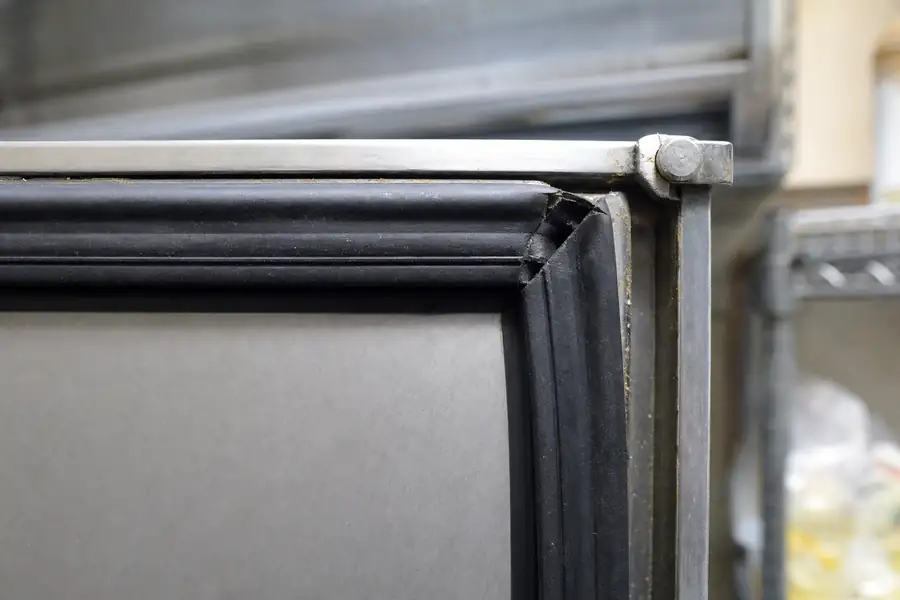
The gasket along the bottom of the door had flattened and torn at one corner, and the lower hinge had loosened enough to let that corner of the door drop slightly out of the frame. Both problems were feeding each other: the sagging corner stressed the gasket further, and the torn gasket let the door swing looser than it should.
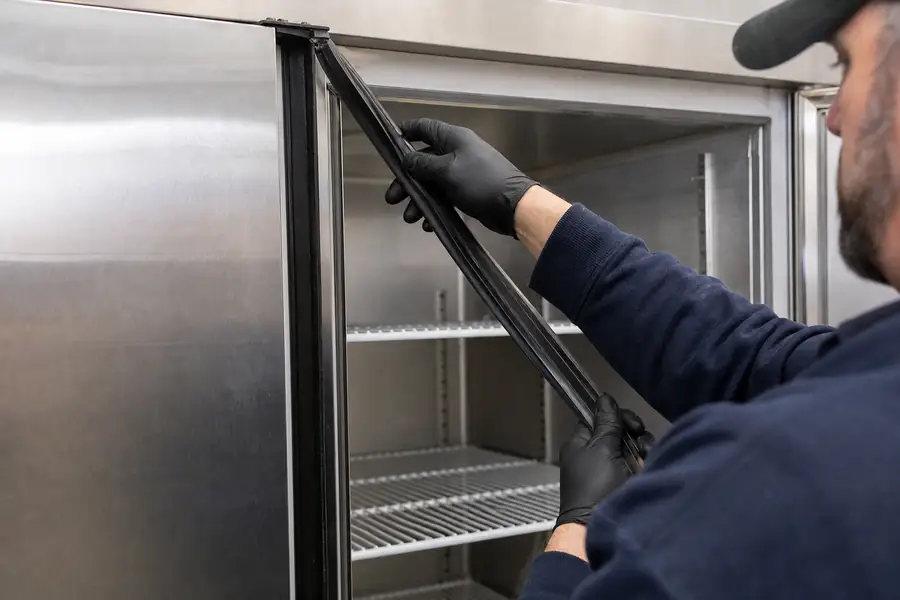
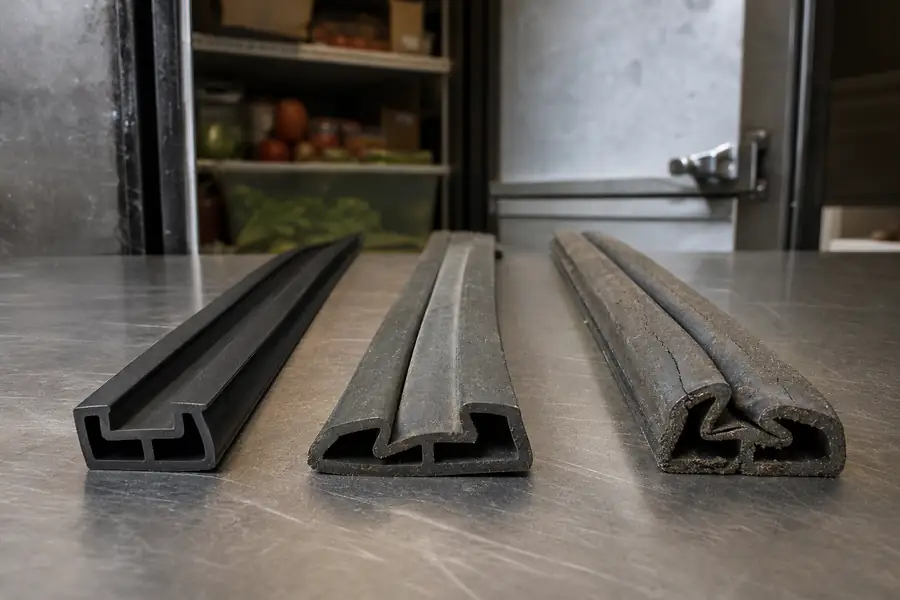
Reach-in units from major lines such as True, Beverage-Air, and Turbo Air all use a similar snap-in or screw-in gasket channel, which meant a properly profiled replacement seal could be cut and fitted on site without waiting on a manufacturer part. The hinge got tightened and reset so the door sat flush in the frame again, and the new gasket made full contact along all four sides once the door was closed.
Turnaround and Result
Sealing the door stopped the warm air leak and let the compressor cycle normally instead of running continuously. On the follow-up check, the top shelf held inside the safe zone with the door closed for a normal service period, matching the rest of the unit.
The Gasketeers' process on jobs like this one runs the same way every time: tell us the unit, get it measured and quoted on site, then get it sealed and cold again, usually within a single visit. That's the difference between calling a repair line that has to order a manufacturer part and calling a shop that fabricates the seal from the profile already on the door.
Commercial Refrigerator Gasket Replacement in Boulder CO: What This Job Confirms
A failed temperature check on a reach-in cooler is usually a door problem, not a refrigeration problem, and this job is one documented example of that pattern in Boulder. The gasket had done its job for years and simply wore out at the point where the door gets touched most, the bottom corner near the handle.
Kitchens across Boulder deal with the same setup: high-traffic reach-in doors, older hinges, and gaskets that flatten with age. None of that requires a new cooler. It requires a seal cut to the right profile and hardware checked at the same time, which is the standard approach on every job The Gasketeers runs, whether the unit is a current model or one that's been discontinued for years.
If a reach-in in your kitchen is running warm on one shelf, frosting along one side of the door, or making the compressor sound like it never rests, contact The Gasketeers for a no-obligation look at the door before assuming the whole unit needs to go.
Frequently asked questions
How do I know if my reach-in cooler's problem is the gasket and not the compressor?
Check for frost or sweating along one section of the door and notice whether the compressor runs longer than usual without the unit reaching temperature. Those two signs together point to a seal or door alignment issue rather than a refrigeration problem, and a technician can confirm it in a few minutes with a simple seal test.
Can a reach-in gasket be replaced without buying a new cooler, even if the unit is old or discontinued?
Yes. A worn gasket can be cut to match the existing seal profile even when the original manufacturer no longer sells that part, so an older or discontinued reach-in cooler or freezer usually does not need to be replaced just because the door seal has failed.
What is the dollar bill test for a walk-in or reach-in door seal?
It's a quick check where a sheet of paper or a bill is closed in the door at several points along the frame and then pulled out. If it slides free with little resistance, the gasket is not holding a seal at that spot, which points to a worn or torn seal rather than a refrigeration issue.
How long does a reach-in gasket replacement usually take?
Most reach-in gasket jobs are measured, quoted, and fitted in a single visit once a technician is on site, since the new seal is cut to match the door's existing profile rather than special-ordered from the manufacturer. Hinge or closer adjustments get handled in the same visit if the door needs it.
Does The Gasketeers work on reach-in coolers from all major brands?
The Gasketeers fits gaskets and door hardware for reach-in coolers and freezers from brands including True, Beverage-Air, Turbo Air, Continental, and Delfield, along with other major commercial lines used in Boulder County kitchens. The gasket profile and door hardware get matched to whatever unit is actually installed, regardless of brand.