Cold Side Door Seals for Boulder County Breweries and Taprooms
Boulder County has 40 breweries. Walk-ins, keg coolers and merchandisers all seal differently, and all of them have to be serviced around a production schedule.
A brewery kitchen rarely has one cold door problem, it has three. The production walk-in holds cold liquor and finished beer. The keg or cellar cooler gets opened every few minutes during a rush. The taproom merchandiser runs a glass door that customers see and touch all day. Each one wears out differently, and a brewery walk-in cooler gasket that needs replacing rarely shows up alone, because the other two doors take the same daily abuse. The Gasketeers work on all three door types across Boulder County breweries, and the scheduling problem matters as much as the seal itself.
Walk-ins, keg coolers, and taproom merchandisers use different seal profiles and wear at different rates.
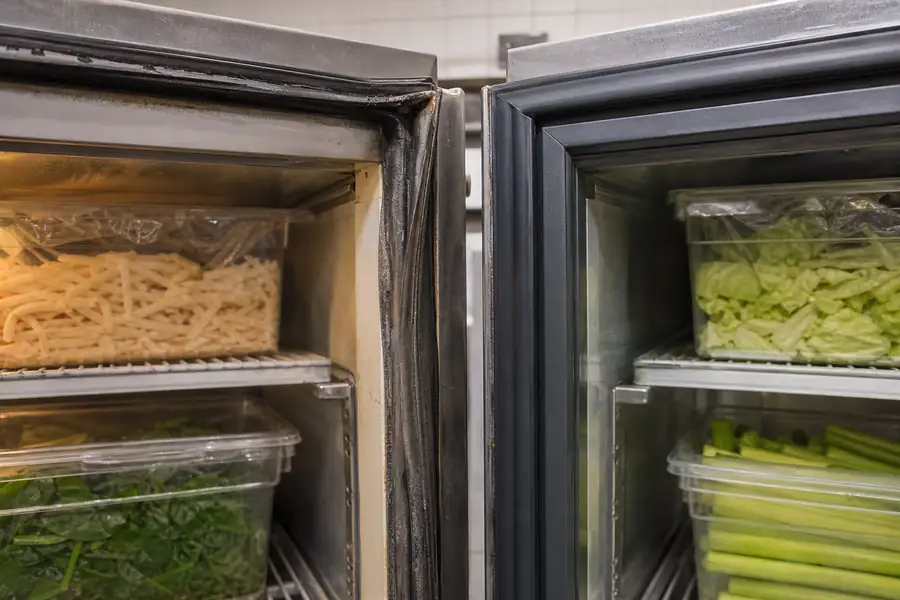
A worn brewery walk-in cooler gasket lets warm air in, so the compressor runs longer to hold a safe temperature for finished beer.
Keg and cellar coolers see the most door cycles of any cold room in a brewery, which shortens gasket life fastest.
A taproom cooler door seal on a glass merchandiser fails from condensation and constant customer handling, not from age alone.
Gasket work can usually be scheduled around brew days and taproom hours instead of shutting a cold room down mid-production.
Colorado Brewery List recorded 40 brewery locations in Boulder County as of December 31, 2025, with the heaviest concentration in Boulder and Longmont.
Three Cold Environments, Three Sealing Problems
Every brewery runs at least three distinct cold storage environments, and each one puts a different kind of stress on its door seal.
Cold environment
Typical seal type
Door cycles per day
Main wear driver
Production walk-in
Snap-in or screw-in magnetic gasket
Low to moderate
Temperature swings, cart and keg traffic
Keg or cellar cooler
Heavy-duty magnetic gasket
High
Constant cycling, doors propped or kicked
Taproom merchandiser
Slim magnetic gasket on a glass frame
Moderate to high
Condensation, customer handling
The Production Walk-In
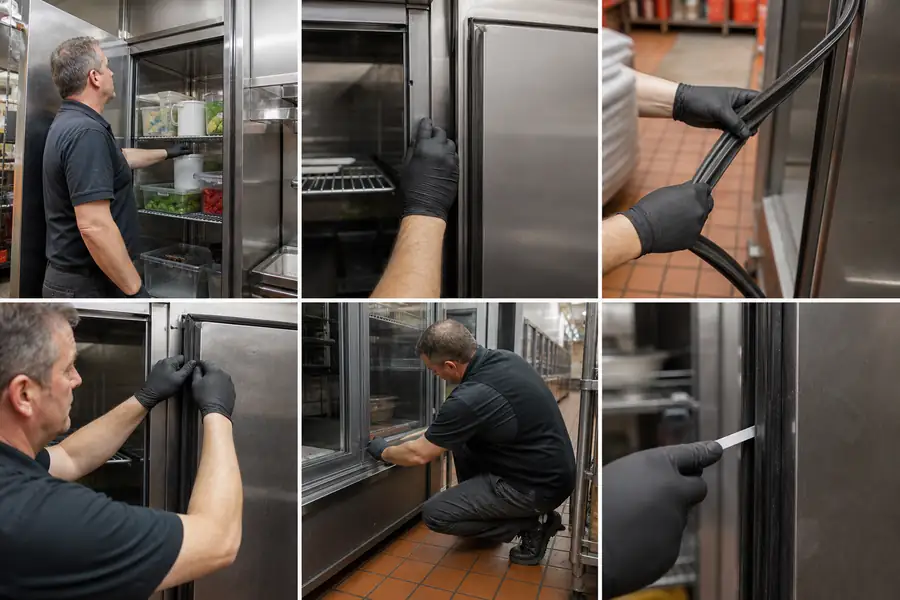
The production walk-in holds finished beer and raw ingredients at a steady temperature, and its gasket usually fails from age and temperature cycling rather than raw traffic. Frost building along the bottom of the door or a soft spot in the seal are the first signs. Replacing walk-in cooler and freezer door gaskets on a brewery-sized unit is straightforward once the seal profile and hinge alignment are confirmed.
The Keg or Cellar Cooler
The keg or cellar cooler takes more door openings per hour than any other cold room in the building, and a keg cooler gasket shows wear at the corners and along the bottom sweep first. Staff moving full kegs in and out rarely close the door gently, and a gasket that has lost its grip lets the compressor run continuously trying to hold temperature. This is brewery cold storage maintenance that gets skipped because nobody notices a slightly soft seal until the power bill jumps.
The Taproom Merchandiser
The taproom merchandiser is the door customers see, and a worn merchandiser door gasket in a brewery setting shows up as fog on the glass or a warm case near closing time. Glass display door gaskets take a different profile than a walk-in seal because the frame is thinner and the gasket has to grip glass instead of a solid door face. Condensation dripping down the inside of the glass is usually the first symptom staff report.
Need a gasket replaced?
Call us or send your unit's model number. Free quotes across Boulder County, usually same week.
Why Brewery Walk-In Cooler Gaskets Wear Out Fastest
A brewery walk-in cooler gasket wears faster than the same seal in a standard restaurant kitchen because the door gets opened for keg movement, ingredient deliveries, and cellar work on top of normal cold storage traffic. The Gasketeers have already resealed a keg cooler door for a production brewery in Longmont, and the wear pattern matched what shows up at nearly every brewery site running a walk-in, a keg room, and a taproom case under one roof. That job is covered in more detail in this brewery and taproom refrigeration door seal resource.
Hop residue, spilled wort, and CO2 tank moisture also age a gasket faster than plain kitchen use does. A gasket that looks fine on the hinge side can still be pulling away at the latch side from repeated hard closes, and a hinge or closer that has drifted out of square puts uneven pressure on the seal even when the gasket itself is still good.
The Scheduling Problem Nobody Solves
A brewery cannot shut down its keg cooler on a Tuesday morning the way a restaurant might close a walk-in for an hour. Brew days, kegging runs, and taproom pours all depend on different doors staying cold at different times, and a contractor who treats a brewery like a standard kitchen will schedule around the wrong hours.
The fix is asking which door is least busy on which day before booking the work, not defaulting to a single morning slot. A production walk-in can often be sealed early before brew day starts, while a keg cooler needs a window between deliveries, and a taproom merchandiser is easiest to reach before doors open to the public.
What a Brewery Door Survey Covers
A brewery door survey checks every cold door in the building in one visit instead of treating each seal as a separate call.
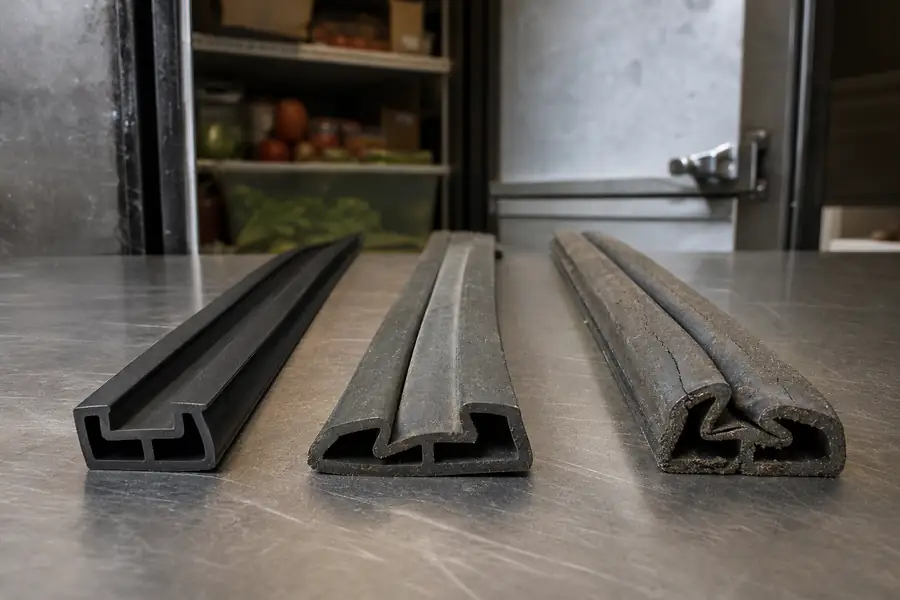
Measure each door and identify the existing seal profile, including snap-in, screw-in, or magnetic-strip styles.
Check hinges, cam-lift closers, and sweeps for drift or sag that puts uneven pressure on the seal.
Note frost, condensation, or warm spots reported by staff at each door.
Flag any obsolete or discontinued unit where a custom-fabricated gasket will be needed instead of an OEM-spec replacement.
Provide a straightforward, no-obligation price for the doors that need work now versus the ones that can wait.
Boulder County's Brewing Density and What It Means for Response
Boulder County has one of the highest concentrations of breweries per capita in Colorado, and that density shapes how fast a local gasket crew can respond. The Colorado Brewery List recorded 40 brewery locations across the county as of December 31, 2025, with 13 in Boulder and 12 in Longmont alone.
That concentration means a crew working the Boulder County service area is rarely far from the next brewery on the list, which keeps response times short without relying on a national dispatch line. A brewery in Louisville facing an inspection deadline or a taproom in Lafayette losing product to a fogged merchandiser both benefit from a crew that already knows the county's brewing footprint rather than one learning it from a map.
Getting Your Cold Side Surveyed
Most breweries do not need a full walk-in replacement when a door starts sweating or a keg cooler runs constantly, they need the right brewery walk-in cooler gasket matched to the door and the hardware behind it fixed at the same time. The process is simple: tell The Gasketeers which units are giving trouble, get a clear price after measuring the doors, and get the cold side sealed and running normally again.
Book a brewery cold side survey through the contact page, or call or text (970) 507-8034 to get a visit scheduled around your production calendar rather than a generic morning slot.
Frequently asked questions
How often should a brewery replace cooler gaskets?
Most brewery cooler gaskets need replacing every two to four years, though keg and cellar coolers with heavy daily traffic often wear out sooner than production walk-ins. The real signal is condition, not age: a gasket that has lost its grip, cracked, or pulled away from the frame should be replaced regardless of how long it has been in service.
What gaskets do keg coolers use?
Keg and cellar coolers typically use a heavy-duty magnetic gasket built to handle frequent door cycling and rough closes from staff moving full kegs. The profile is usually thicker than a standard reach-in gasket to hold up under that traffic, and it can be matched to the existing door even on an older or discontinued unit.
Who services brewery walk-in coolers in Colorado?
The Gasketeers service brewery and taproom refrigeration exclusively within Boulder County, Colorado, including breweries in Boulder, Longmont, Louisville, and the surrounding towns. Breweries outside that service area should look for a local commercial refrigeration specialist familiar with their county.
Can gasket work be done without shutting a cold room?
Gasket replacement generally does not require running the compressor off or emptying the room, since the seal is swapped while the door is briefly open rather than the unit powered down. The bigger scheduling issue for a brewery is picking a window around brew days and keg deliveries so the door itself is not needed during the short time it takes to fit the new seal.