Cleaning Commercial Refrigerator Gaskets Without Destroying Them
The weekly routine that keeps door seals pliable, the cleaners that harden and crack vinyl, and why mould keeps coming back in the same corner of the fold.
Knowing how to clean commercial refrigerator gaskets sounds like the easy part of kitchen maintenance, right up until the same seal that gets wiped down every night starts cracking at six months instead of lasting years. The problem usually isn't dirt left on the gasket. It's what's cleaning the dirt off. Bleach solution, degreaser overspray, and a green scrub pad all sanitize a seal fine and all shorten its life at the same time. The Gasketeers replace enough seals that were scrubbed to death to recognize the damage patterns on sight, and most trace back to the cleaning routine, not the equipment's age.
Warm water and mild dish soap clean almost any commercial gasket safely.
Bleach, solvents, and abrasive pads all shorten gasket life, even used for legitimate sanitizing.
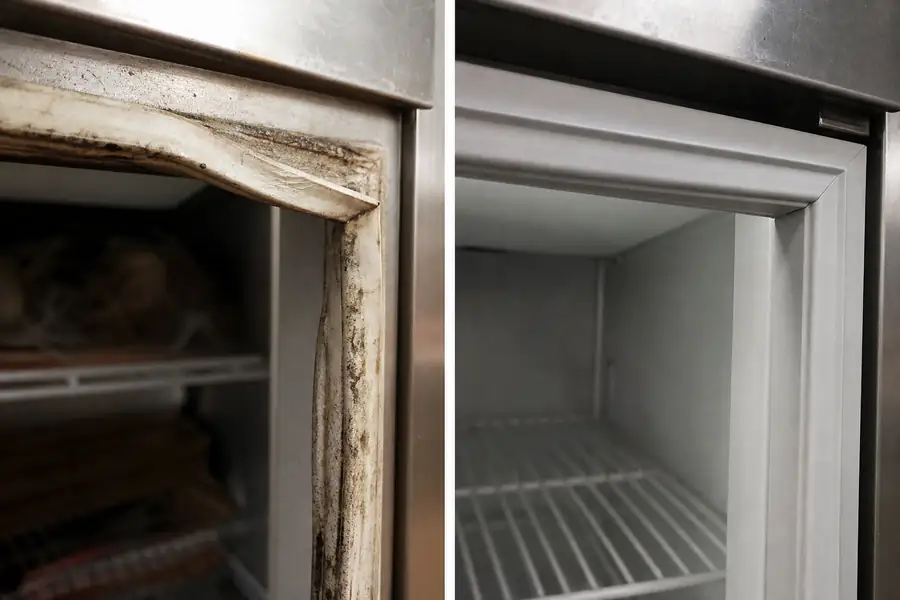
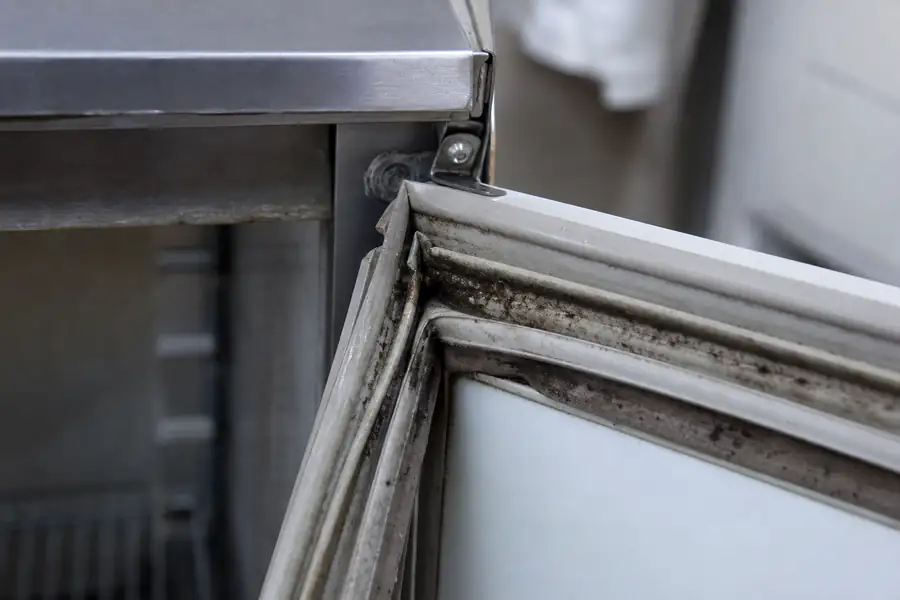
Mould that keeps returning to the same fold usually points to a compression problem, not a cleaning gap.
Snap-in gaskets have a magnetic strip that weakens if it's soaked or submerged.
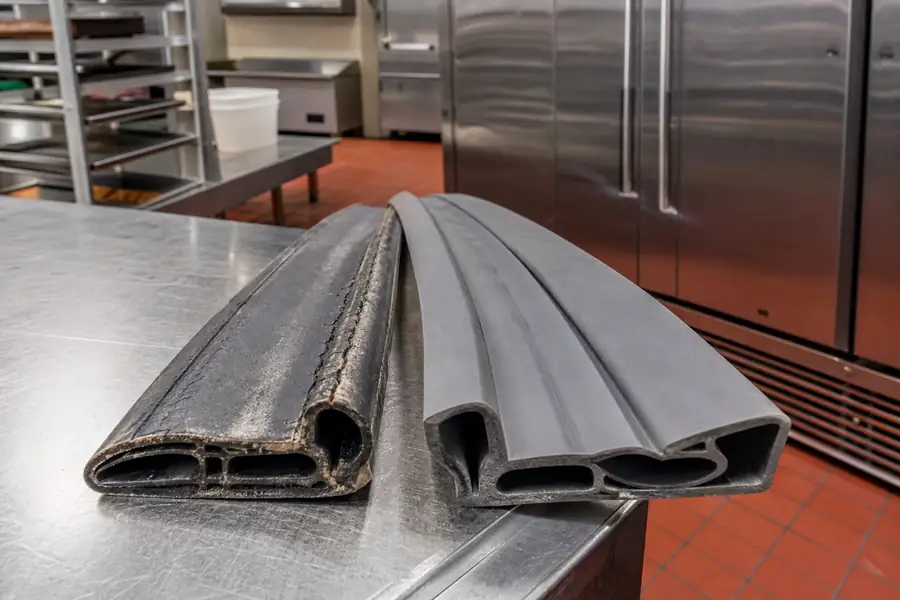
A gasket that's torn, shrunk, or lost its spring can't be cleaned back into shape.
The weekly routine that takes four minutes a door
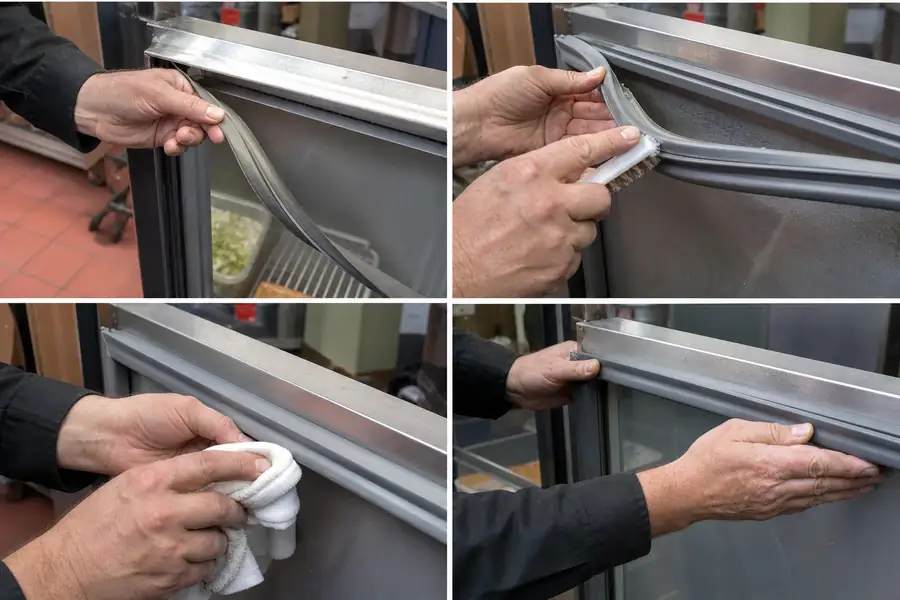
Cleaning a commercial door gasket properly takes about four minutes per door and three supplies: warm water, a few drops of unscented dish soap, and a soft cloth or non-abrasive sponge.
Wipe the full length of the gasket, working into every fold, with the soapy water.
Rinse with a clean, damp cloth to remove soap residue, which attracts dust and grease if left behind.
Dry the gasket completely, including inside the folds, before closing the door.
Check the seal against the frame for gaps, tears, or flat spots while it's clean and easy to see.
Boulder County's dry air pulls moisture out of vinyl and PVC seals faster than a humid climate would, so a gasket rinsed but never fully dried cracks sooner here than elsewhere. If a seal is already too stiff or torn to hold a clean wipe-down, that's a sign to look at commercial gasket replacement rather than another round of scrubbing. There's a printable gasket-cleaning checklist worth handing to the closing crew.
Need a gasket replaced?
Call us or send your unit's model number. Free quotes across Boulder County, usually same week.
Warm water and a mild, unscented dish soap are safe on nearly every commercial gasket material, whether it's PVC, vinyl, or a TPE (thermoplastic elastomer) profile used on newer units.
A soft microfiber cloth or non-abrasive sponge does the actual cleaning; the soap loosens grease and food residue so it wipes away instead of getting worked deeper into the fold. Rinse with plain water and dry the seal before closing the door. That last step matters: a damp gasket closed against a cold frame is exactly the environment mould needs.
What damages it, and what the damage looks like
Chlorine bleach, solvent-based degreasers, and abrasive pads all damage commercial gasket material over time, and each leaves a different kind of visible wear. A full chemical compatibility reference, naming exact products and safe contact times against PVC and TPE seal formulations, is still pending supplier documentation.
Chlorine bleach at kitchen concentrations
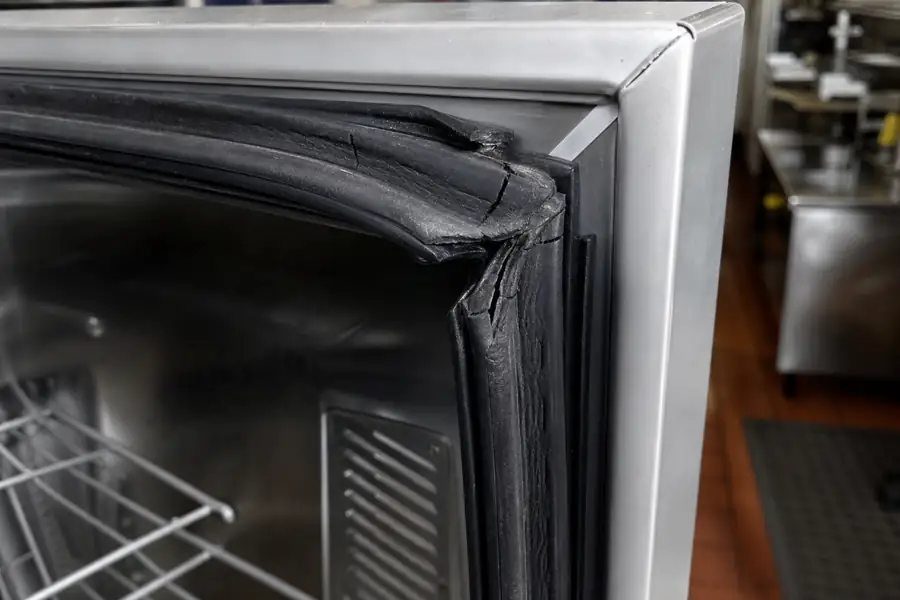
Bleach sanitizes a gasket's surface, but repeated contact breaks down the plasticizers that keep vinyl and PVC seals flexible. A bleach-damaged gasket looks chalky and faded along the fold, and it stiffens before it cracks, usually at the corners first.
Solvent and degreaser overspray
Solvent and citrus-based degreasers made for grease traps and hood filters swell and soften gasket material on contact, even from overspray during a nearby wipe-down. A solvent-damaged seal looks tacky or slightly swollen and loses its snap-back when pulled away from the frame.
Abrasive pads
Green scour pads and steel wool scratch the sealing face of a gasket, and every scratch becomes a groove where condensation sits instead of running off. Those grooves are where mould gets its first foothold, often within days of a scrub meant to remove it.
When mould keeps coming back in the same spot
Mould that regrows in the same fold within days of cleaning is almost always a compression problem, not a cleaning gap. A gasket has to be squeezed against the door frame every time the door closes to push moisture out of the fold; if the door is out of square, or a hinge has sagged, that squeeze only happens along part of the seal and the rest stays damp between cleanings.
On a prep table, this shows up along the back edge of the lid gasket, where the lid no longer sits flush over the pans. On a reach-in, it's usually the bottom corner near the hinge side, where the door has dropped slightly over years of use. Cleaning that spot harder doesn't fix it, because moisture returns the moment the door closes on an uneven gap.
The magnet strip and why it should not be soaked
The magnetic strip inside a snap-in gasket weakens if it's soaked, submerged, or scrubbed under heavy water pressure, and a weak magnet lets the door edge separate from the frame even on a gasket that still looks fine.
Wipe the strip's cover from the outside only. Don't pull the gasket off the frame to dunk it in a sink of sanitizer, and don't run it under a hose. If a door swings open on its own or the seal feels weak against a metal frame, the magnet has likely lost pull, and no amount of cleaning restores it.
What cleaning cannot fix
Cleaning cannot fix a gasket that's torn, shrunk, or has lost its memory, meaning it no longer springs back to its original shape once the door closes on it.
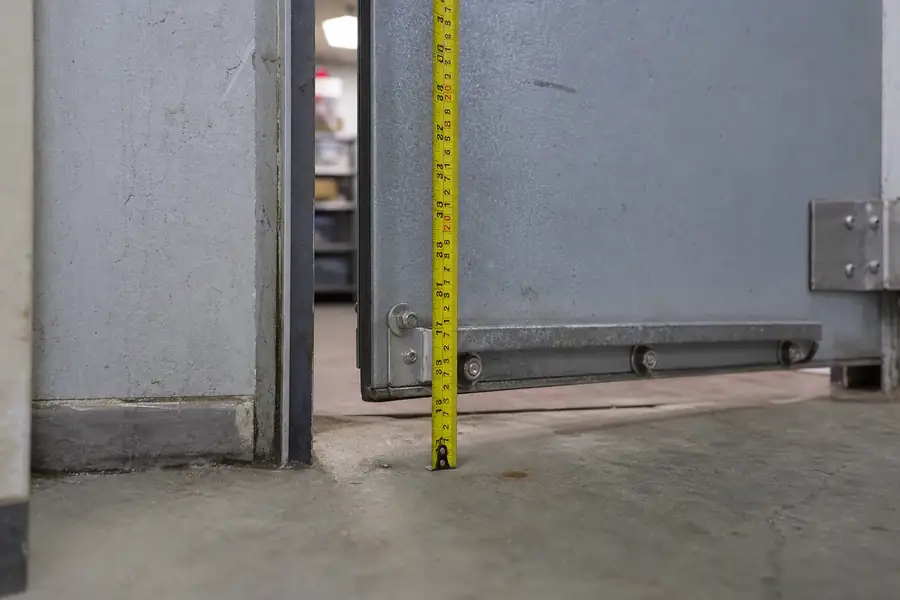
Signs a seal is past cleaning include daylight visible through the closed door, frost building on only one side of the frame, or a door that bounces slightly instead of settling flush. Those symptoms sometimes point past the gasket entirely, to a hinge that's sagged, a closer that's lost tension, or a sweep worn down at the floor. A seal replaced without checking that hardware often fails again within months for the same reason the last one did.
Getting a seal assessed
Getting a commercial gasket assessed starts with a call describing the unit and the symptom, whether that's mould in one corner, a warm case, or a door that won't stay shut.
The Gasketeers ask which brand and model the door came off (True, Beverage-Air, Traulsen, Continental, and most other major brands turn up constantly in Boulder County kitchens), measure the seal and the frame, and quote the repair with no obligation attached. If a seal keeps growing mould no matter how it's cleaned, or a door just won't seal square anymore, request a free gasket quote and get it assessed before the compressor runs up another month of overtime.
Frequently asked questions
What is the best way to clean refrigerator gaskets?
Warm water, a few drops of mild unscented dish soap, and a soft cloth or non-abrasive sponge clean commercial refrigerator gaskets safely. Wipe into every fold, rinse with plain water, and dry the seal fully before closing the door, since a damp gasket left closed is what lets mould regrow.
Can you use bleach on refrigerator gaskets?
Bleach sanitizes a gasket's surface but breaks down the plasticizers that keep vinyl and PVC seals flexible with repeated use, leaving them stiff and eventually cracked. It's better kept for the surrounding frame and interior surfaces than for daily wipe-downs of the seal itself.
Why does mould keep coming back on my fridge seal?
Recurring mould in the same spot on a gasket usually means the door isn't squeezing that section of the seal shut anymore, often because of a sagging hinge or a door that's slightly out of square. Moisture stays trapped in that fold between cleanings no matter how thoroughly it's wiped down, so the mould returns within days.
How often should commercial gaskets be cleaned?
Most commercial kitchens should wipe down door gaskets at least weekly, and daily on high-traffic reach-ins and prep tables that see constant hand contact and spills. A quick four-minute wipe with soap and water at each cleaning catches early tears or gaps before they turn into a mould problem or a warm case.