Your Cooler Door Drifts Open: Closers, Hinges and Door Sag
A door that drifts open costs more than a torn seal and no gasket will fix it. How to tell a spent closer from a sagging hinge from a door that is out of square.
Quick answer: A walk in cooler door will not stay closed almost never because the gasket alone failed. The usual cause is a spent door closer, worn or sagging hinges, or a door panel that has dropped out of square, any of which lets the door drift open no matter how new the seal is.
Replace the gasket on a door with bad hardware and the same complaint comes back in weeks. The seal wears out fastest exactly where the door hangs crooked, so the fix has to start with what's holding the door, not the strip of rubber around its edge.
The Gasketeers see this pattern across grocery coolers, school kitchens, and senior living facilities across Boulder County: staff prop the door open, or slam it shut, because it no longer swings closed on its own.
Three different problems that look identical
A door that drifts open, sags at one corner, or needs a shove to latch usually traces back to one of three separate failures: a worn closer, loose or sagging hinges, or a door panel that has dropped out of square against the frame. Each produces roughly the same complaint at the pass, but each calls for a different fix.
Sort out which one is failing before touching the seal. Hinge, closer and sweep repair covers all three, but a technician needs to know which part is actually loose or worn first, otherwise you end up paying to replace hardware that was never the problem.
Need a gasket replaced?
Call us or send your unit's model number. Free quotes across Boulder County, usually same week.
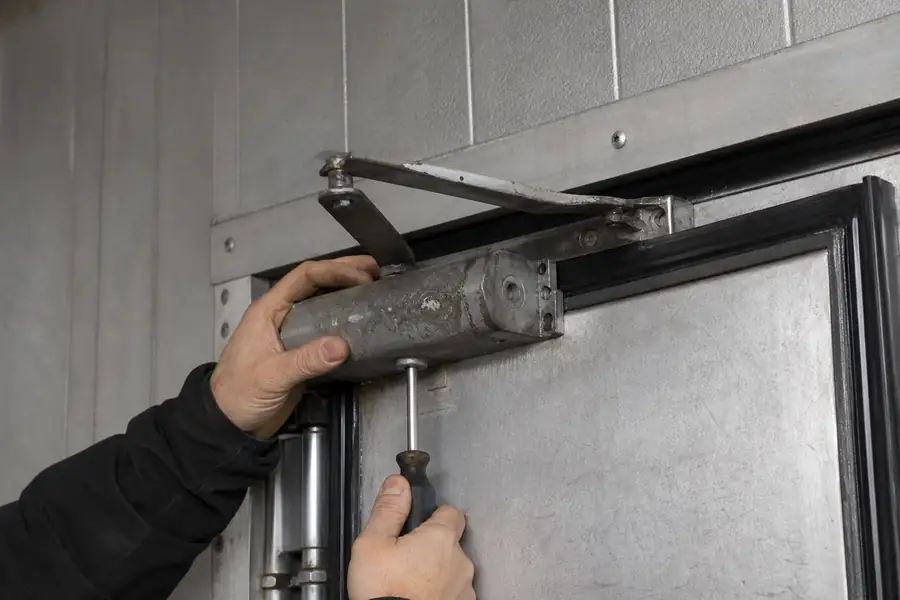
A door closer is the spring-and-arm mechanism mounted at the top of the door that pulls it shut after someone lets go. Working correctly, it swings the door closed from any angle and seats it flush against the frame every time.
How to test pull-to from six inches
Open the door about six inches, let go, and watch what happens next. A healthy closer pulls the door the rest of the way shut and lets the latch engage without a push or a slam. If the door stalls partway, swings shut hard enough to bounce, or doesn't move at all, the closer has lost its tension.
What a spent closer feels like
A worn closer usually shows up as one of two extremes: a door that barely creeps shut and needs a hand to finish, or one that slams so hard it knocks the gasket loose on rebound. Staff work around either problem by propping the door, which is when frost and warm-air infiltration start costing real money.
The hinges
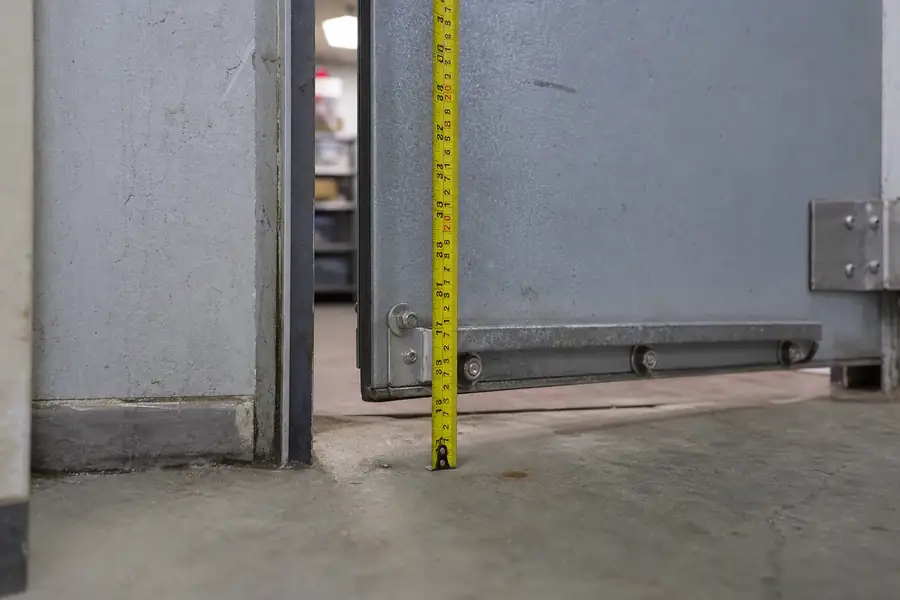
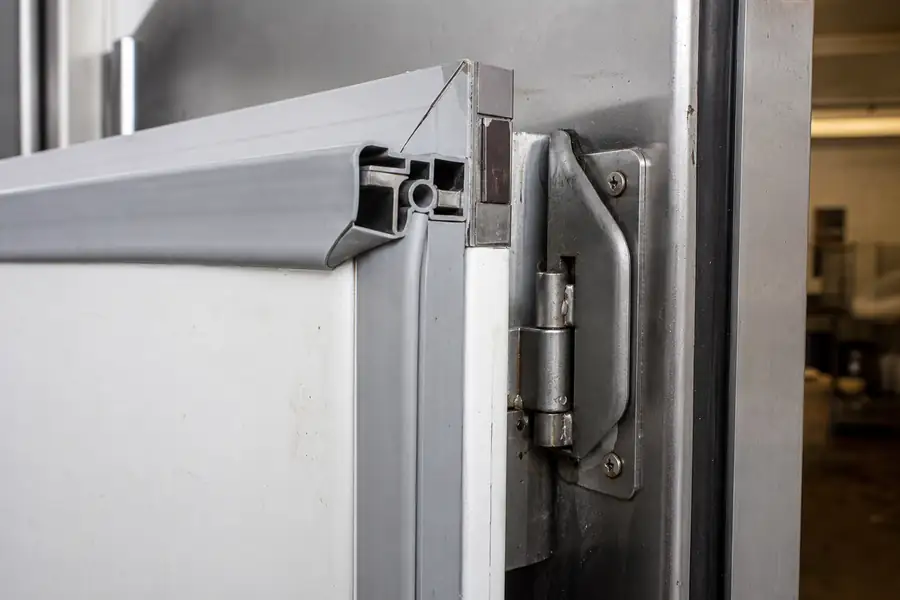
Hinges carry the full weight of an insulated cooler door, and worn ones let it sag away from the frame even when the closer is fine. A door hanging a quarter inch low at the latch side won't seal at the top no matter how new the gasket is.
Cam-lift versus spring hinges
A cam-lift hinge lifts the door slightly as it swings open, then uses that lift plus the door's own weight to rotate it shut and seat it square against the frame, similar to a self-closing screen door. Spring hinges rely on tension inside the hinge barrel instead of gravity. Most walk-in doors use cam-lift hinges, including common brands like Kason, because gravity keeps closing the door reliably over years of use.
Testing for sag and lateral play
Measure the gap between the door and frame at the top corner opposite the hinges, then compare it to the gap at the bottom corner. A gap noticeably wider at the top means the door has dropped on its hinges. Grab the outer edge and rock it side to side: wobble at the hinge pins means the barrels have worn loose and the door no longer tracks square.
The door itself
Even with perfect hardware, a warped or delaminated door panel will never hold a tight seal, since the gasket needs a flat, stable surface to compress against. This is less common than a hardware fault, but it happens on older Kolpak, Nor-Lake, and Master-Bilt doors that have taken years of cart impacts.
Panel drop and delamination
Panel drop happens when the screws anchoring the hinges pull loose from the door's core, letting the panel sag under its own weight. Delamination is when the outer metal skin separates from the foam insulation underneath, usually from repeated impact or moisture, leaving the panel wavy instead of flat.
A frame that has moved
Building settling, a forklift clipping the frame, or a slab that has shifted can knock the frame out of square even when the door and hardware are fine. A level held against the jamb quickly shows whether the opening itself has racked out of true.
The latch and strike
A walk in cooler door latch that won't catch, or catches loosely enough that the door pops back open, usually means the strike plate has worn a groove where the latch cam rides. That groove lets the cam slip past instead of locking, especially once the door is even slightly out of alignment from a sagging hinge. Check for a shiny, dished-out wear pattern; if the cam no longer sits centered in the strike, realigning or replacing the strike solves it faster than adjusting the latch itself.
Why this destroys gaskets faster than anything else
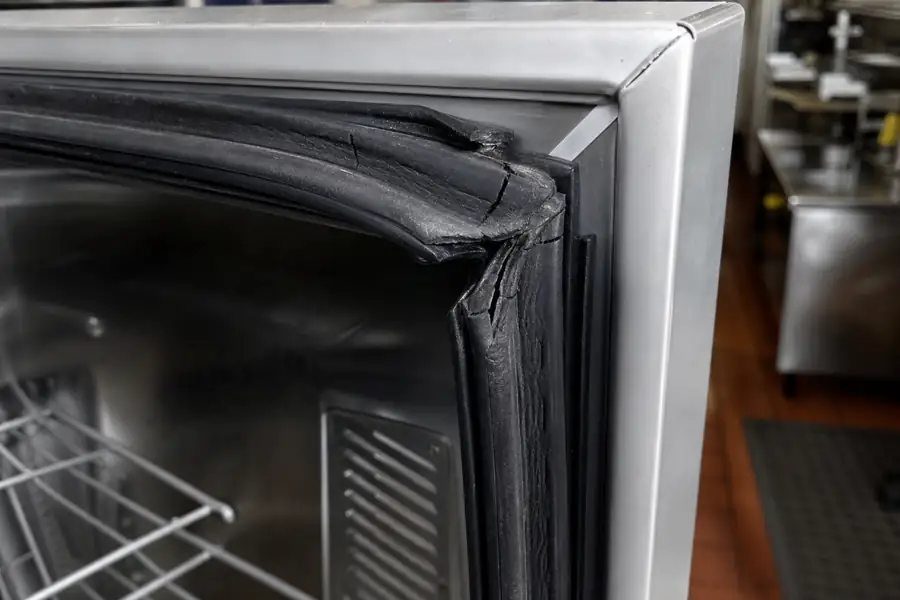
A door that drifts, sags, or gets slammed rubs its gasket against the same spot on the frame every single cycle, instead of compressing evenly around the whole perimeter. That uneven wear tears and flattens the seal in months instead of years, someone replaces the gasket, and the same wear starts over the next day. New walk-in cooler and freezer gaskets fitted to hardware that isn't holding the door square will always fail early, no matter how good the seal is.
Fixing the door before fitting the seal
Fix the hardware first, then fit the gasket, not the other way around. Adjusting a closer's tension, swapping worn hinge pins, or resetting a strike plate usually takes less time than a full gasket job, and it's the step that decides whether the new seal actually lasts. Request a free gasket quote once the hardware has been checked, and get the door itself assessed rather than assuming a new seal alone will fix a walk in cooler door that will not stay closed.
Frequently asked questions
Why won't my walk-in cooler door stay closed?
Most of the time it's the hardware, not the gasket: a worn door closer that's lost spring tension, hinges that have sagged and let the door drop out of square, or a strike plate too worn to hold the latch. A new gasket on a door with any of these problems will still drift open because the seal was never the real fault.
How do you adjust a walk-in cooler door closer?
Most closers have a tension screw or adjustment nut that changes how hard the arm pulls the door shut. Turning it in small increments while re-running the six-inch pull-to test shows whether the door now closes fully without slamming. If the closer has no adjustment left, or is stripped or leaking oil, it needs replacing rather than adjusting; see this breakdown of a cooler door that drifts open for the full test sequence.
What is a cam-lift hinge?
A cam-lift hinge is a spring-loaded hinge that lifts the door slightly as it opens, then uses that lift plus the door's own weight to swing it shut and seat it square against the frame once released. They're standard on most heavier walk-in cooler and freezer doors because gravity does reliable closing work over years of use, unlike hinges that depend only on internal spring tension.
How do you fix a sagging cooler door?
A sagging cooler door is usually fixed by tightening or replacing the hinge pins and screws holding the door to the frame, which restores the door to its original height and square alignment. If the panel itself has dropped because the anchor screws pulled loose from the door's core, the mounting points need to be reset or reinforced before the hinges are retightened. Once the door hangs square again, a gasket will actually seal instead of wearing unevenly.