Commercial Refrigerator Door Not Sealing: Work Out Why in Five Minutes
A working order of checks for a commercial fridge door that will not seal: seal, hinge, closer, latch and frame, and which of them a new gasket actually fixes.
Quick answer: A commercial refrigerator door usually fails to seal for one of five reasons: a torn or hardened gasket, a magnet strip that has lost its pull, a sagging hinge, a closer that has lost tension, or a latch that has drifted out of alignment. Test the gasket first. If it passes a light-leak and compression check, the fault is almost always in the door hardware, not the rubber.
Guessing wrong here costs a week. Order a gasket when the real problem is a hinge and the door still won't seal when the new gasket shows up. Reach-in gasket replacement is usually a same-day fix once you actually know that's the fault, so the four checks below take five minutes and settle it before you spend money on the wrong part.
Start Here: Four Checks for a Commercial Refrigerator Door Not Sealing
Work through these in order. Each one rules something out, and by the fourth check you'll know whether you're shopping for a gasket or calling someone about the hinges.
1. Light leak from inside the cabinet
Step into the unit, close the door, and have someone kill the kitchen lights. Any daylight or ceiling light visible around the gasket's edge marks exactly where the seal is failing, whether that's one corner (usually hardware) or the whole perimeter (usually the gasket itself).
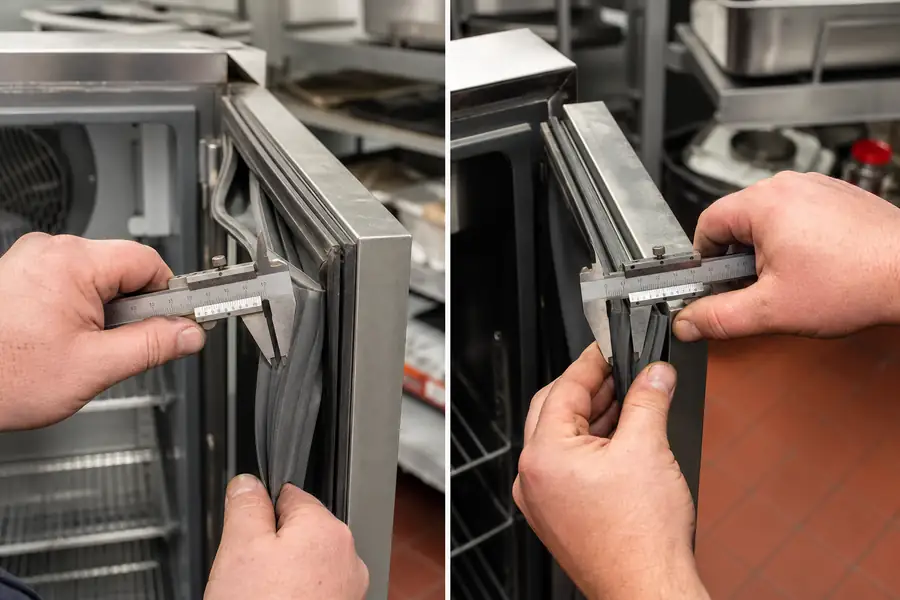
2. Compression width around the whole perimeter
Close the door on a strip of paper or a dollar bill at the top, both sides, and the bottom, then pull. Even, firm resistance at all four points means the gasket is compressing correctly. Resistance at three points but not one usually points to a hinge or frame problem, not the gasket.
3. Does the door pull itself shut from six inches
Open the door about six inches and let go. A working closer should swing it the rest of the way and seat the latch on its own. A door that stalls, drifts, or needs a shove has a closer that has lost tension, not a bad gasket.
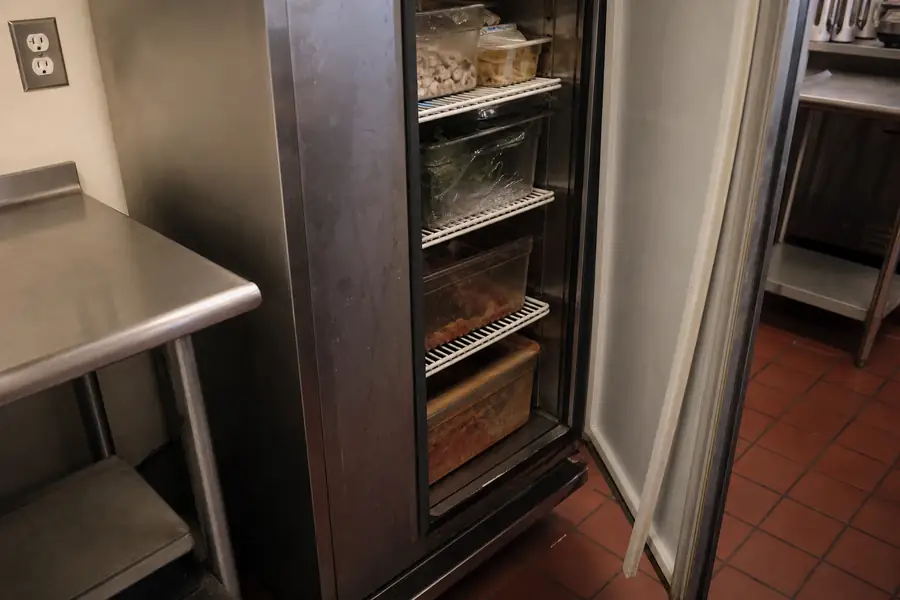
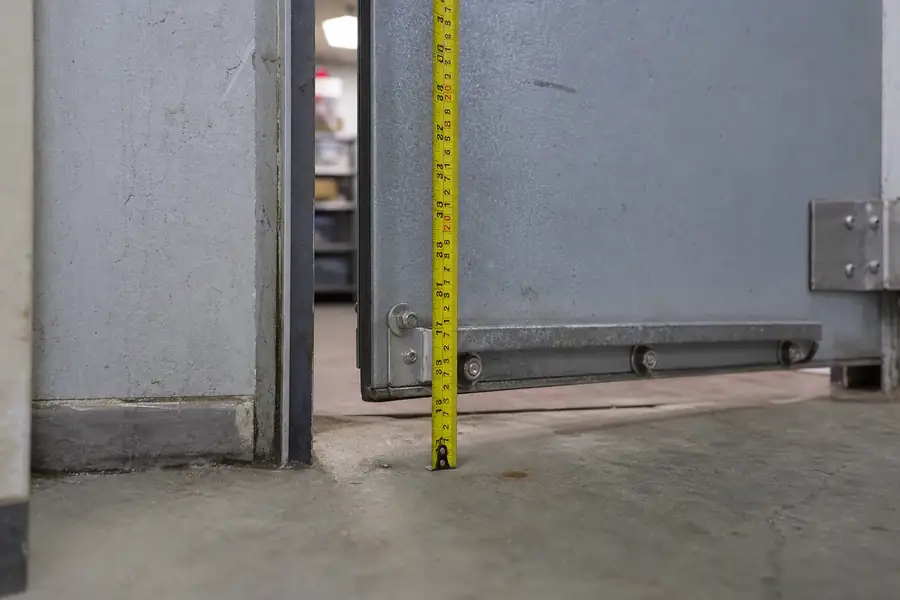
4. Is the door square in the frame
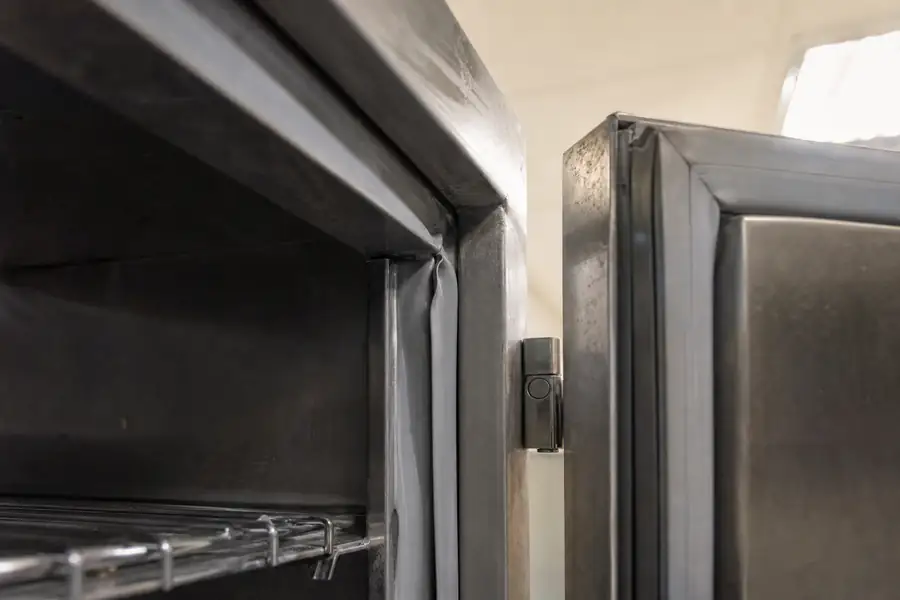
Stand back and look at the gap between the door and the frame on all four sides. A gap that is even everywhere but too wide means the gasket has worn thin. A gap that is bigger at the top than the bottom, or bigger on one side, means the door itself has shifted.
Need a gasket replaced?
Call us or send your unit's model number. Free quotes across Boulder County, usually same week.
These are gasket problems, and they're the cheapest fix on this list.
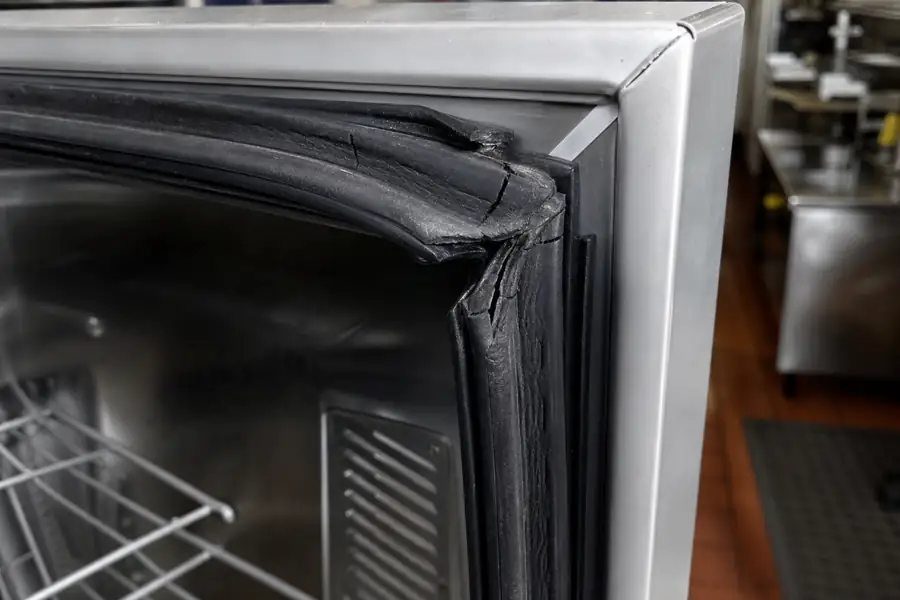
Torn, split or perished
A gasket with visible cracks or splits along the bellows has lost the structure it needs to hold shape, so it can't spring back and seal even where it looks intact elsewhere on the door.
Hardened and no longer compressing
Rubber stiffens with age and repeated temperature cycling. A gasket that looks whole but feels stiff to the touch, or one that stays flattened after you release the door, has hardened past the point where it can compress against the frame.
Magnet no longer holding
The magnetic strip inside the gasket weakens over years of use, and once it can't pull the door tight against the frame, warm air gets a straight path into the cabinet even with an otherwise decent-looking seal.
If the Seal Passes but the Door Still Leaks
This is the part every symptom listicle skips, and it's usually where operators waste money on a gasket that was never the problem.
Sagging hinges
Loose screws or a worn pin let the door drop slightly on its hinges, which opens a gap at the top or the latch side that no gasket can bridge no matter how new it is.
A closer that has lost tension
A cam-lift closer that no longer pulls the door fully shut leaves the gasket un-compressed at the latch side, even though the rubber itself is fine.
A latch adjusted out of alignment
A latch that catches early or late lets the door look closed without seating all the way, so the gasket never gets compressed to its working depth.
A frame that has moved
Impact damage, a forklift bump, or a building settling over time can twist the frame out of square. No gasket, hinge, or closer fix closes a gap the frame itself created. Hinges, closers, latches, and sweeps are handled as door hardware repair, usually alongside gasket work rather than as a separate visit.
What Each Fault Costs You While You Wait
Every one of these faults lets warm, humid kitchen air into a cold cabinet, and the compressor pays for it by running longer to hold temperature.
Fault
What it does to the cabinet
Cost while you wait
Torn or hardened gasket
Constant air leak around the whole door
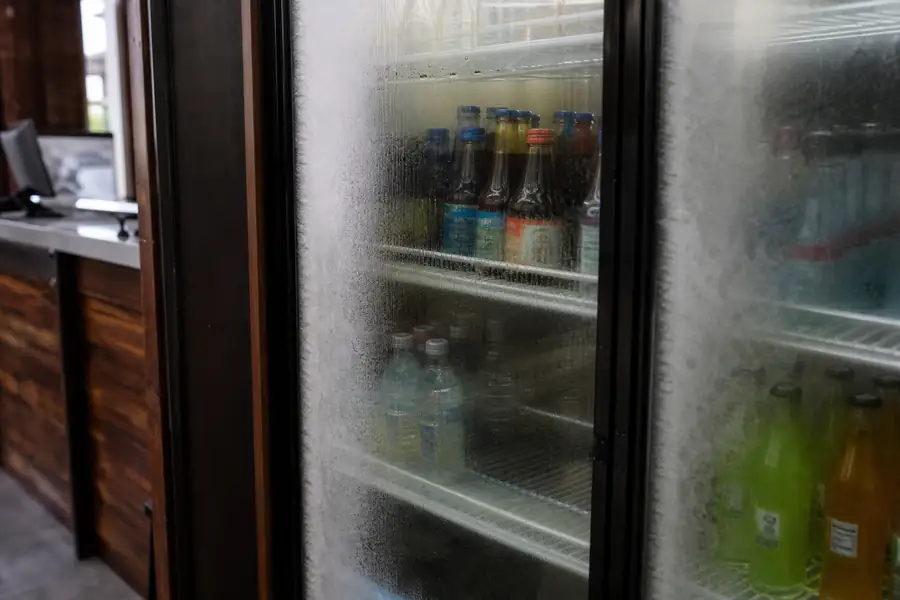
Compressor runs near-continuously; frost builds fast
Sagging hinge
Fixed gap at top or latch side
Same leak, all day, every day
Weak closer
Door drifts open after every service pass
Warm air enters in bursts, hard to notice on a walk-by
Misaligned latch
Door looks shut but isn't fully seated
Slow, easy-to-miss leak that adds up over a shift
Shifted frame
No gasket can span the gap
Any gasket you install keeps failing until the frame is corrected
None of that is guaranteed to show up on your next power bill in a fixed amount, but a door that won't seal is a cost accumulating in the background every hour it stays open to warm air, and it's the kind of thing a health inspector notices before you do.
What We Need From You to Quote the Fix
A gasket quote for a commercial refrigerator door not sealing starts with a few photos, not a truck roll. Send a photo of the data plate (make, model, serial number), a photo of the gasket itself, and a note on which of the checks above the door failed.
That's enough for The Gasketeers to give you a clear price before anyone drives out, and it tells us up front whether this is a gasket job, a hardware job, or both. Request a free gasket quote through the contact page, or text photos of the door and data plate to (970) 507-8034 and skip the form. Save this commercial refrigerator door not sealing checklist for your line cooks so the next warm case or ice buildup gets diagnosed the same way, in five minutes, before anyone orders the wrong part.
Frequently asked questions
Why is my commercial refrigerator door not sealing?
Most commercial refrigerator doors stop sealing because the gasket has torn, hardened, or lost its magnetic pull, or because the door itself no longer sits square in the frame due to a sagging hinge, a weak closer, or a misaligned latch. Running the four checks in order tells you which one you're dealing with.
How do I test a refrigerator door seal?
Close the door with the interior light on, step outside, and look for light escaping around the edges, then repeat from inside with the kitchen lights off. Follow that with a compression check: close the door on a strip of paper at each of the four sides and pull, feeling for even resistance all the way around.
Can a bad hinge stop a door from sealing?
Yes. A sagging hinge drops the door slightly, which opens a gap at the top or latch side that a new gasket cannot close no matter how good the rubber is. If the gasket passes the compression check but the door still leaks, the hinge is a common cause.
Should I replace the gasket or adjust the door?
Replace the gasket if it fails the light-leak or compression check on its own, meaning it's torn, hardened, or the magnet has weakened. Adjust or repair the hardware instead if the gasket passes those checks but the door still won't self-close or seat square in the frame.