Every gasket quote starts with the same question: what unit is this? The answer lives on a small metal or plastic tag called the data plate, but manufacturers tuck it into different spots, label the model and serial numbers differently, and sometimes let years of grease and repainting make it unreadable. Knowing how to find your commercial refrigerator model number before you call in a repair saves a wasted trip and gets you a gasket that actually fits the first time.
The data plate lists both a model number and a serial number, and the serial number can matter as much as the model when a gasket profile changed mid production.
Reach-ins and prep tables usually keep the plate inside the cabinet, often on the hinge side wall or near the compressor compartment.
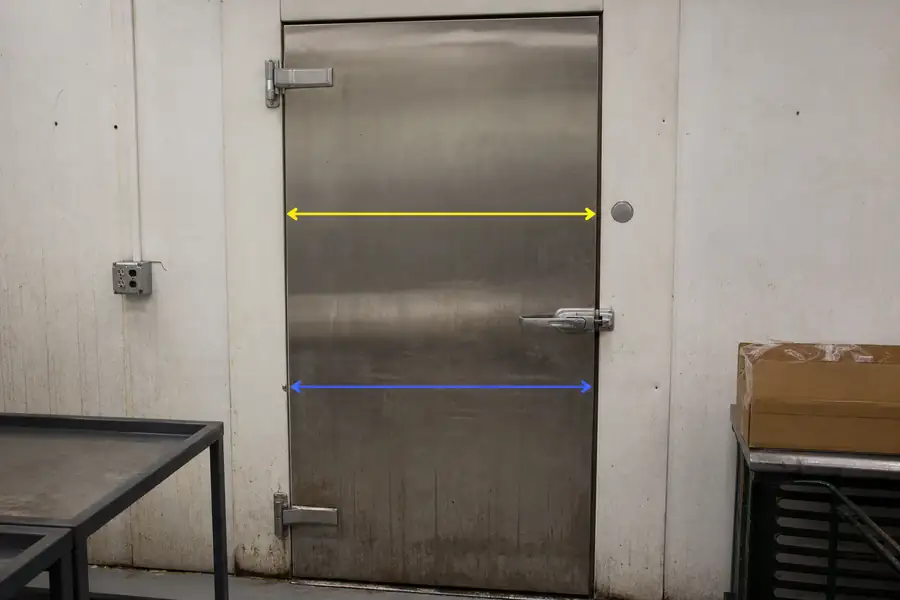
Walk-in coolers and freezers typically mount the plate directly on the door or door frame, visible without stepping inside.
A painted-over, corroded, or missing plate does not stop a gasket order. The old seal itself carries the measurements needed to match it.
Units old enough to be discontinued are still fixable through custom fabrication from the existing gasket profile.
Why the plate decides your gasket
The data plate is the most reliable way to match a replacement gasket to your exact unit, because two refrigerators that look identical on the sales floor can use different door frame depths, corner radii, or magnet strips on the inside. A gasket ordered from a guess at the model, without checking the plate, has a real chance of arriving loose, gapping at the corners, or not seating in the retainer channel at all.
The Gasketeers has opened enough cooler and freezer doors across Boulder County kitchens to know that plate placement follows patterns by manufacturer, but never guesswork. That holds true across the brands we service, from the major national manufacturers down to units old enough to be discontinued.
Need a gasket replaced?
Call us or send your unit's model number. Free quotes across Boulder County, usually same week.
Model number, serial number and which one we actually need
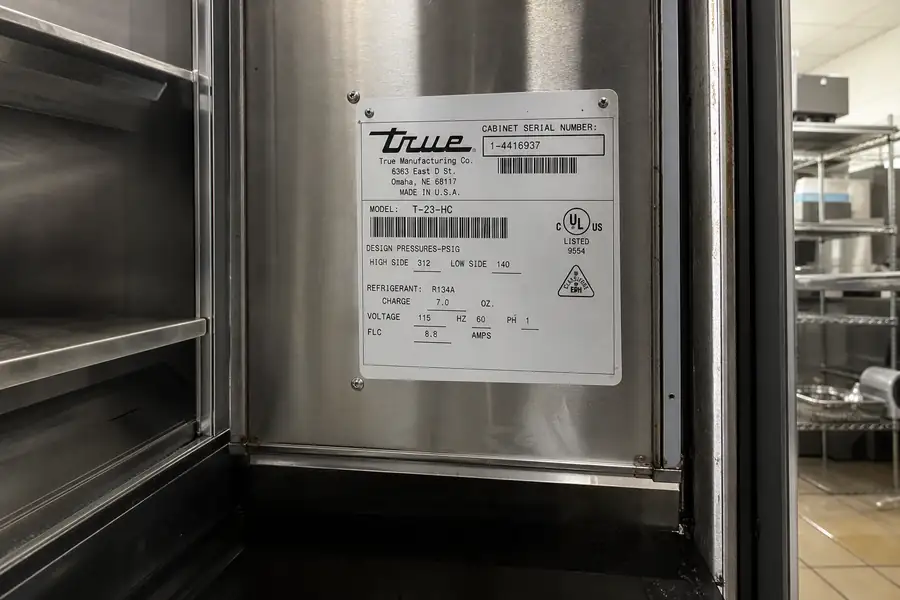
The model number identifies the general design of the unit; the serial number usually encodes when and where it was built, and sometimes marks a running change within that same model. Most data plates print both, labeled MOD or MODEL and SER or S/N, along with the manufacturer name, voltage, and refrigerant type.
For gasket fitment, both numbers matter. The model tells us the door style and general dimensions. The serial number's build date tells us whether your unit falls before or after a manufacturer changed the gasket profile on that same model, which is common enough that a model number alone is not always the final word. For a quick photo walkthrough of spotting these two numbers on your own plate, see our guide to finding your refrigerator's model number.
Where each manufacturer puts the plate
Data plate placement follows a rough pattern by manufacturer, though individual models and production years vary. These are the spots The Gasketeers checks first on the units it sees most often in Boulder County kitchens.
True
On most True reach-ins and glass merchandisers, the data plate is mounted on the interior cabinet wall, usually on the hinge side, at or near eye level. True is one of the more common brands The Gasketeers services locally, and its plate location is also one of the more consistent across model lines.
Traulsen
Traulsen typically places the data plate on the interior frame near the top of the cabinet, close to the door gasket retainer, rather than on an exterior panel.
Turbo Air
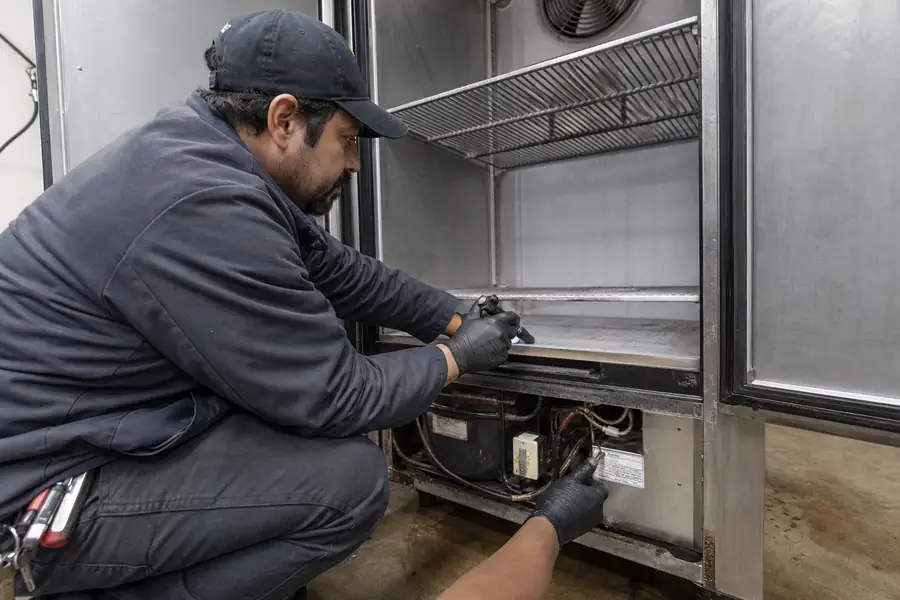
Turbo Air units commonly carry the plate on an interior side wall or just inside the compressor compartment, so it may take moving a shelf or bin to spot it.
Beverage-Air
Beverage-Air follows a pattern similar to Turbo Air, with the plate usually on the interior hinge-side wall or on the compressor deck at the base of the unit.
Delfield and Continental
Delfield and Continental units often mount the plate on the top rail of the cabinet or along the upper door frame, sometimes visible from outside the unit without opening a door.
Hoshizaki
Hoshizaki tends to place the plate on an exterior side panel or just inside the compressor compartment access panel, rather than inside the food storage area.
Kolpak, Nor-Lake and Master-Bilt walk-ins
Kolpak, Nor-Lake, and Master-Bilt walk-in coolers and freezers usually mount the data plate directly on the door itself, near the hinge side, or on the exterior wall right next to the door frame. A walk-in cooler nameplate is generally meant to be readable from outside the box, without opening the door to check it.
When the model number is not enough: mid-run profile changes
Manufacturers sometimes change a gasket's profile partway through a model's production run, so two units carrying the identical model number can need two different gaskets. Parts Town's parts documentation shows this on the True T-49F reach-in: units built before a 2005 running change use gasket part 810803, while units built after that date use 810719. The True GDM-35 glass merchandiser shows the same pattern, with part 811134 used before 2009 and 810807 after.
This is exactly why the serial number's build date matters alongside the model number. A model number that looks like a perfect match on a parts site can still be the wrong version if your unit was built on the other side of a running change. When the date is unclear, measuring the old gasket directly settles it faster than trying to decode a production timeline.
What to do when the plate is gone, painted over or unreadable
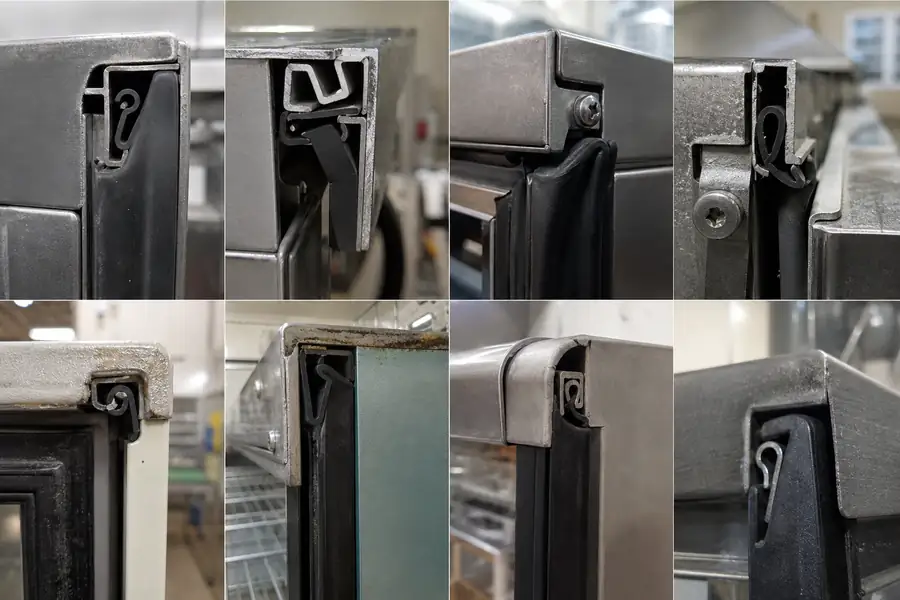
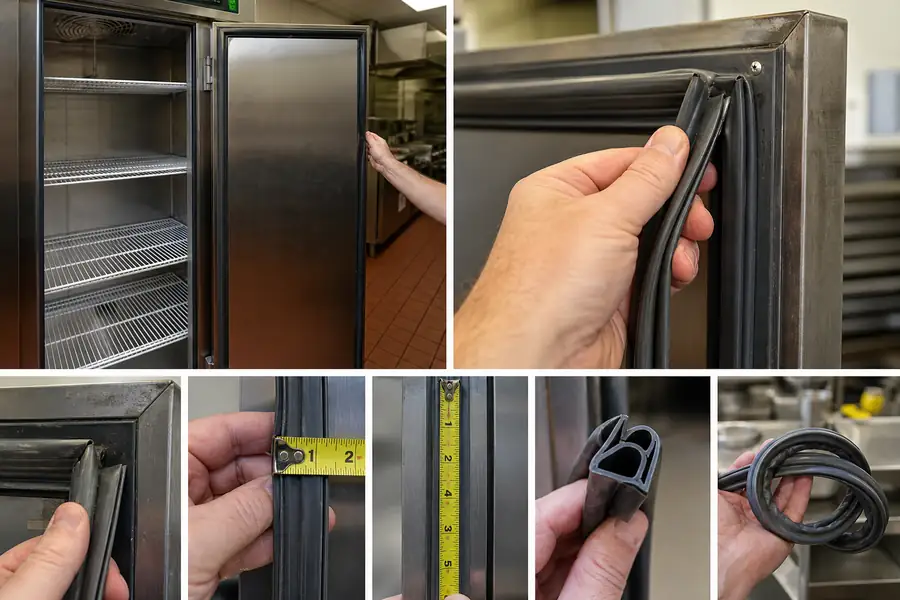
A missing or unreadable data plate does not stop a gasket order, because the old seal already in the door is a working record of the exact profile that fits. Measuring its length, width, bulb shape, and magnet type gives The Gasketeers what a legible plate would have provided anyway.
If the plate is gone, photograph the door frame and any hardware still attached, and check for a secondary marking elsewhere, such as a warranty sticker or a stamped number on the compressor deck. For units old enough that the model has been discontinued outright, custom and obsolete unit gaskets can be fabricated directly from the existing seal profile, so a missing plate is rarely a dead end.
The three photos that let us quote without a plate
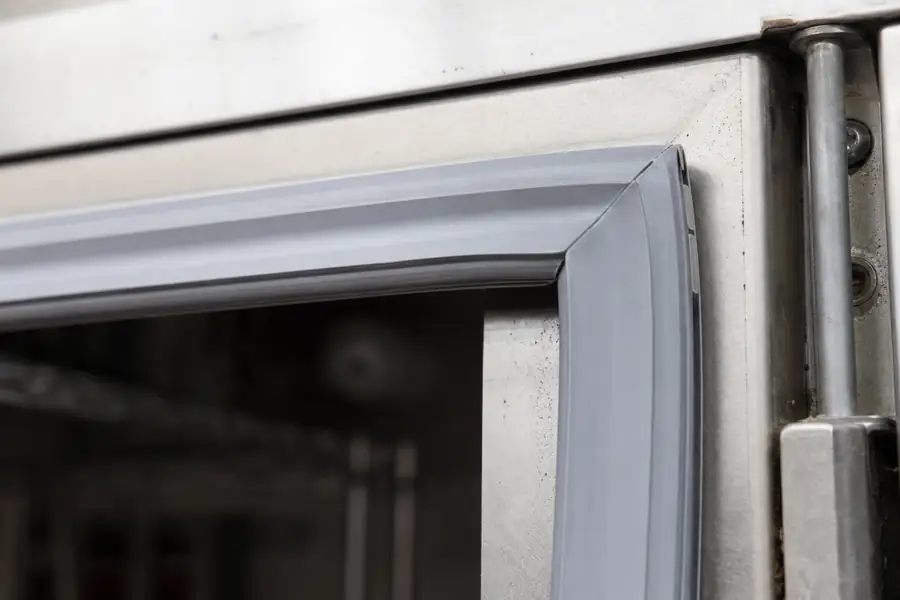
Three photos are usually enough for The Gasketeers to identify a gasket without ever locating the data plate. First, a photo of the full door, closed, taken from a few feet back so the frame and corners are visible. Second, whatever remains of the data plate, even partially legible. Third, a photo of the gasket cross-section, taken by peeling back one corner of the old seal to show its bulb shape and how it grips the frame.
Send those photos, or the model and serial number if you found them, through The Gasketeers' contact page, and expect a clear quote back without a truck roll just to look at a door.
Frequently asked questions
Where is the model number on a commercial refrigerator?
On most reach-in coolers and freezers, the model number is printed on the data plate inside the cabinet, often on the hinge side wall or near the compressor compartment. On walk-in coolers and freezers, the plate is usually mounted on the door itself or the exterior door frame, so it can be read without opening the unit.
What is the difference between a model and serial number?
The model number identifies the general design and size of the unit, while the serial number usually records the specific build, including when it was manufactured. For gasket fitment, the serial number's build date can matter just as much as the model, since some manufacturers change a gasket profile partway through a model's production run.
Can you find a gasket without a part number?
Yes. The Gasketeers regularly matches gaskets using photos of the door and a physical measurement of the old seal when no plate or part number is available. This works even on discontinued units, since a custom gasket can be fabricated directly from the existing profile.
Where is the data plate on a walk-in cooler?
On most walk-in coolers and freezers, the data plate is mounted on the door itself near the hinge, or on the exterior wall immediately next to the door frame. It is typically placed so it can be read from outside the box without opening the door.