Gasket Mounting Profiles: Snap-In, Push-In, Screw-In and Compression
Snap-in, push-in, screw-in, compression, magnetic and hook: how to tell which profile your unit uses from one corner photo, and why it decides your options.
Ask a kitchen manager what gasket they need and most can tell you the unit brand, maybe the door size. That gets you nowhere at the parts counter, because a door seal is defined first by its mounting profile, the shape that lets it grip the frame, not by its length or color. The Gasketeers work with commercial gasket mounting profiles across walk-ins, reach-ins, glass cases, prep tables and drawers, and once you can name yours from one corner photo, ordering the right part takes minutes instead of guesswork.
Key things to know before you start measuring:
The profile, not the size, decides whether a gasket fits, so two seals of identical length can be completely incompatible.
The main families are push-in, snap-in/dart, screw-in, compression, and magnetic insert, plus a handful of less common hook and slide-in styles.
Most operators can identify their profile from a single photo of one door corner, gasket and frame together.
Uncommon or discontinued profiles are still fixable. They get fabricated from the old gasket as a pattern.
A door retrofitted with the wrong profile will sweat, frost, or leak no matter how new the gasket looks.
Why the mounting profile matters more than the size
The mounting profile is the single fact that determines whether a gasket will seat, seal, and hold, and it matters more to a working repair than door height, width, or even brand. A gasket ordered by dimensions alone but the wrong profile will not lock into the channel, or it will sit loose enough to leak cold air within weeks. That is why our gasket profile catalogue is organized by profile first, unit type second.
Each profile describes how the gasket's back edge engages the door or frame: a rib that snaps into a slot, a flange screwed flat against the door face, a foam core squeezed between two surfaces. Get the profile wrong and the size is irrelevant.
Need a gasket replaced?
Call us or send your unit's model number. Free quotes across Boulder County, usually same week.
A push-in gasket has a plain flexible flange that gets pressed into an open channel and held by friction and its own memory, no screws, no separate retainer needed. It is common on prep tables, refrigerated drawers, and some older reach-ins where the door frame has a simple U-shaped groove.
Push-in profiles are easy to strip out for cleaning, which is exactly why they wear loose first at the corners, the spot that takes the most flexing every time the door closes.
Snap-in and dart
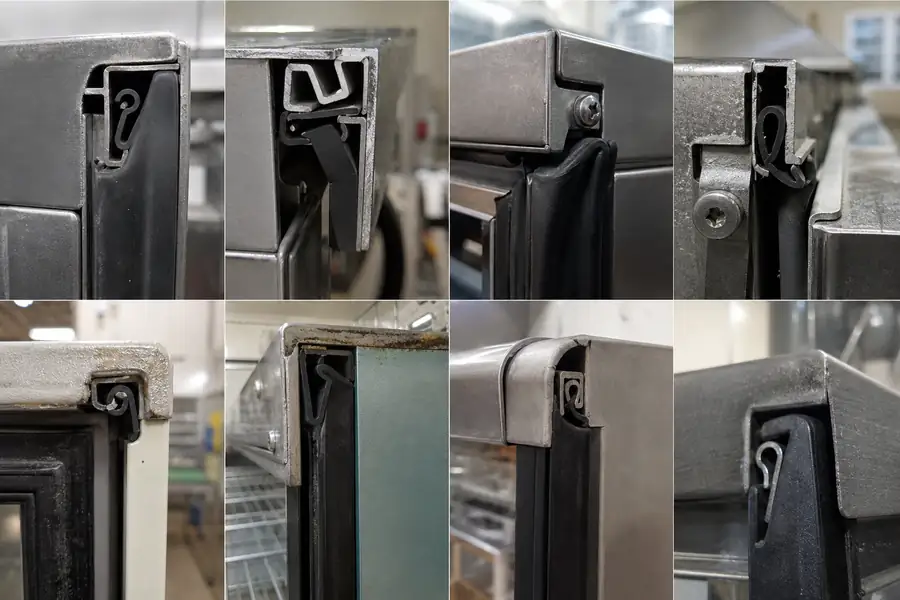
A snap-in gasket uses a bulb or dart-shaped rib along its back edge that clicks into a matching groove and locks there under tension. This is the dominant profile on True reach-ins and many glass display cases, where a tight, tool-free seat matters for fast field service.
The dart profile is a specific type of snap-in: instead of a rounded bulb, the rib is a narrow arrowhead shape that resists pulling back out once seated. Both rely on the plastic channel keeping its shape. A channel that has flexed or cracked from years of door slams will let a good snap-in or dart gasket pop loose at the corners.
Screw-in and screw-mount
A screw-in gasket has a flat mounting flange fastened directly to the door face with small screws through pre-punched holes, rather than snapping or pushing into a channel. It shows up most on older walk-in doors and some units where the door has no molded retaining groove.
Screw-mount seals are the most forgiving profile to install correctly because the screws hold position while you square the corners, but they are also the slowest to swap since every screw has to come out and go back in without stripping the hole.
Compression
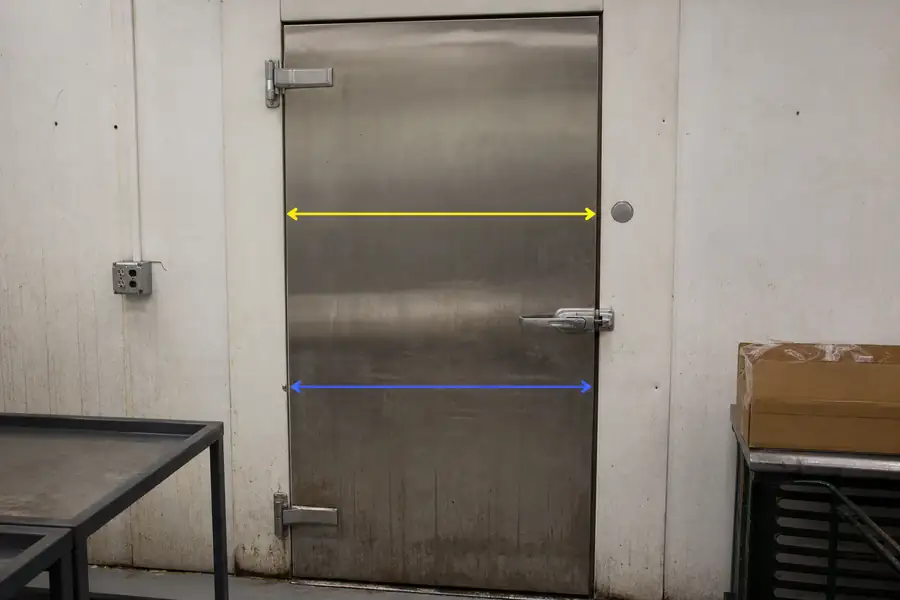
A compression gasket has no channel or rib at all. A solid foam or rubber core simply gets squeezed between the door and the frame when the door latches, and the seal comes entirely from that compression, not from any mechanical lock. It is most common on older walk-in freezer doors and some heavy insulated coolers.
Because nothing holds the gasket in place mechanically, compression seals depend completely on the door closing square and the latch pulling tight. A hinge that has sagged even slightly leaves one corner under-compressed, and that corner frosts first.
Magnetic inserts and how they fail
A magnetic door gasket is not a separate profile, it is a magnetic strip embedded inside a vinyl gasket wall, and it can be built into a push-in, snap-in, or screw-mount body. The magnet pulls the door tight against the frame across the full length of the seal, which is why most reach-ins and glass cases use one.
Not all commercial gaskets are magnetic. Compression seals on walk-in freezer doors and many screw-mount seals on older equipment rely on latch pressure instead. When a magnetic gasket fails, the magnet has usually weakened and stopped pulling, or the vinyl wall around it has torn and let the strip sag away from the frame, which shows up as a warm spot along one section of door rather than the whole seal failing at once.
Identify yours from one corner photo
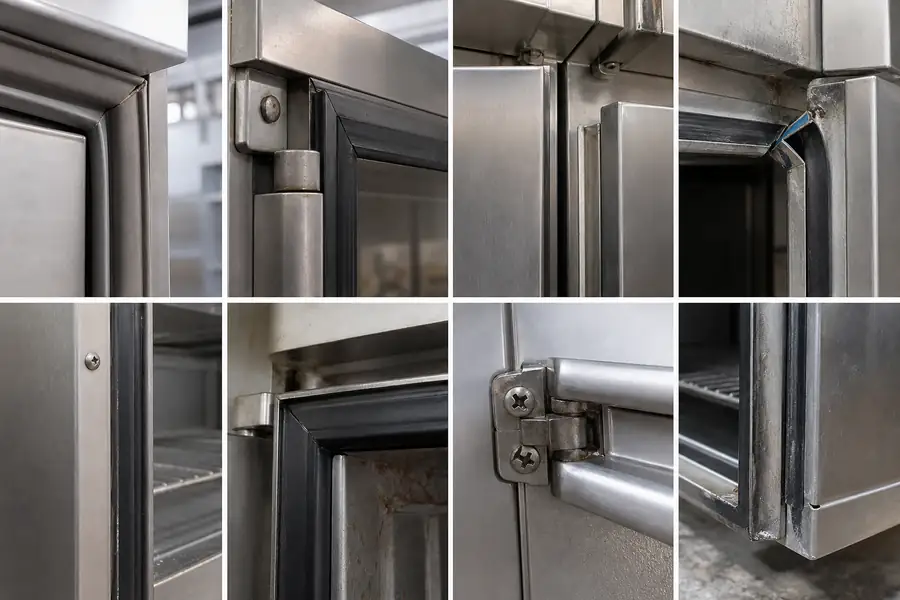
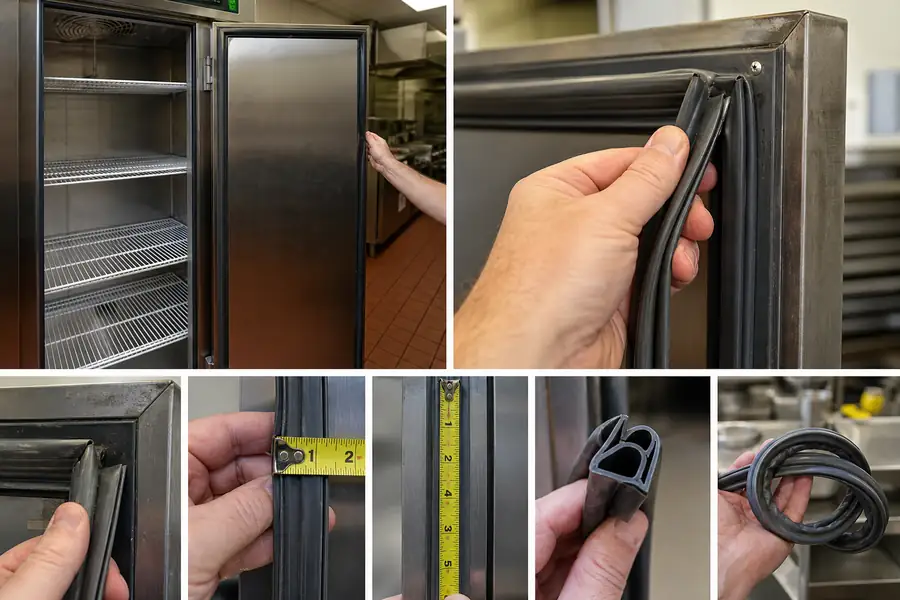
Open the door, photograph one corner where the gasket meets the frame with the seal pulled slightly away from the channel, and that single image usually tells which profile you have. Look for three things: a visible rib or dart on the gasket's back edge, screw heads through the gasket face, and whether the gasket sits inside a molded channel or presses flat against a solid frame.
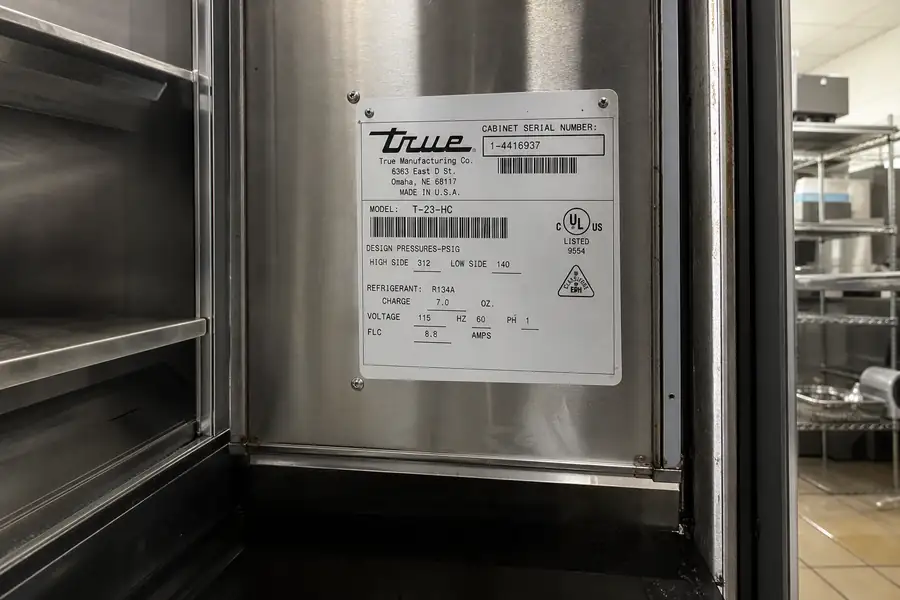
If it is still not obvious, contact The Gasketeers with that corner photo and the data plate from inside the door. Matching a profile from a photo takes a few minutes; guessing and ordering the wrong part costs a week.
Which profiles are stocked and which are fabricated
Push-in, snap-in, and screw-mount profiles are common enough that many sizes are kept ready to go, since they cover the bulk of reach-ins, prep tables, and glass cases in a typical kitchen. Compression and the less common profiles are more often built to order, measured directly from the old gasket rather than pulled off a shelf.
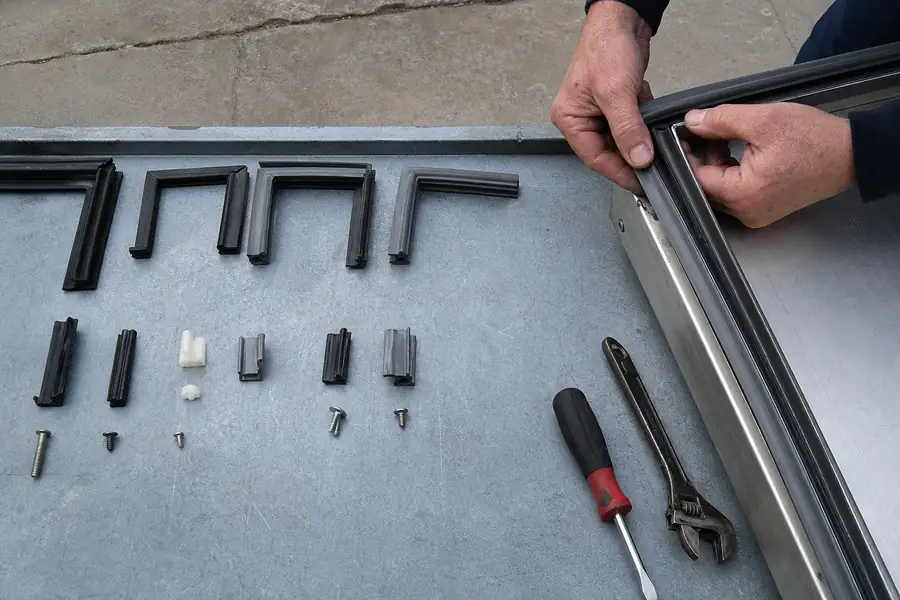
That is not a downside. It is the reason a unit with a discontinued or obsolete profile is still fixable through custom and obsolete gasket fabrication rather than a full equipment replacement. The old seal becomes the pattern, profile and all.
What happens when a unit has been retro-fitted with the wrong profile
A door retrofitted with the wrong mounting profile will chronically sweat, frost, or run the compressor longer than it should, even with a brand-new gasket installed, because the seal is fighting the channel instead of locking into it. This happens most often when a generic gasket gets pressed into a channel it was never shaped for, just to get the door closed for the day.
The fix is not another generic gasket. It is matching the profile to the actual channel or flange on the door, the same identification step covered above, before any new seal goes in.
Frequently asked questions
What is a snap-in gasket?
A snap-in gasket is a door seal with a bulb or rib-shaped edge along its back that clicks into a matching groove in the door or frame and locks there under tension. It is the most common profile on newer reach-in coolers and glass display cases because it installs and removes without tools.
What is the difference between a dart and a push-in gasket?
A dart gasket has an arrowhead-shaped rib that locks into its channel and resists pulling back out, while a push-in gasket has a plain flat flange held only by friction with no locking shape. Dart profiles hold stronger than a standard push-in but both go into a channel rather than being screwed or magnetically pulled flat.
How do I know what type of refrigerator gasket I have?
Photograph one door corner with the gasket pulled slightly back from the frame and look for a rib or dart shape, visible screw heads, or a flat magnetic seal with no mechanical lock. A detailed breakdown of what each shape looks like is in our gasket types and mounting profiles guide, and a clear corner photo is usually enough to confirm it.
Are all commercial gaskets magnetic?
No. Magnetic strips are common in push-in and snap-in gaskets on reach-ins and glass cases, but compression gaskets on walk-in freezer doors and many screw-mount seals on older equipment rely on latch pressure instead of a magnet. Whether a specific gasket is magnetic depends on the unit, not the profile family as a whole.