Fogging and Sweating Glass Display Doors: What the Seal Has to Do With It
Condensation on merchandiser glass is not always a heater fault. How to tell a failed door seal from a failed anti-sweat system before you pay for the wrong repair.
Quick answer: Fog that clings to one edge of a glass display door, or shows up on a single door in a run while the rest stay clear, usually means a worn or misaligned door gasket is letting warm, humid air leak past the seal. Fog spread evenly across every pane in the run usually points to a failed anti-sweat heater system built into the door frame, not the seal at all.
Both problems look identical from across the store: a wall of merchandiser doors nobody can see through. But the shape of the fog tells you which system failed, and that determines who you call first.
Condensation on the Outside Versus the Inside
Condensation on the outside of a glass display door forms when warm room air hits cold glass, the same way a cold drink sweats on a summer porch. This is a temperature and humidity issue, not a seal issue, and it normally clears once the anti-sweat heater warms the glass a few degrees above the dew point.
Condensation on the inside, fogging the inner pane or collecting near the gasket line, forms when the seal is letting store or kitchen air leak into the refrigerated cabinet. That moist air hits the cold interior surfaces and fogs from the inside out. This is the pattern that traces back to the door gasket.
If a haze wipes away and stays gone for hours, that's ordinary transient exterior condensation. If it keeps coming back at the same edge or the same door, something mechanical is wrong.
Need a gasket replaced?
Call us or send your unit's model number. Free quotes across Boulder County, usually same week.
A failing glass display door gasket produces fog with a shape to it, not an even haze across the pane.
Fog Concentrated Along One Edge
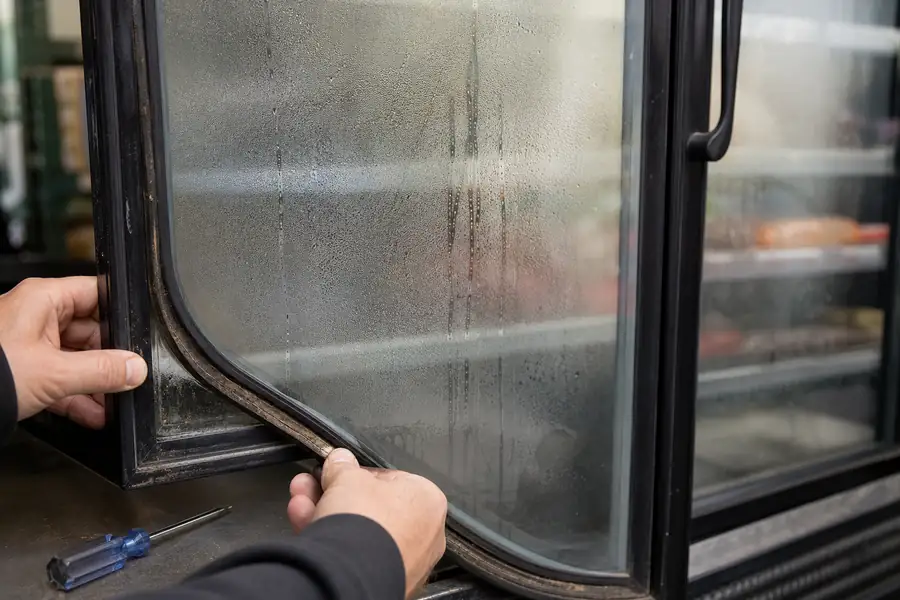
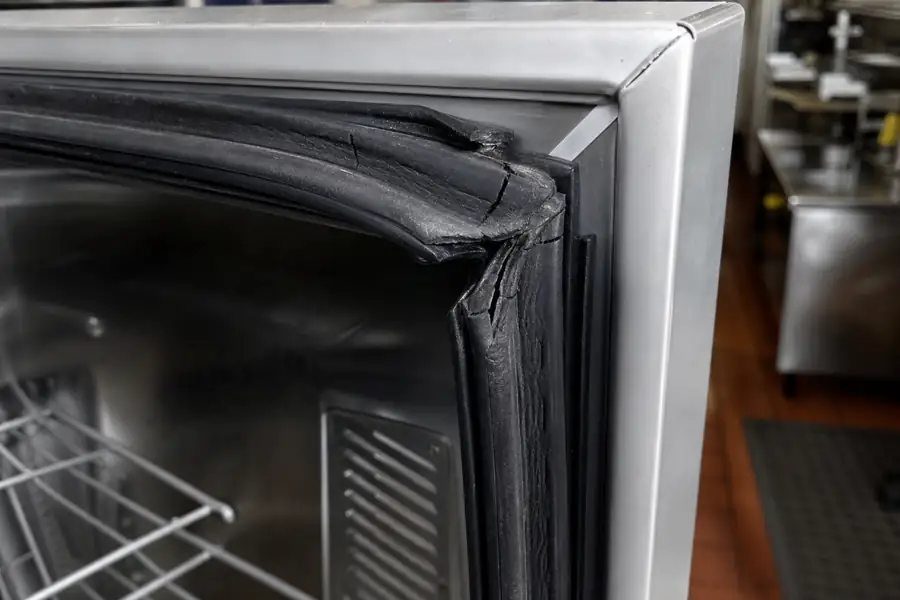
Check the top corner, the strike side, or wherever the gasket has flattened, cracked, or pulled away from the frame. That's usually where the fog runs thickest, because that's exactly where warm air is finding a gap. A gasket that has lost its memory, meaning it no longer springs back to seal tight against the frame, leaves a channel for humid air barely a pencil wide, and that's enough to fog a case.
A Single Door in a Run Behaving Differently
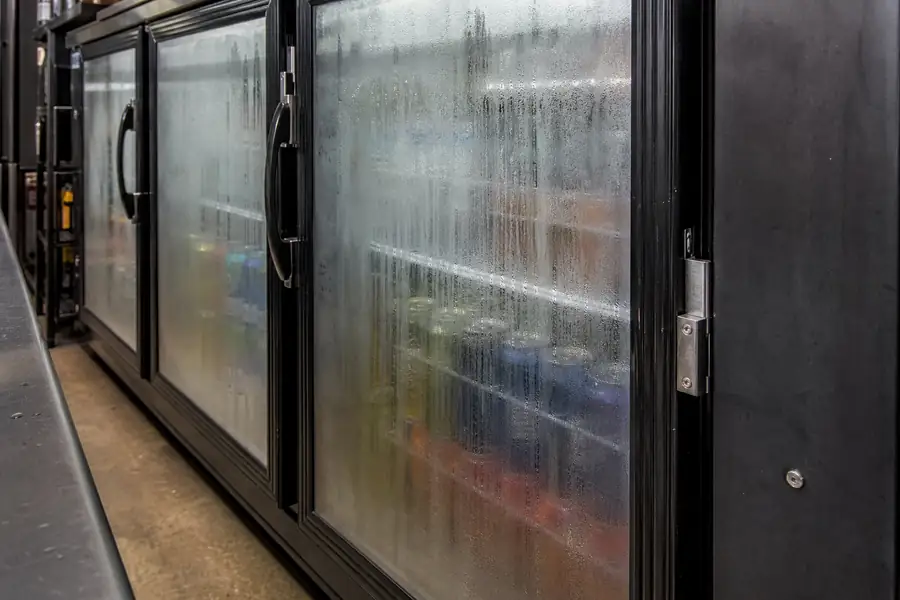
In a run of six or eight display doors, gasket failure almost always shows up on one door, occasionally two, while the rest stay clear. Each door has its own gasket, its own hinge alignment, and its own history of hard slams and cart dings. Anti-sweat heater faults behave the opposite way, since those circuits typically run in zones and take out several doors at once rather than one at a time.
What an Anti-Sweat System Failure Looks Like
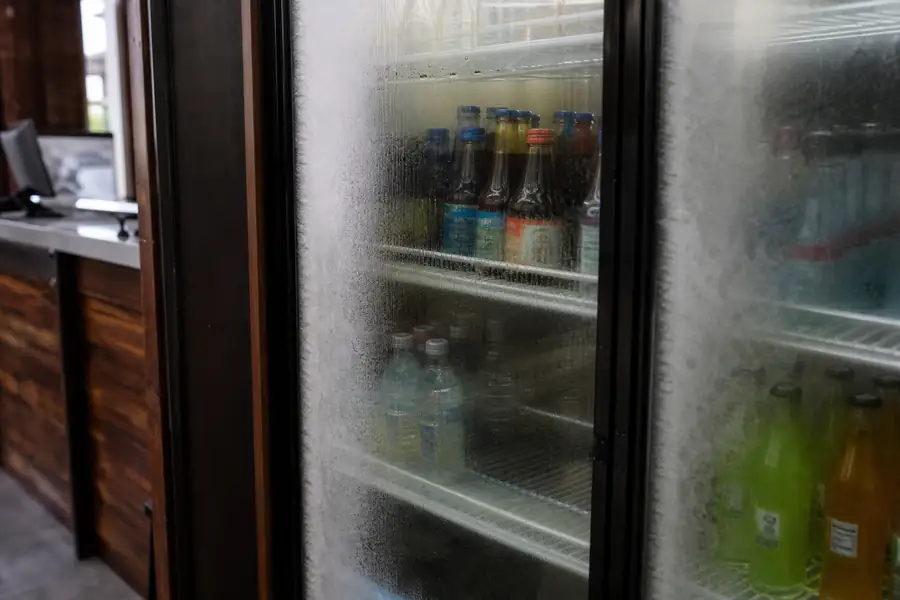
A failed anti-sweat heater produces fog that is uniform across the whole pane, with no edge concentration and no single-door pattern.
Uniform Fog Across the Whole Pane
The anti-sweat system is a thin electric heater built into the glass edge or frame, designed to keep the glass surface a few degrees warmer than the surrounding air so moisture can't condense on it. When that heater fails, the entire pane drops to ambient temperature and fogs evenly, edge to edge, with no dry patch separating fogged from clear glass.
Every Door in the Run Affected
Anti-sweat heaters are usually wired in zones, so when one fails, several doors in the same run tend to fog together, sometimes the whole case. That's a strong sign against a seal problem, since gaskets fail door by door, not in groups.
What You See
Doors Affected
Likely Cause
Fog thickest along one edge or corner
Usually one door
Worn or misaligned door gasket
Even, uniform fog across the whole pane
Often several doors in a zone
Failed anti-sweat heater
Fog clears in minutes, no repeat pattern
Any door, briefly
Normal transient condensation
This is descriptive information, not a repair The Gasketeers performs. Anti-sweat heater and glass wiring is refrigeration and electrical work, calling for a licensed refrigeration contractor, not a gasket technician. Knowing that the pattern points away from the seal can save you from paying a gasket crew to chase a heater problem.
What Door-Closing Habits Do to Both
How a door closes changes how fast either problem shows up, even when the root cause is the seal or the heater. A door that gets slammed, propped open during restocking, or left slightly ajar by a weak closer floods the cabinet with warm air every time, and that extra moisture load makes both a worn gasket and a marginal anti-sweat heater fog sooner. Hinges, closers, and handles that hold a door tight against the frame cut down on how much moist air gets in to begin with, which is why The Gasketeers checks door hardware alongside the gasket instead of treating them as two separate jobs.
Why This Diagnosis Is Different on the Front Range
Boulder County's dry climate makes persistent glass display door condensation more likely to trace back to a seal or door-closing problem than to ambient humidity, the opposite of what national troubleshooting content assumes. Guides written for humid climates treat fogging mainly as a humidity fight the anti-sweat heater has to win. Along the Front Range, outdoor humidity usually runs low enough that a healthy heater and a tight seal handle it without much trouble.
So when a glass display door in a Longmont convenience store or a Louisville bottle shop keeps fogging despite dry local air, that usually means the gasket or door hardware is letting in air the anti-sweat system was never built to fight, not that the heater is undersized for the climate.
What It's Costing You in Visible Product
A fogged glass display door hides the product behind it, and product a customer can't see is product that doesn't sell. Recurring fog on a single door often shows up alongside frost or a soft, damp gasket bead when you touch it, since the same leak fogging the glass raises humidity inside the cabinet. A door that feels warm along one edge, or a gasket that looks flattened and grey instead of black and pliable, confirms the seal is the culprit.
What The Gasketeers Can Fix, and What Needs a Refrigeration Contractor
The Gasketeers handles the door side of glass display door condensation: the gasket itself, plus the hinges, closers, and handles that keep it seated tight against the frame. That covers merchandisers and display cases from Anthony, Structural Concepts, Federal, True, and Turbo Air, whether it's a snap-in gasket that has shrunk with age or a screw-in profile cracked at the corners.
What The Gasketeers doesn't touch is the anti-sweat heater, the glass unit, or wiring inside the frame. If the pattern points to a heater fault, that's a job for a refrigeration contractor, and telling the two apart before making that call is the point of this diagnostic.
If you're not sure which pattern you're looking at, text photos of the door and its data plate to (970) 507-8034, or reach out through The Gasketeers' contact page and get a clear read on whether the fix is a seal or a heater.
Frequently asked questions
Why are my cooler doors fogging up?
Cooler and merchandiser doors fog when warm, moist air meets a cold glass surface, either on the outside, where the anti-sweat heater is supposed to keep the glass warm enough to prevent it, or on the inside, where a worn door gasket is letting humid air leak into the cabinet. The pattern on the glass, spread evenly or concentrated at one edge, points to which one is failing.
How do you fix a sweating display case?
If the fog is concentrated on one door or along one edge, replacing the worn or misaligned door gasket and adjusting the hinge or closer usually solves it. If the fog is even across every door in a run, the anti-sweat heater has likely failed and needs a refrigeration contractor, since that's electrical work rather than a seal repair.
Do glass cooler doors have heaters?
Most commercial glass display doors have a thin anti-sweat heater built into the frame or glass edge that keeps the surface a few degrees warmer than the surrounding air, which stops condensation from forming on the outside. When that heater fails, the glass drops to ambient temperature and fogs evenly across the whole pane.
Can a bad gasket cause condensation?
Yes. A worn, cracked, or misaligned gasket lets warm, humid air leak past the door seal into the refrigerated cabinet, fogging the glass from the inside, usually concentrated near the gap in the seal rather than spread evenly. Replacing the gasket and making sure the door hardware holds it tight against the frame typically clears it.