The Walk-In Door Maintenance Checklist for Commercial Kitchens
A printable monthly walk-in check covering seals, sweeps, thresholds, hinges, closers and latches, built from what actually fails on Boulder County doors.
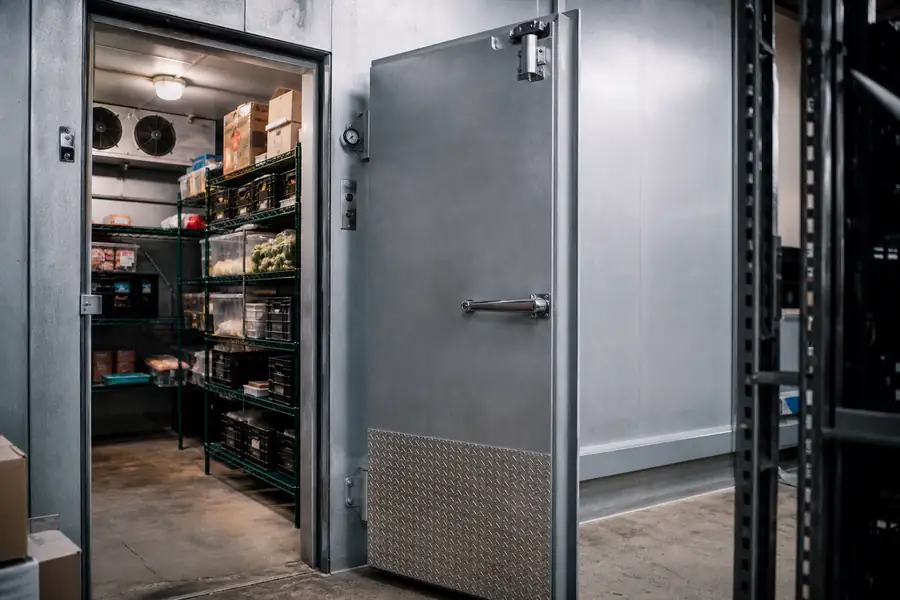
A generic "clean the coils, check the temperature" checklist doesn't tell a facility manager anything useful about the part of a walk-in that fails constantly: the door. The Gasketeers built this walk in cooler maintenance checklist around eleven checks that take about fifteen minutes a month and catch seal, hinge, and latch problems before they turn into frost, warm product, or a failed health inspection.
In Boulder County kitchens, from grocery backrooms to school cafeterias, most refrigeration calls trace back to a door that no longer seals square, not a failing compressor.
How to use this checklist
Run this checklist monthly on every walk-in cooler and freezer door in the building, using the same route each time so nothing gets skipped.
The eleven checks below cover the seal, the frame, and the hardware that keeps the door square, the parts a walk-in door gasket service actually fixes. This checklist does not cover the compressor, refrigerant, evaporator coil, or condensate drain. Those belong to a refrigeration contractor, and trying to diagnose them from a gasket checklist usually wastes a service call.
Same route, same order, every month
Note anything that changed since the last check, not just pass or fail
Flag door and hardware issues separately from refrigeration issues
Need a gasket replaced?
Call us or send your unit's model number. Free quotes across Boulder County, usually same week.
These eleven checks catch nearly every seal and hardware failure before it costs you product or an unnecessary service call.
Seal compression at six points
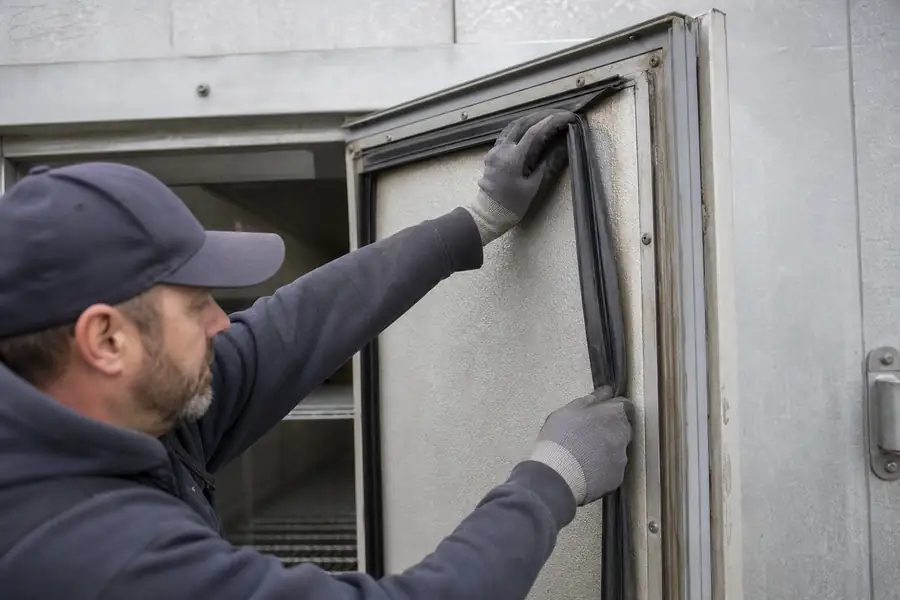
Close the door and slide a sheet of paper between the gasket and the frame at six points: each corner and the mid-point of each side. The paper should drag, not pull free; if it slides loose anywhere, the gasket has lost compression there.
Light leak from inside
With the door closed and the cooler lights off, stand inside and look for daylight around the frame. Any visible line means the seal isn't making contact at that spot, even if the paper test passed.
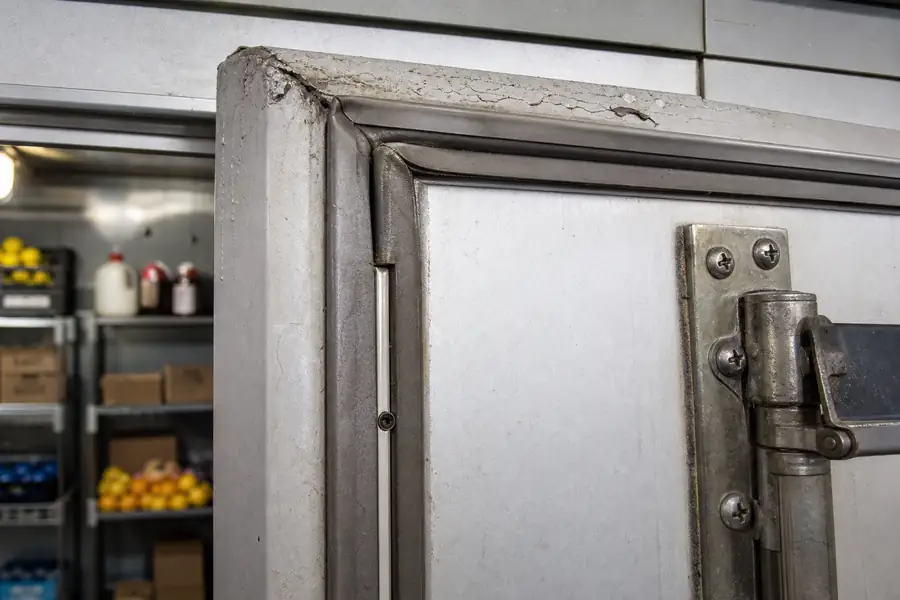
Mitre corners
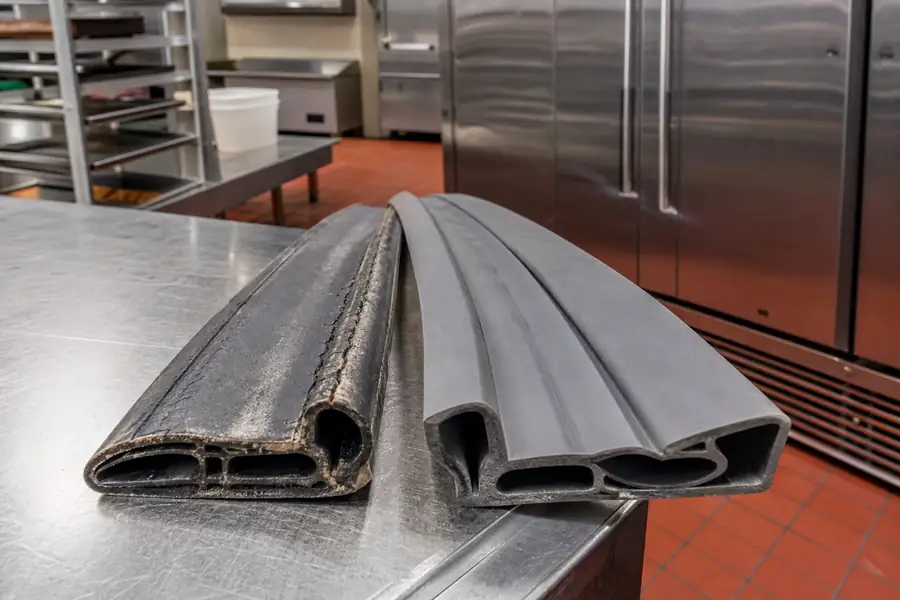
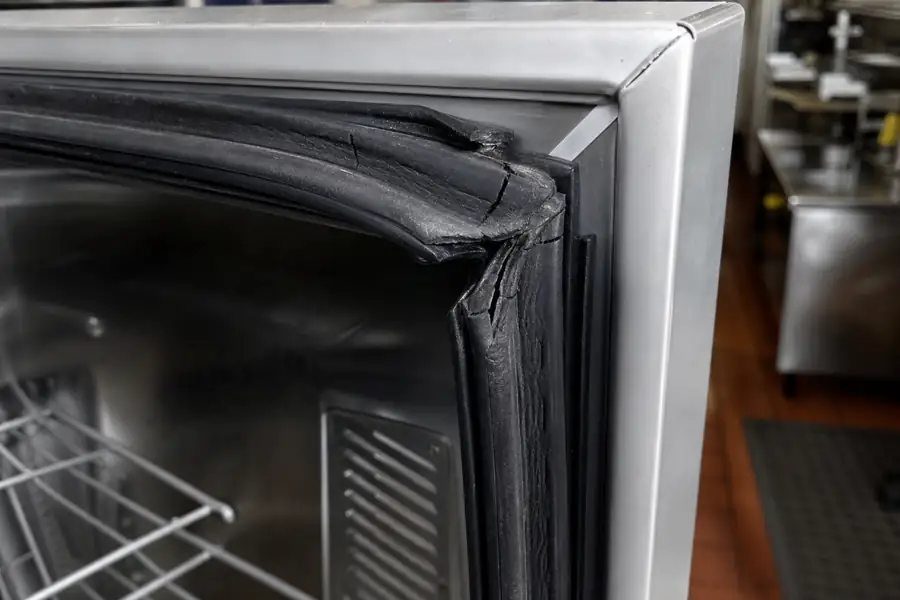
Check the mitre corners, the diagonal seams where two gasket lengths meet at a corner. Gaskets crack and separate here first, well before the flat runs show wear.
Magnet grip
Run a hand along the gasket's magnetic strip and feel for spots that no longer pull to the frame. Weak magnet grip lets the door swing open slightly on its own, a different problem than a torn seal.
Sweep contact and wear
Confirm the door sweep, the flexible strip along the door's bottom edge, still touches the threshold across its full width. A curled or split sweep lets warm air roll in at floor level, where it does the most damage to stored product.
Threshold condition
Check the metal threshold for dents or buildup that keep the sweep and gasket from sitting flat. A bent threshold defeats even a new gasket, since there's nothing flat left to seal against.
Hinge play and door square
Grab the door and check for play at the hinges. Loose pins let the door sag out of square, which shows up as one corner leaking while the rest seals fine, and points to door hardware repair rather than a gasket alone.
Closer pull-to
Open the door partway and let go: the cam-lift closer should pull it firmly shut without slamming. A closer that stalls before the frame leaves the seal uncompressed every time someone lets go early.
Latch engagement
Confirm the latch catches solidly and holds the door tight against the gasket without extra force. A latch that needs a shove to engage is usually compensating for a door already out of square.
Safety release
Push the interior safety release with the door shut and confirm it opens immediately. It's a life-safety check, not a seal check, but it takes ten seconds and belongs in the same monthly pass.
Frame heater warmth where fitted
On freezer doors with a frame heater, a low-wattage strip that keeps the frame from frosting, feel along the frame for even warmth. Cold spots usually mean a section has failed, and frost will start there first.
Quarterly: the things that creep
Every three months, add three checks that change too slowly to catch monthly but still cost money if ignored.
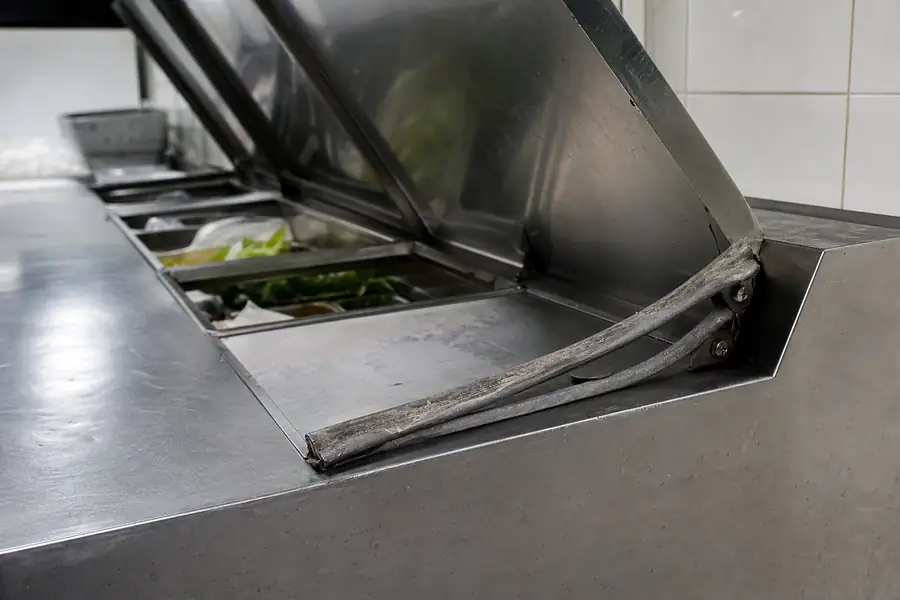
Measure gasket thickness at a flat run with calipers or a straightedge and compare it to three months ago: gaskets thin out gradually as the rubber compresses permanently, and a section that has lost noticeable thickness needs replacing before it fails the paper test. Check every screw or snap point holding the gasket into its retainer, since a seal that's sealing fine can still be one loose clip away from pulling free at the corner. And walk the door frame for rust or coating damage on Kolpak, Nor-Lake, Master-Bilt, or Bally units, since a rusted frame edge cuts a new gasket as fast as it seals it.
What to escalate, and to whom
Split anything you find into two piles: door and hardware problems, and refrigeration problems, because they go to different people.
Torn gaskets, cracked mitre corners, loose hinges, a closer that won't pull the door shut, and a latch that won't hold are all door-side problems. The Gasketeers handle those, including custom-fabricated gaskets for units where the original part is discontinued.
Frost on the coil, water pooling under the unit, a compressor that runs constantly with every door check passing, or a refrigerant odor are refrigeration-side problems. Those go to your refrigeration contractor, not a gasket technician, and pushing a seal replacement at a compressor problem just delays the real fix.
Download the printable version
The full walk in cooler maintenance checklist is available as a printable PDF, sized for a wall clipboard next to the door it covers. Print one per door, date each pass, and keep the last twelve months on file for inspections.
What we check on a service visit
A walk-in door inspection covers the same eleven points in more depth, plus measurements a monthly walk-through can't catch, like exact seal compression force and frame squareness. Most calls start with a symptom, ice buildup, a warm case, or a spiking power bill, and trace back to one or two of the checks above.
If the last few monthly checks flagged the same spot every time, that's usually enough reason to book a walk-in door inspection rather than keep monitoring it.
Frequently asked questions
What maintenance does a walk in cooler need?
A walk-in cooler needs monthly door checks covering the gasket seal, sweep, hinges, closer, and latch, plus a quarterly look at gasket thickness and frame condition. Coil cleaning, drain checks, and refrigerant service are separate maintenance handled by a refrigeration contractor, not part of the door routine.
How often should walk in cooler gaskets be inspected?
Check walk-in cooler gaskets monthly for compression, tears, and corner separation, since a seal that tests fine one month can lose grip within weeks in a busy kitchen. A quarterly thickness check catches the slower wear that a monthly glance misses.
What is included in walk in cooler preventive maintenance?
Preventive maintenance on the door side includes the seal, sweep, threshold, hinges, closer, latch, and safety release covered in this checklist. It does not include compressor, refrigerant, or coil maintenance, which is a separate service handled by a refrigeration contractor.
Who services walk in cooler doors?
A gasket and door hardware specialist services walk-in cooler doors, handling the seal, hinges, closers, sweeps, and latches. The Gasketeers work on walk-in doors throughout Boulder County, including custom gaskets for older or discontinued units where the manufacturer no longer sells a matching part.