Door and Seal Maintenance Across a Commercial Kitchen
Every cold door in a commercial kitchen, from walk-ins to prep table lids, with the inspection interval each one actually needs and who should be doing it.
Fifteen cold doors across six equipment types do not wear out on the same schedule, and checking them all on the same calendar wastes labor and misses real problems. Commercial refrigeration door maintenance means checking the gasket and the hardware around it, hinges, closers, sweeps, on an interval matched to how often that specific door actually gets opened. A walk-in cooler door that swings forty times a shift needs a different look than a prep table lid that flips four hundred times. The Gasketeers handle door and seal work across every one of those unit types through our gasket and door services, and this commercial refrigeration door maintenance guide sorts them by duty cycle so you know what to check and how often.
Key takeaways:
Duty cycle, not calendar age, sets the check interval; high-opens doors like prep table lids fail faster than walk-in doors.
A warm case or frosted coil often traces back to a torn seal or a hinge letting the door sag, not the compressor.
Walk-ins, reach-ins, and glass display doors typically need a monthly seal check; prep table lids and drawers need one weekly.
Hinges, closers, and sweeps cause as many seal failures as worn gasket material does.
Kitchen staff can handle the daily visual check; measuring for a replacement or a custom profile is specialist work.
Why door seals are the maintenance item everyone skips
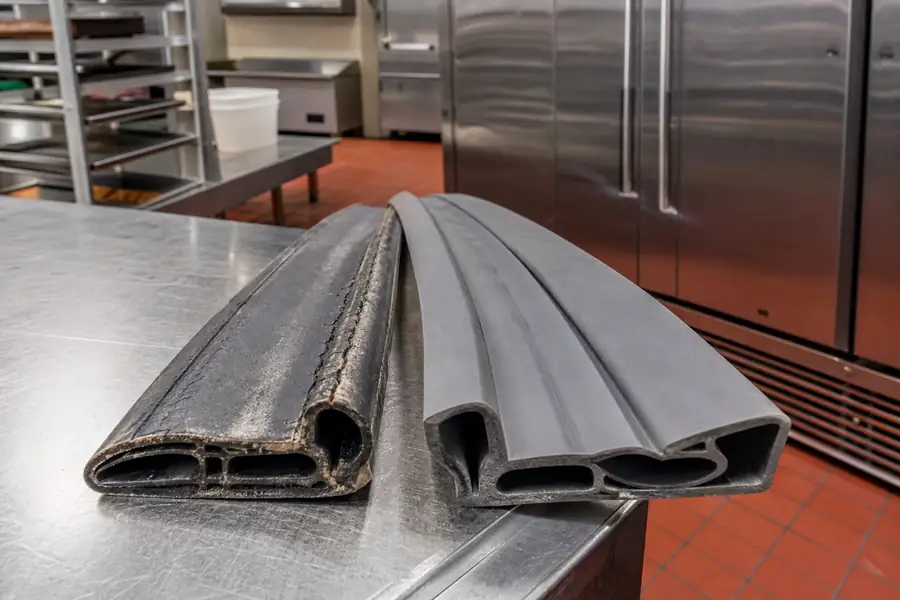
The gasket is the first part to wear out on any cold door, and it is the cheapest one to ignore. A cracked or flattened seal lets warm, moist air leak past the door every time it closes, which forces the compressor to run longer to hold temperature. That extra runtime shows up on the power bill long before anyone spots ice on the coil or sweat on the glass. Staff usually blame the compressor or start pricing a new unit, when the actual failure is a seal that costs far less to fix than the diagnosis suggests.
Need a gasket replaced?
Call us or send your unit's model number. Free quotes across Boulder County, usually same week.
A door that opens four hundred times a shift needs a weekly check; one that opens forty times can safely go a month between checks. Duty cycle, how many times a door opens and closes in a shift, is the biggest factor in how fast a gasket wears, ahead of unit age or brand.
Door type
Typical opens per shift
Seal check interval
Walk-in cooler/freezer
40-80
Monthly
Reach-in cooler/freezer
100-200
Monthly
Prep table lid/base
300-400+
Weekly
Refrigerated drawer
200-300
Weekly
Glass display/merchandiser
50-150
Monthly
Undercounter/back-bar
30-60
Every other month
These intervals come from technician observation across Boulder County kitchens, not a manufacturer schedule, and a unit under unusual load may need attention sooner.
Walk-in doors
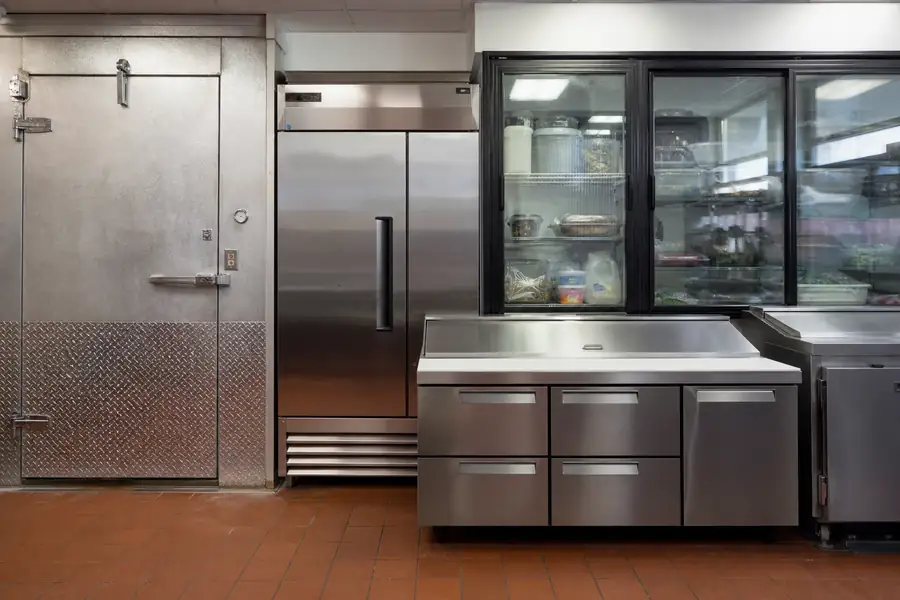
Walk-in doors get opened least often per hour, but the door is heavy and the seal runs the full height of the frame, so a sagging hinge is often the real culprit rather than the gasket itself. Check the full perimeter monthly for gaps, tears, and flat spots. A Louisville brewery kitchen once traced frost building in one corner of its walk-in to a hinge letting that side hang slightly low, not to the compressor.
Reach-in doors
Reach-in doors open more often than a walk-in but carry a shorter, lighter seal that is easy to check in a few seconds. Look monthly for a gasket that no longer springs back after being pinched, and for a magnetic strip that has gone soft and stopped pulling the door shut. A reach-in that won't hold its own door closed is losing cold air constantly, even between service calls.
Prep table lids and base doors
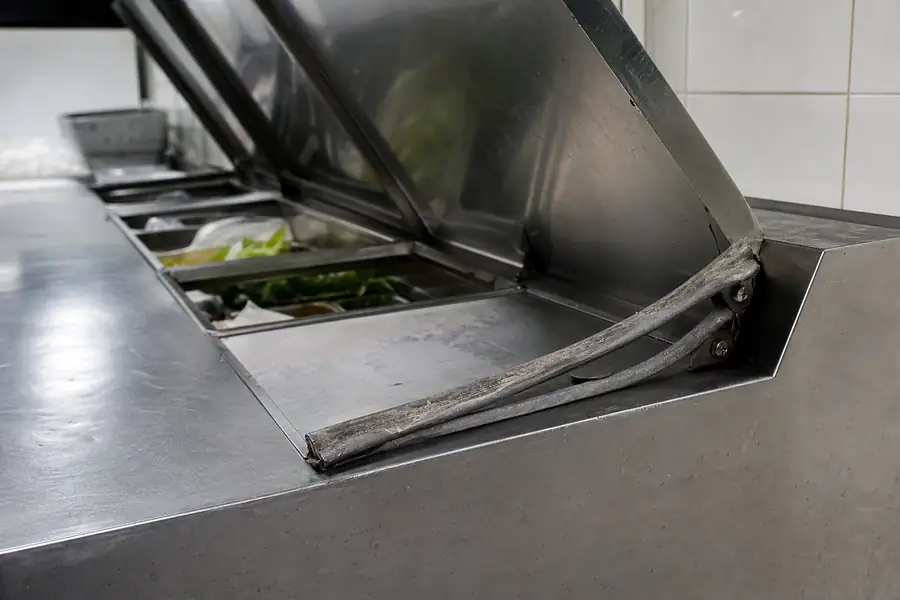
Prep table lids get opened more times in a single lunch rush than a walk-in door sees all week, and that constant flexing wears the seal fastest at the hinge points first. Check the lid gasket weekly for compression that no longer springs back, and check the base door gasket monthly since it opens far less often. The Gasketeers fabricate replacement Prep Table Gaskets to the original lid and base profile so the fit stays tight for years.
Refrigerated drawers
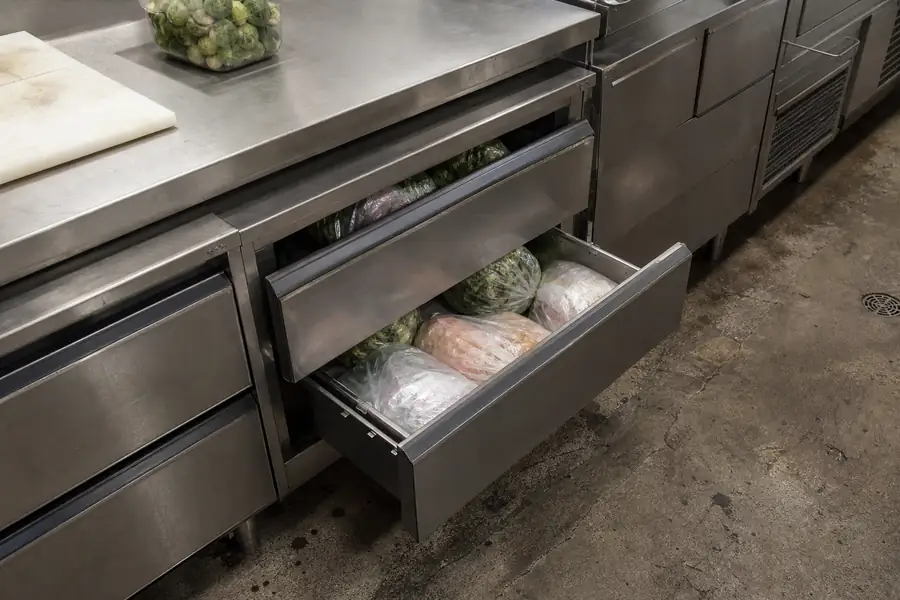
Refrigerated drawers see nearly as much traffic as prep table lids, and the seal sits on a slide track that can bind or drag if the drawer misaligns. Check weekly for a seal that no longer seats evenly across the drawer face, and for a drag that points to the track rather than the gasket. The Gasketeers supply Refrigerated Drawer Gaskets cut to the drawer's original profile, including on older units where the manufacturer no longer stocks the part.
Glass display and merchandiser doors
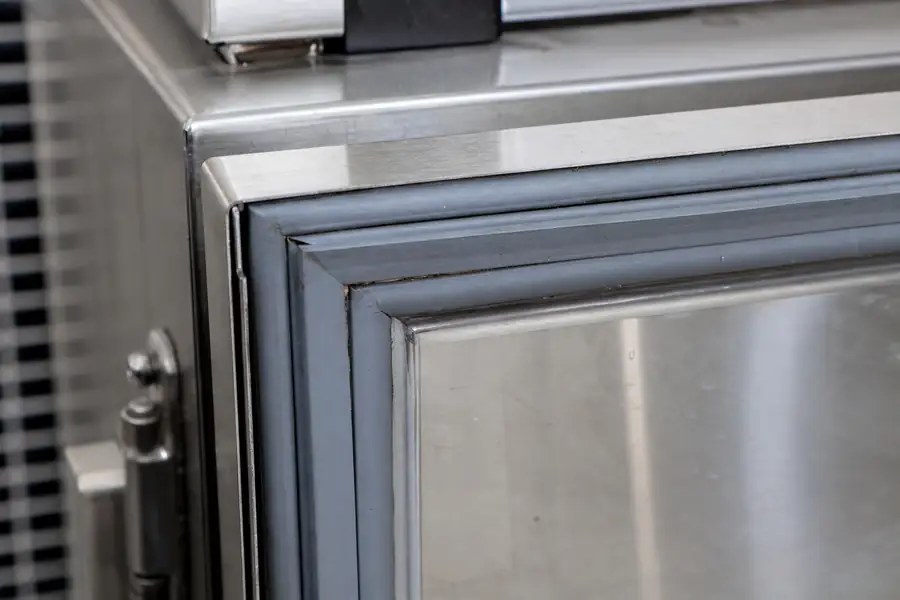
Glass display doors get opened often but briefly, and condensation on the glass is usually the first visible sign the seal has failed rather than a cooling problem. Check monthly for a gasket that has pulled away at the corners, the spot customers brush against most and where wear shows up first.
Undercounter and back-bar
Undercounter and back-bar units get the fewest opens of any cold door in a typical kitchen, so a check every other month usually catches problems before they cost much. These doors sit low and take physical abuse from carts and foot traffic, so check the hinge and closer alongside the gasket rather than the seal alone.
An inspection calendar you can actually keep
A workable calendar assigns each door type its own interval instead of checking all fifteen doors the same day. Group weekly checks (prep table lids, drawers) into one pass and monthly checks (walk-ins, reach-ins, glass doors) into another, with undercounter units on a slower rotation. During a whole-kitchen door survey, The Gasketeers can help lay out a calendar built around your specific unit mix rather than a one-size schedule.
What belongs to your kitchen team and what needs a specialist
Kitchen staff can handle the daily and weekly visual checks: looking for tears, gaps, and frost patterns, and wiping grease and food debris off the seal so it seats fully. Measuring for a gasket replacement, fabricating a custom profile for a discontinued unit, or adjusting a hinge so a door hangs square is specialist work. A measurement that's off by even a little means the new seal fits just as poorly as the old one did.
What is not in this guide, and why
This guide covers doors and seals only, not the compressor, refrigerant, coils, or electrical components that also affect a unit's temperature. The Gasketeers repair and replace gaskets, hinges, closers, and sweeps; a warm case with a tight seal and a square-hanging door points to a mechanical or refrigerant issue that needs an HVAC-R technician, not a gasket repair. Ruling out the door first saves a service call on the wrong problem. A Boulder grocery running fifteen cold doors across six unit types used this framework to book a whole-kitchen door survey, then requested a free gasket quote once the worn seals were identified.
Frequently asked questions
How often should commercial refrigeration be serviced?
Door and seal checks should follow duty cycle: monthly for walk-ins, reach-ins, and glass display doors, and weekly for prep table lids and refrigerated drawers since they open far more often per shift. Compressor and refrigerant service runs on a separate schedule set by an HVAC-R technician, not by the seal check.
What is preventive maintenance for a commercial refrigerator?
For the door and seal side, preventive maintenance means a regular visual check of the gasket for tears or flat spots, cleaning debris off the seal, and confirming the hinge and closer still pull the door fully shut. Catching a worn seal early avoids the compressor runtime and spoilage costs that come from a slow leak nobody noticed.
Do refrigerator door seals need maintenance?
Yes. A commercial refrigerator door seal loses its compression over time from constant flexing and food debris buildup, and a seal that no longer springs back lets warm air leak in every time the door closes. Wiping it clean and checking for gaps takes a minute and catches most problems before they affect temperature.
How long do commercial refrigerator gaskets last?
Lifespan varies with how often the door opens: a low-traffic walk-in seal may hold up for several years, while a prep table lid gasket opened hundreds of times a shift often wears out much sooner. Heat, grease, and rough handling all shorten that life further, which is why duty cycle matters more than a fixed replacement date.
Can a gasket be replaced on an old or discontinued unit?
Usually, yes. The Gasketeers fabricate a custom gasket from the existing seal profile when the original part is no longer available from the manufacturer, so an obsolete walk-in, reach-in, or prep table doesn't need to be replaced just because the seal wore out.